The same plastic handle can behave completely differently depending on how its finishes. A smooth handle and a textured one might come off the same tool, in the same material, but the grip, the resistance to scratches, and how well the color matches a brand’s palette can all change with the finish alone. However, many customers only consider plastic handle finishes after the prototype has already been made. If the required texture, color, coating, or logo is decided too late, the project may require additional tooling changes, rework, or new samples.
Why Surface Finish Matters?
Surface finish affects more than appearance. It changes how a handle feels in the hand, how well it resists wear and scratching over time, and whether it matches a product’s branding consistently across a full product line. Two handles molded from the same resin, in the same shape, can perform noticeably differently once one gets a grip texture and the other stays smooth, or one is painted to match a logo color and the other relies on a raw resin tint that drifts slightly between production runs.
Common Plastic Handle Textures and Surface Finishes
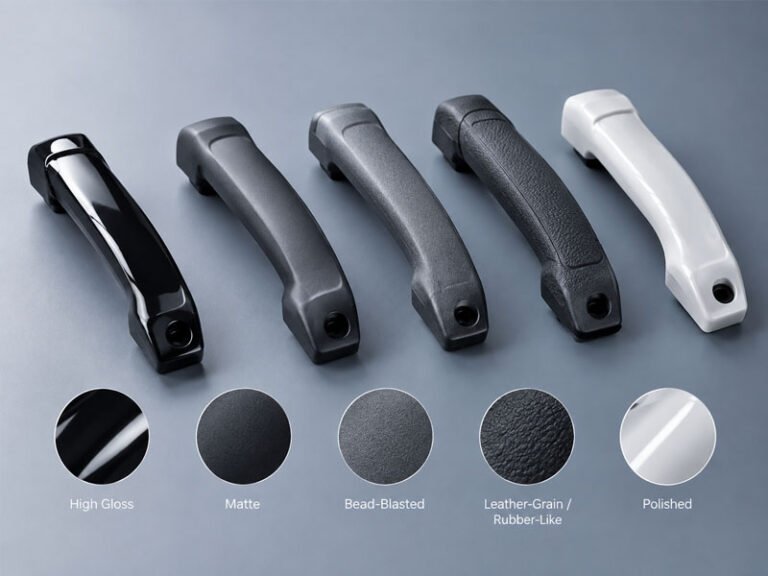
Plastic handle texture is usually created directly through the mold surface. Common options include matte, bead-blasted, leather-like, rubber-like, and polished finishes. The appropriate choice depends on the required grip, appearance, cleaning requirements, and manufacturing process.
Matte / Bead-Blasted Texture
A matte finish has low surface gloss and produces a less reflective appearance. This is one of the most common textures used on molded handles, achieved by bead-blasting the mold surface rather than polishing it. Industry mold-texture standards, such as SPI D-series or VDI grades, are commonly used to specify exactly how fine or coarse the finish should be.
This type of plastic handle texture is commonly used for industrial products because it provides a practical appearance and can reduce the visibility of fingerprints and minor surface marks.
The texture depth needs to be considered during mold design. A deeper texture can require additional draft angle to allow the part to release from the mold without dragging or damaging the surface. Textured surfaces are also somewhat harder to clean than a smooth one, since texture depth gives dirt and residue more surface area to collect in, which matters for handles used in environments that require frequent disinfection.
Leather-Grain / Rubber-Like Texture
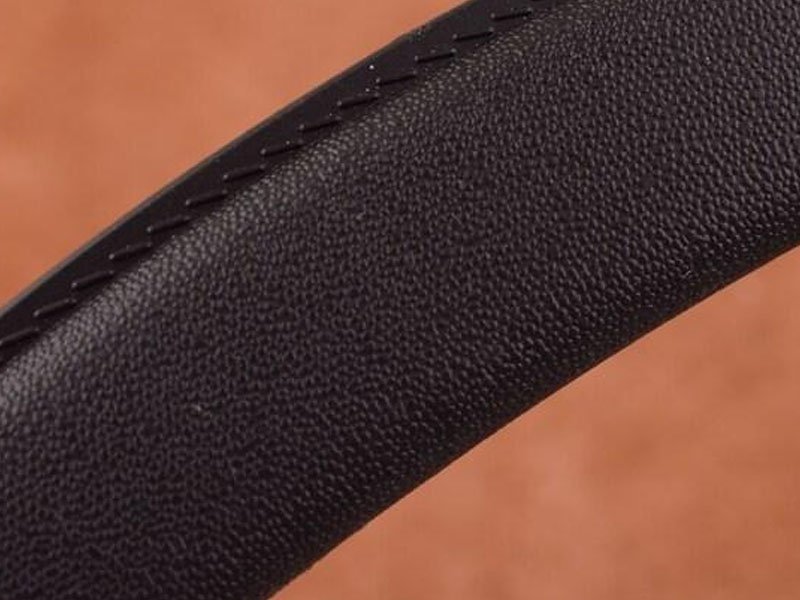
A deeper, more pronounced texture pattern designed to mimic the tactile quality of leather or rubber, typically applied through a more aggressive mold-texturing process than a standard matte finish.
This texture is a strong fit for handles that are gripped firmly and frequently, where a more pronounced surface pattern improves traction.
The deeper texture pattern requires even more draft angle than a standard matte finish, which can constrain part geometry.
High-Gloss Polish
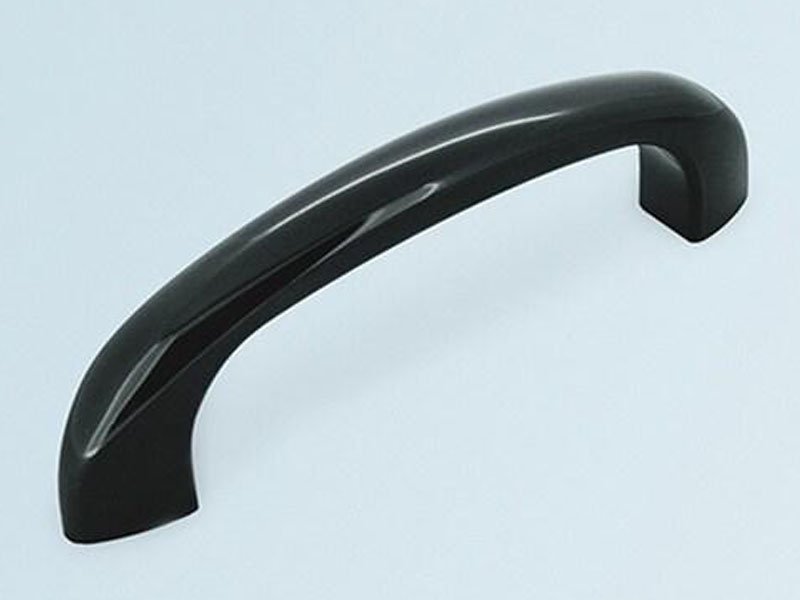
A smooth or polished finish provides a clean surface with higher gloss. A fully polished mold surface, typically specified using SPI A-series grades, produces a smooth, reflective finish on the molded part.
High-gloss finishes suit consumer products where a premium, polished appearance matters more than grip.
Polished surfaces show fingerprints, scratches, and minor wear far more readily than a textured finish. They also tend to reveal cosmetic defects, like flow lines or sink marks, that a textured finish would otherwise hide.
Related Reading: Learn more about plastic injection molding surface finishes, including common texture grades, polishing methods, and how to select the right finish for your molded parts.
Plastic Handle Colors and Coloring Methods
The plastic should first be selected according to mechanical, temperature, chemical, and environmental requirements. The required color can then be achieved through the appropriate coloring or finishing process.
Integral Coloring
Integral coloring is achieved by adding a colorant or masterbatch to the plastic material before injection molding. The color is distributed throughout the molded part, so there is no separate painting process. This method is suitable for high-volume production and standard colors because it can simplify production and reduce secondary processing. However, the final color can be affected by the resin grade, colorant formulation, processing temperature, and material batch. For consistent production, the required color should be defined with a color reference or approved sample.
Spray Painting
Spray painting applies a colored coating directly to the molded plastic handle. It provides more flexibility when a specific brand color, gloss level, or decorative appearance is required. It can also be combined with protective coatings when the application requires additional surface protection. However, painting adds a secondary manufacturing process and increases processing cost. Coating adhesion, scratch resistance, chemical compatibility, and coating thickness should also be considered.
Two-Shot Molding and Overmolding
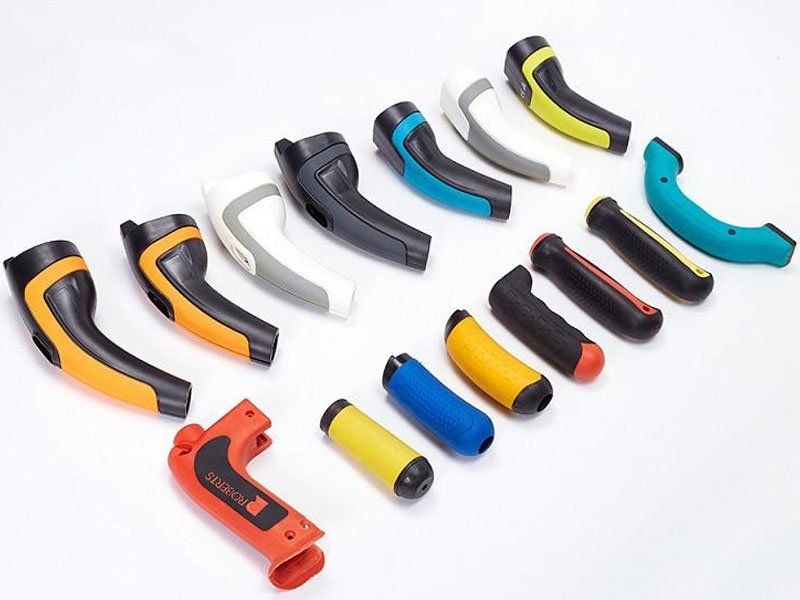
Two-shot molding can produce a handle with two different plastic colors or materials as an integrated part. Overmolding can also combine a rigid plastic substrate with a softer TPE or TPU layer to create a more comfortable and slip-resistant grip. These processes can be used for two-color designs, soft-touch areas, contrasting sections, or functional grip surfaces. However, they require more complex mold design and higher initial tooling costs. Material compatibility, bonding strength, shrinkage, and molding conditions should be evaluated before production.
Coatings and Functional Surface Treatments
Not every plastic handle finish is intended only for appearance. Some surface treatments provide additional functional properties.
Electroplating
A thin metal layer, typically chrome, is deposited onto the plastic surface, most commonly on ABS or ABS-based blends, giving the part a metallic appearance without the weight or cost of an actual metal handle. It works well for products where a premium metallic look matters, though it adds a processing step and cost, and not every resin plates well.
UV-Resistant Coatings and UV Protection
A protective coating applied to reduce the yellowing and surface degradation that comes from prolonged UV exposure. This matters most for handles used outdoors or in direct sunlight, where an uncoated resin would otherwise fade or become brittle over time.
Anti-Static and ESD Treatment
Some handles used near electronic components require control of electrostatic charge. Reduces the buildup of static charge on the handle’s surface, which is relevant in environments sensitive to static discharge, such as electronics assembly or handling equipment near sensitive components.
Silk-screen Printing or Laser Etching for Logos
Silk-screen printing applies ink directly onto the surface and works well for simple logos or color branding, but the ink layer can wear off with repeated handling over time. Laser etching removes or alters the surface material itself to create a permanent mark that won’t fade or rub away, though it typically can’t add color the way silk-screening can unless the resin includes a laser-markable additive.