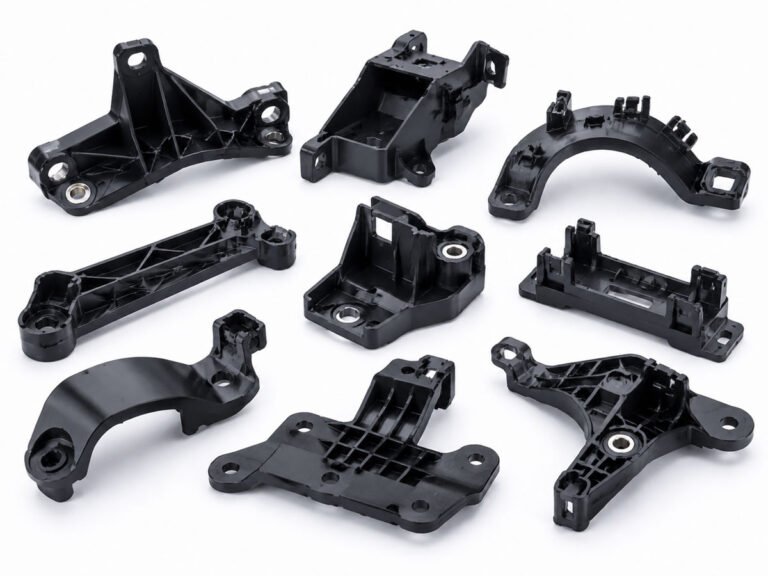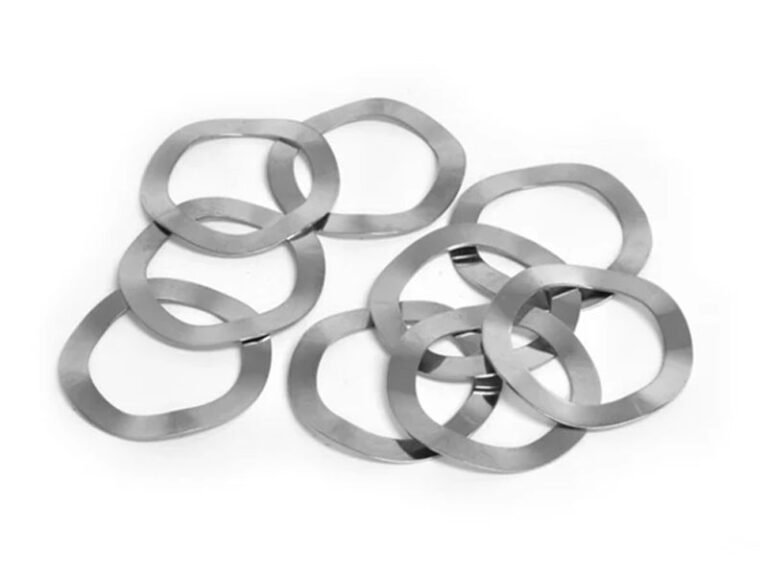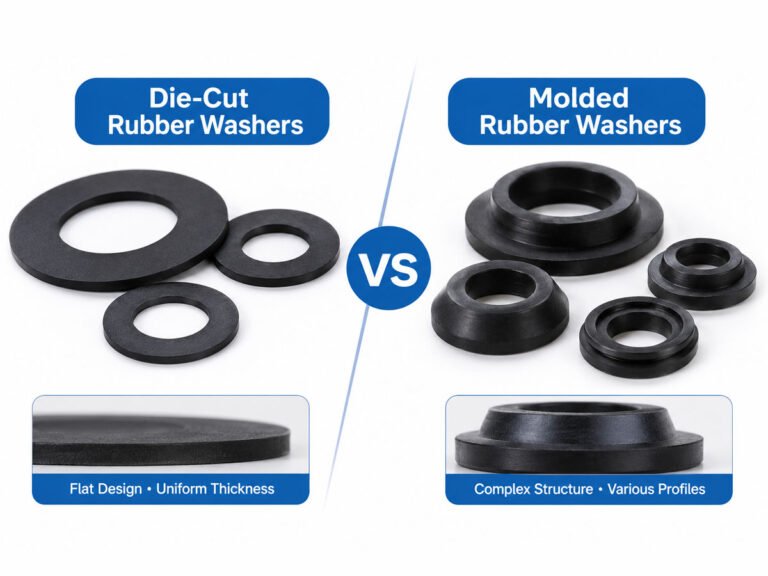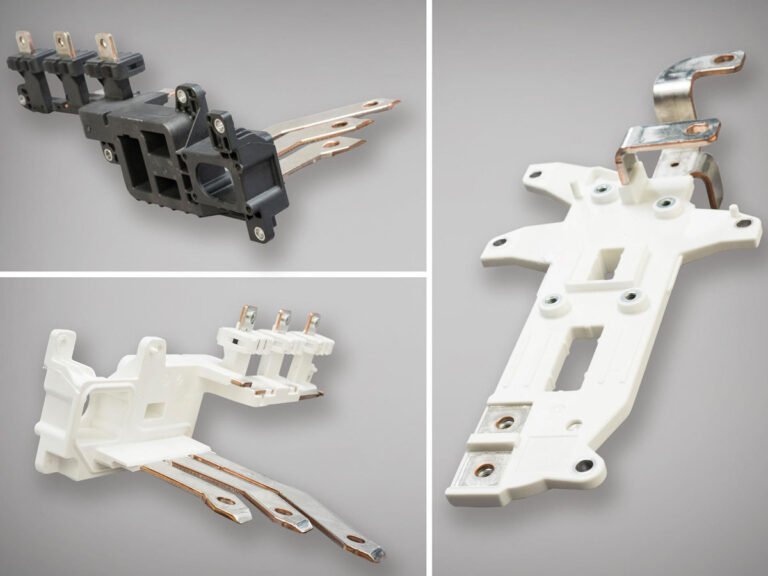
EV battery pack plastic parts are the molded components that sit between and around the cells, busbars, wiring, and cooling hardware inside an electric vehicle battery. They insulate, locate, protect, and organize, and they do so in a space where heat, vibration, and high voltage all act at once. Most are injection molded, which allows complex shapes, consistent dimensions, and a low cost per part at volume.
What Are EV Battery Pack Plastic Parts?
EV battery pack plastic parts are non-metallic components used inside or around an electric vehicle battery pack. They work with battery cells, busbars, cooling plates, wiring systems, and other structural components.
Their main functions include:
- Electrical Insulation: Separate conductive components and reduce the risk of unintended electrical contact.
- Component Positioning: Keep battery cells, modules, and connectors in their intended positions.
- Mechanical Protection: Protect sensitive components from physical contact, abrasion, and impact.
- Assembly Support: Provide mounting points, locating features, and fastening structures.
- Cable Management: Secure wiring harnesses and prevent unwanted movement.
- Thermal Management: Support cooling circuits through selected fluid connectors and other plastic components.
Common Types of EV Battery Pack Plastic Parts
Different battery pack areas require different plastic components. Their structures and material requirements depend on the parts they support or protect.
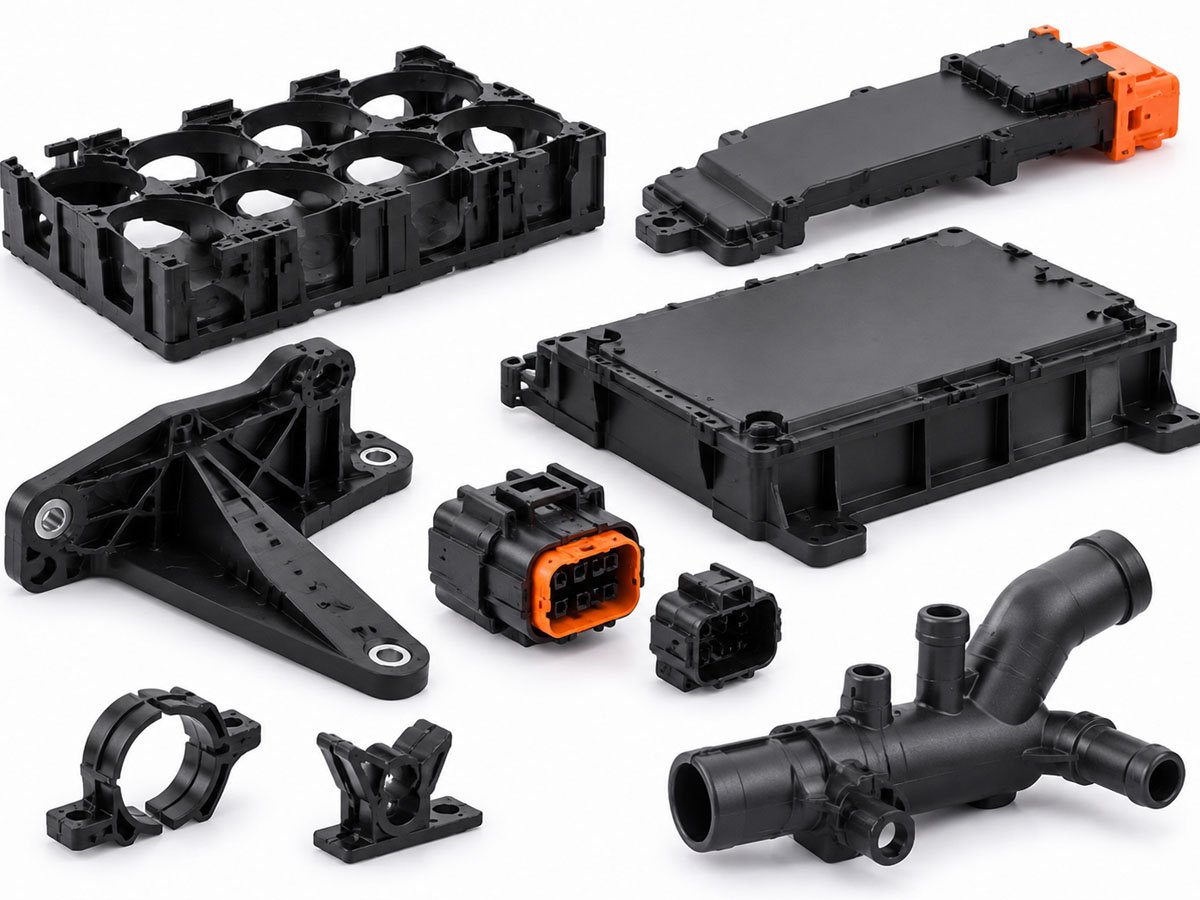
Battery Cell Holders and Spacers
Battery cell holders and spacers keep individual cells or cell groups in the correct positions. They maintain consistent spacing and reduce direct contact between adjacent components. These parts may include locating slots, separation walls, positioning ribs, and fastening features. Dimensional accuracy is important because variations in cell spacing can affect module assembly. PA6, PA66, and PP are possible material options, depending on the required stiffness, temperature resistance, and mechanical performance.
Busbar Covers
Covers insulate exposed conductors and prevent accidental contact or short circuits. The design has to maintain the required creepage and clearance distances, and the material needs good tracking resistance. Common design features include snap-fits, screw holes, locating clips, and openings for electrical connections. Material selection should consider dielectric properties, heat resistance, and flame-retardant requirements.
Battery Module Housings and Covers
Housings enclose a group of cells and protect them from impact and contamination. Covers are usually flame-rated, and the parts must keep their shape under heat. Large or complex housings require attention to wall thickness, reinforcing ribs, warpage, fastening points, and assembly tolerances. Their materials must meet the required mechanical and thermal specifications.
Battery Pack Mounting Brackets
Plastic mounting brackets secure selected components inside the battery pack, such as sensors, control units, and wiring assemblies. They may include mounting holes, screw bosses, reinforcing ribs, and locating features. The design must maintain component position under vibration and temperature changes. For higher stiffness requirements, glass-fiber-reinforced plastics or metal inserts may be considered.
Cable Clips and Connector Housings
Cable clips secure wiring harnesses and prevent cables from contacting sharp edges, hot surfaces, or moving components. Connector housings provide electrical insulation and mechanical protection. They also help maintain connector alignment and support reliable assembly. These components require accurate dimensions, consistent snap-fit performance, and suitable vibration resistance. Connector housings may also need to meet specific temperature, sealing, and electrical insulation requirements.
Thermal Management Plastic Components
Coolant connectors, manifolds, hose clips, and covers belong here. They need resistance to coolant, including hydrolysis resistance, and leak-tight interfaces. Where a plastic part meets a metal part or a rubber seal, tolerances on the sealing faces matter.
Common Materials for EV Battery Pack Plastic Parts
Material selection depends on the component’s function, operating temperature, mechanical load, electrical requirements, and chemical exposure. Common materials for EV battery pack plastic parts include PA6, PA66, PA66 GF30, PBT, PPS, PP, and PC-based plastics.
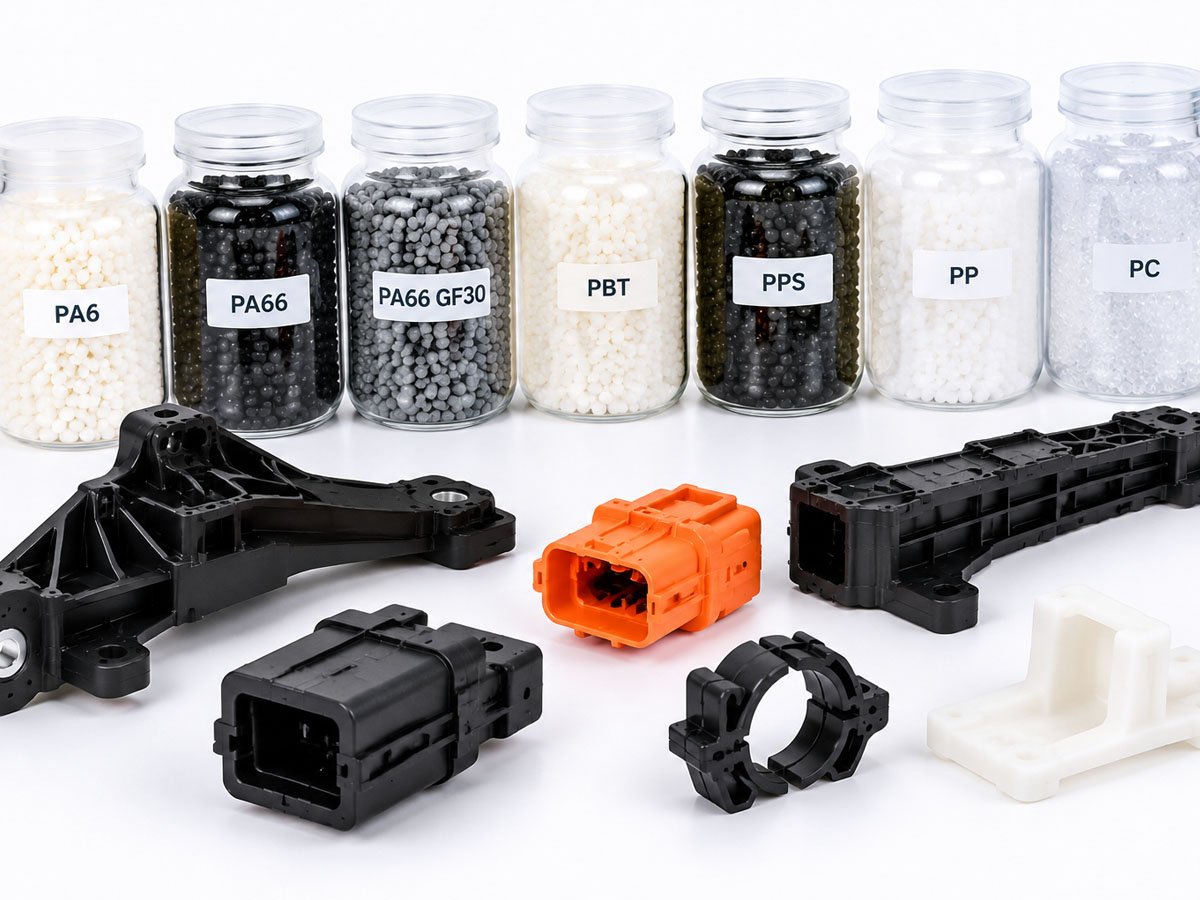
PA6
PA6 offers good mechanical strength, toughness, and wear resistance. It is suitable for components that require a balance of strength and flexibility.
Typical applications include battery cell holders, spacers, cable clips, and mounting brackets. However, PA6 absorbs moisture, which can affect its dimensions and mechanical properties. This should be considered when designing parts with tight tolerances.
PA66
PA66 generally provides higher heat resistance and stiffness than standard PA6. It is often used for battery pack components exposed to elevated temperatures or requiring greater mechanical strength.
Typical applications include structural supports, mounting parts, and selected battery module components. Its moisture absorption and dimensional changes should also be considered during material
PA66 GF30
PA66 GF30 contains approximately 30% glass fiber reinforcement. Compared with unreinforced PA66, it offers higher stiffness, strength, and dimensional stability.
It is suitable for reinforced mounting brackets, support structures, and other components requiring greater rigidity. However, glass fiber orientation during injection molding affects shrinkage, warpage, and mechanical performance. Weld lines near mounting holes or highly stressed areas also require attention during mold design
PBT
PBT offers good electrical properties, dimensional stability, and heat resistance. It is commonly used for electrical components that require reliable insulation and accurate dimensions.
Typical applications include connector housings, electrical insulation components, and selected busbar covers. Flame-retardant PBT grades are also available for applications with specific fire safety requirements.
PPS
PPS provides high heat resistance, good chemical resistance, and dimensional stability. It is suitable for components exposed to demanding thermal or chemical conditions.
Potential applications include selected electrical components and parts operating near high-temperature areas. However, PPS generally has higher material costs and more demanding processing requirements than standard engineering plastics.
PP
PP is light, low in cost, and chemically resistant, and flame-retardant and filled grades exist. It is suitable for components that do not require high stiffness or heat resistance.
Typical applications include battery spacers, protective covers, and selected low-load components.
PC and PC-ABS
PC offers good impact resistance and dimensional performance. PC-ABS combines impact resistance with good processability and is used in selected protective and electrical housings.
These materials may be considered for battery module covers, protective housings, and other components requiring impact resistance. The selected grade must meet the required operating temperature, electrical, and flame-retardant specifications.
Key Design Requirements for Custom EV Battery Pack Plastic Parts
Custom EV battery pack plastic parts must meet the electrical, thermal, mechanical, and assembly requirements of their applications.
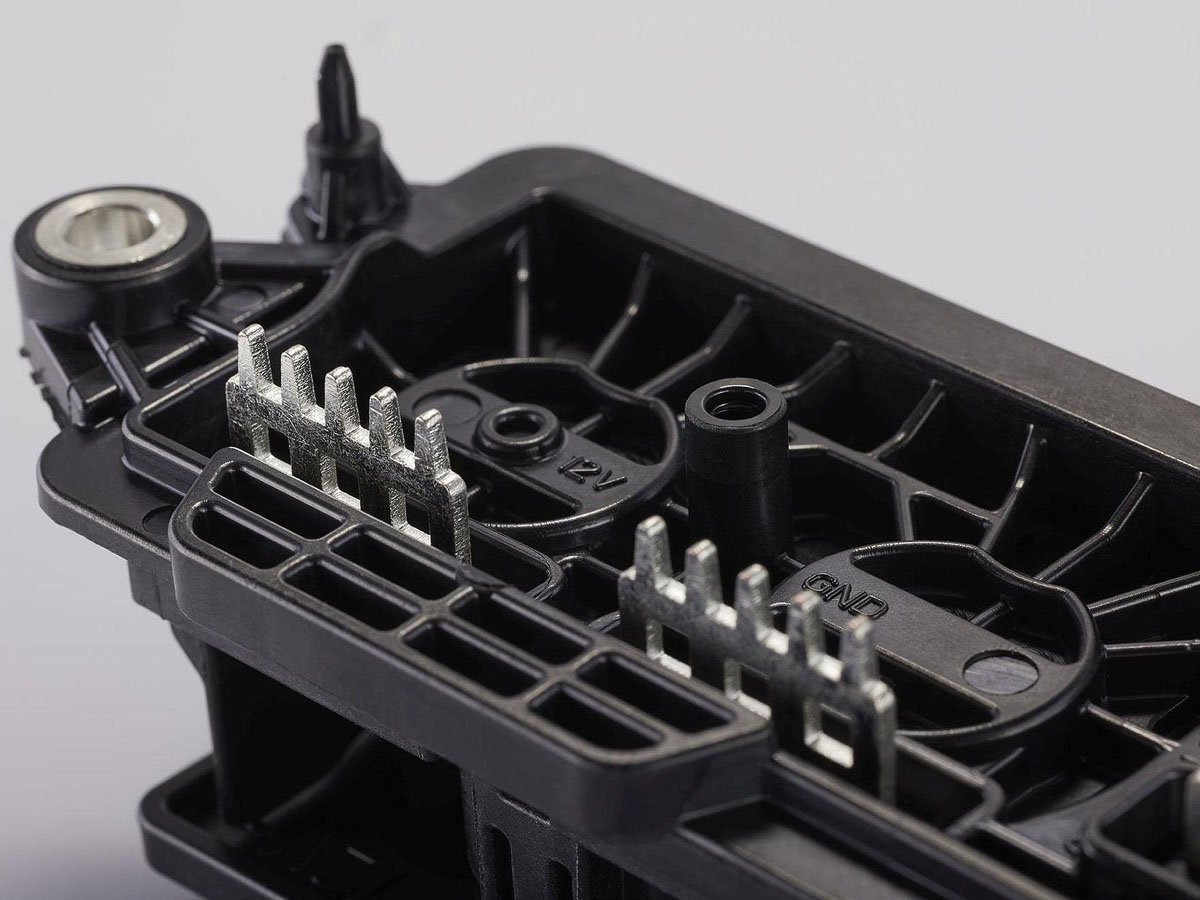
Electrical Insulation
Busbar covers, connector housings, and other components near conductive parts require suitable electrical insulation. They should consider dielectric strength, insulation resistance, creepage distance, and clearance distance. Part geometry, wall thickness, surface condition, and assembly gaps can also affect insulation performance.
Heat Resistance and Thermal Stability
Define continuous and peak temperatures in °C, including heat from cells and electrical loads. Do not treat a resin’s melting point or heat deflection temperature as its allowed continuous service temperature, and verify that it retains its properties after prolonged heat exposure.
Flame Retardancy
UL 94 V-0 is the rating most often cited for parts in and near cells. A UL 94 rating applies to a specific formulation, color, and thickness, so a grade rated at one wall thickness may not meet the requirement at another.
Dimensional Accuracy and Assembly Fit
Dimensional variation can affect cell spacing, connector alignment, fastening, and module assembly. Critical dimensions should be identified on the drawings, especially mounting holes, locating surfaces, snap-fit features, and interfaces with adjacent components. Also consider material shrinkage, fiber orientation, mold variation, and temperature-related dimensional changes.
Mechanical Strength and Vibration Resistance
Brackets, holders, and clips must maintain their function under expected mechanical loads and vehicle vibration. Wall thickness, reinforcing ribs, mounting points, and load direction all affect structural performance. For components exposed to sustained loads or repeated vibration, creep and fatigue performance should also be evaluated.
Mounting and Assembly Structures
Common structures include snap-fits, screw bosses, reinforcing ribs, and metal inserts.
- Snap-Fits: Allow assembly without separate fasteners. Their geometry must account for material flexibility and assembly requirements.
- Screw Bosses: Provide fastening points. Their dimensions and connection to surrounding ribs affect strength and molding quality.
- Reinforcing Ribs: Improve stiffness and support load distribution. Their thickness should be controlled to reduce sink marks and warpage.
- Metal Inserts: Provide stronger threaded connections when plastic threads cannot meet the required fastening load.
What to Consider When Customizing EV Battery Pack Plastic Parts
Product Function and Installation Position
Define the component’s function and installation location. A busbar cover, cell spacer, mounting bracket, and coolant connector have different performance requirements.
Understand whether the part provides insulation, positioning, mechanical support, protection, or fluid connection.
Product Dimensions and Drawing Requirements
Provide 2D drawings and 3D CAD files where available. Identify overall dimensions, critical tolerances, mounting holes, locating surfaces, and assembly interfaces.
If the part connects with existing components, provide the relevant mating dimensions or assembly information. This helps identify potential interference and clearance issues before tooling begins.
Material and Performance Requirements
Specify the required mechanical properties, operating temperature, electrical insulation performance, flame-retardant classification, and chemical resistance.
If a particular material grade or certification is required, include it in the technical specifications rather than relying on general descriptions such as high strength or heat resistance.
Structural and Assembly Requirements
Confirm whether the design uses snap-fits, screws, metal inserts, or other fastening structures. Also identify the assembly sequence and whether the component needs to be removable.
A design for manufacturing (DFM) review can help identify thin walls, uneven wall thickness, difficult mold-release areas, potential warpage, and features requiring sliders or inserts.
Actual Operating Environment
Important conditions include operating temperature, temperature cycling, vibration, moisture, chemical exposure, electrical requirements, and expected service life.
These conditions should be evaluated together. For example, a material with good heat resistance may still be unsuitable if it is incompatible with the specified coolant.
Customization Quantity and Production Requirements
Production volume affects mold design, tooling investment, cavity count, and manufacturing cost.
Prototype and low-volume projects may require a different tooling strategy from long-term mass production. Confirm annual demand, delivery schedules, inspection requirements, and traceability needs.
Conclusion
EV battery pack plastic parts require suitable materials, accurate dimensions, and reliable structural design to meet electrical, thermal, and mechanical requirements.
Flexiparts provides custom plastic part manufacturing, including material selection, DFM evaluation, mold design, and injection molding. Contact us with your drawings and requirements to discuss your EV battery plastic components and get a quotation.