Choosing the wrong plastic material for handles tends to show up later, not right away. A handle that cracked after a season outdoors, faded and turned brittle under the sun, developed stress cracks after contact with a cleaning chemical, or drove up costs because the wrong resin was specified from the start. Handles that all look like “plastic parts” from the outside can behave very differently once they’re actually in use, and the material behind that difference is usually the deciding factor.
Comparison of Four Common Materials
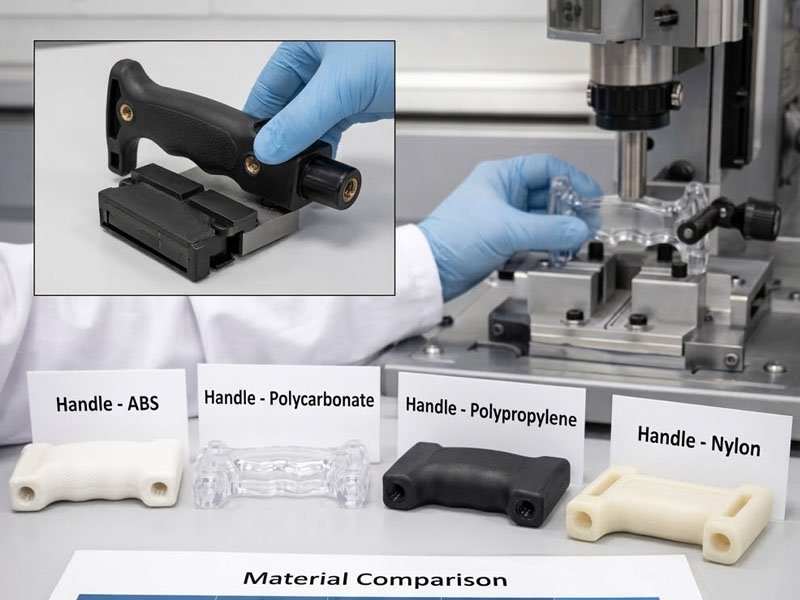
ABS, PP, nylon, and PC cover most handle applications.
| Material | Impact Resistance | Weatherability (UV) | Chemical Resistance | Relative Cost |
|---|---|---|---|---|
| ABS | Good | Poor without stabilizers | Moderate | Low-moderate |
| PP | Moderate | Poor to moderate | Strong, broad-spectrum | Low |
| Nylon (PA) | Good | Needs UV stabilization | Moderate | Moderate |
| PC | Very good | Good, especially stabilized grades | Weak against certain cleaners | Moderate-high |
ABS
ABS balances toughness, rigidity, and surface finish reasonably well, and it’s easy to mold with a consistent, attractive surface.
ABS is ideal for general-purpose handles that need to look good and withstand everyday handling—consumer products, indoor equipment, and applications where appearance matters as much as durability.
ABS yellows and becomes brittle under prolonged UV exposure without added stabilizers, and it has only moderate resistance to solvents and aggressive cleaning agents. It’s not the right default for outdoor or chemical-heavy environments.
PP (Polypropylene)
PP is lightweight, low in cost, and resists a broad range of chemicals better than the other three materials on this list.
Cost-sensitive, high-volume projects, and applications with frequent exposure to cleaning agents or chemicals, since PP holds up to a wider range of substances than ABS, nylon, or PC.
PP becomes brittle in cold temperatures, which rules it out for cold-chain or outdoor winter applications. Its rigidity is also lower than nylon’s, so it’s a weaker choice for handles under sustained heavy load.
Nylon (PA)
Nylon offers strong wear resistance, good fatigue performance under repeated flexing, and better stiffness under load than ABS or PP.
Nylon handles that get opened and closed frequently, or that carry meaningful load — nylon holds up to repeated cycling better than the other materials here. Glass-filled grades extend this further when extra rigidity is needed.
Nylon absorbs moisture, which can shift dimensions slightly over time, and it needs UV stabilization for any outdoor use, since the base resin is not inherently weather-resistant.
PC (Polycarbonate)
PC delivers the highest impact resistance of the four and holds up well in cold temperatures, along with reasonably good UV stability in stabilized grades.
Cold-storage or outdoor winter equipment, and applications where impact resistance is the priority, such as handles exposed to accidental drops or rough handling.
Despite its toughness, PC is prone to stress cracking when exposed to certain cleaning agents and disinfectants — a limitation that surprises people who assume “more impact-resistant” also means “more chemically resistant.” It’s a weaker choice for medical or food-processing environments than PP.
Choosing Plastic Materials for Handles by Application
Choosing the right plastic material for handles requires more than comparing material prices. The material needs to match the application, mechanical load, operating environment, required service life, and injection molding process.
Outdoor or sun-exposed environments. None of these four materials handles prolonged UV exposure well in its standard form. PC or nylon with a UV-stabilized formulation is the practical choice — not the base resin on its own.
Cold storage or cold-chain environments. PC maintains impact resistance in low temperatures better than the alternatives. PP is the material to avoid here, since it becomes brittle and prone to cracking in cold conditions.
Frequent opening, closing, or load-bearing use. Nylon is the strongest fit, given its wear resistance and stiffness under repeated cycling. Glass-filled nylon is worth considering when the load is higher still.
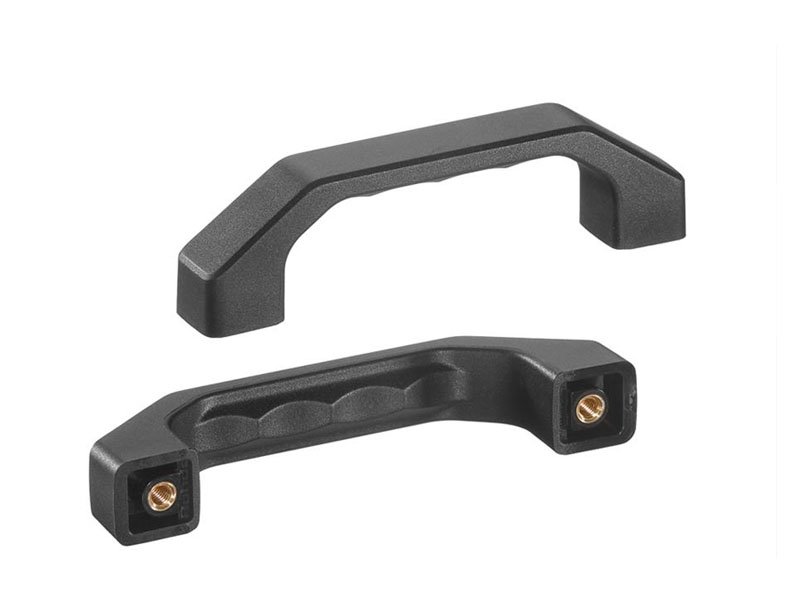
Frequent contact with chemicals or cleaning agents, as in medical or food-processing equipment. PP offers the broadest chemical resistance of the four. PC, despite its impact strength, is actually a weaker choice here due to its susceptibility to stress cracking from certain disinfectants.
Electrical insulation or proximity to live components. All four materials provide adequate electrical insulation. If flame-retardant certification such as UL94 is also required, the certification applies to a specific formulation — a standard grade can’t simply be swapped in for a certified one.
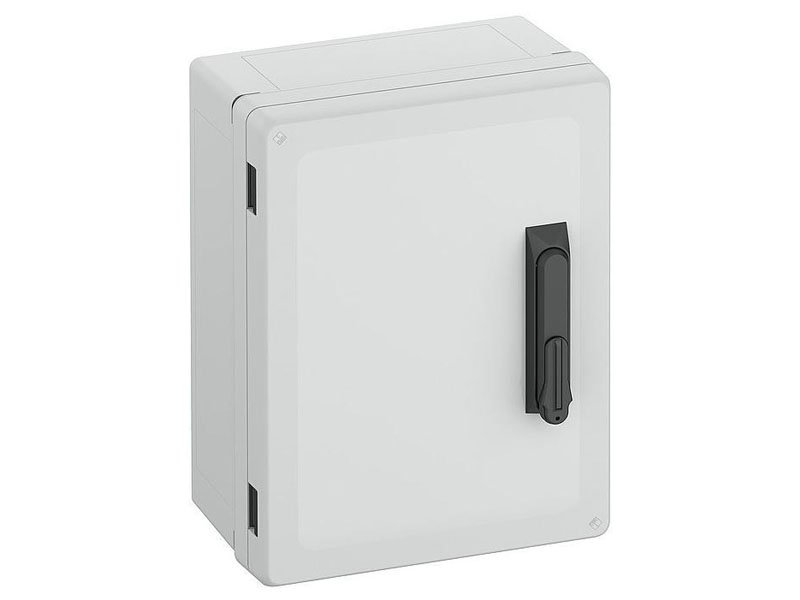
Cost-sensitive, high-volume projects. PP is typically the most economical option, combining a lower material price with lower density, which reduces cost per part even before volume discounts are factored in.
Custom Plastic Handles from Flexiparts
Matching the right plastic material for handles to the actual operating conditions is what prevents failures such as cracking, fading, chemical damage, and cost overruns. If you’re looking for a handle project with specific environmental, load, or budget requirements, welcome to contact Flexiparts, and we can help confirm the right material and come up with a custom solution for your project.