Table of Contents

Plastic Handle Types: Applications, Materials, and How to Choose

Different products have different requirements for their handles. A toolbox needs a handle that can withstand lifting and impact. An equipment enclosure may place more importance on the mounting method and available installation space. Outdoor equipment needs a handle material that can tolerate UV exposure, moisture, and temperature changes.

For this reason, choosing a plastic handle is not simply a matter of selecting a shape or appearance. The application, load, handle type, mounting method, available space, operating environment, and material all need to be considered together.

What Are the Main Plastic Handle Types?

Plastic handles are available in several configurations. Each type is designed around a different way of gripping, carrying, or pulling a product.

Pull Handles

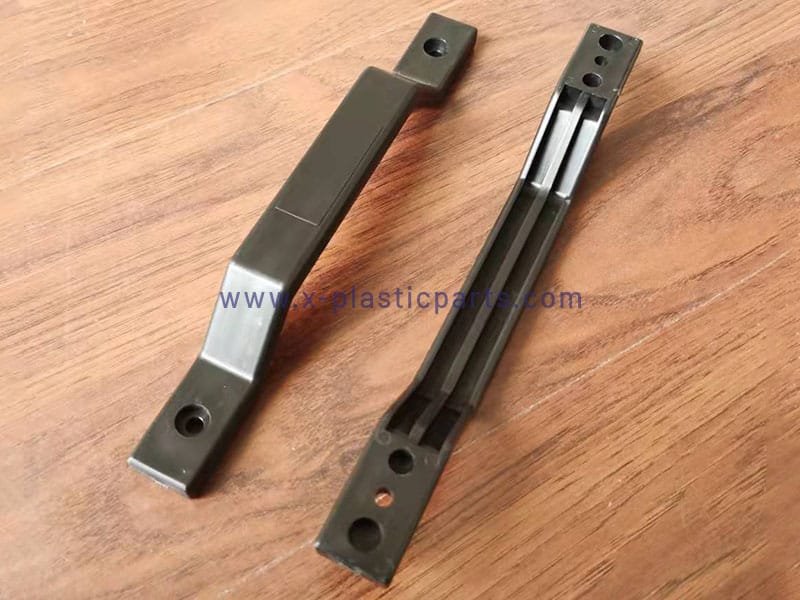
Pull handles operate by force applied in a single direction, usually perpendicular to the mounting surface, to open a door or drawer. They are common on industrial equipment, cabinets, enclosures, drawers, access panels, and cases. Load capacity depends heavily on the mounting hole layout and the clearance built in for fingers or gloved hands. Insufficient finger clearance is a common oversight, particularly in industrial settings where gloves are standard.
Plastic Pull Handle

Recessed Handles

Recessed handles sit flush within a panel rather than projecting outward. This saves exterior space and lowers the risk of snagging or impact damage. They most often appear on equipment enclosures and cabinet housings, where a flat exterior profile or protection from accidental contact matters more than grip size.

Grip Handles

Grip handles are designed around hand comfort first, typically with an ergonomic contour that follows the shape of the hand—these fit applications where a handle gets held for extended periods or used frequently throughout a shift. The shape, surface texture, diameter, and hand clearance can affect the user’s experience.

Carry Handles

Carry handles are built to lift a product or container, with the load path running mostly straight down through the handle. They are commonly found on tool cases, containers, portable equipment, and storage products. The distinction from a pull handle is in the load itself: a carry handle distributes the full weight of what it’s lifting, while a pull handle is engaging an opening or closing motion.

Integral Handles

An integral handle is molded as part of the main plastic component rather than manufactured as a separate handle. This approach can reduce the number of components and simplify assembly, and gives more design freedom to blend the handle into the product’s overall shape through curved transitions or matching contours. Integral handles are often suitable for molded plastic cases, containers, housings, and consumer products.

Folding and Pivoting Handles

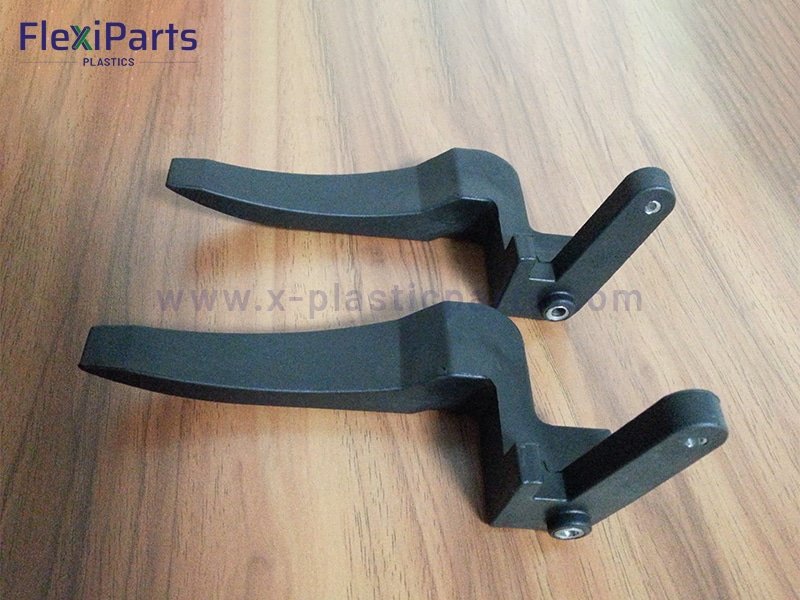
Folding or pivoting handles work for applications that need the handle to collapse for storage or shift position during use — a handle that lies flat during transport and stands up for carrying, for example. The specific mechanisms behind these designs vary by application and are worth discussing directly for a given project.
How to Choose the Right Plastic Handle Type?

Selecting from different Plastic Handle Types should start with the actual application rather than the appearance of the handle.

Consider the Load

Handles are generally grouped into light, medium, and heavy-duty categories, but load capacity isn’t determined by handle type or material alone. Mounting structure, material selection, geometry, and safety factor all interact to determine what a given handle can actually support. There’s no single number that applies across handle types — the same nominal design can carry very different loads depending on how it’s mounted and reinforced.

Consider How the Handle Is Used

Lifting, pulling, and carrying place different demands on a handle’s structure. Frequency matters just as much as the motion itself — a handle used dozens of times a day needs more attention to wear resistance and fatigue life than one used occasionally.

Consider Available Space

Exposed handle types like pull and carry handles need clearance in front of the mounting surface. Recessed handles need depth within the panel instead. Folding handles need space to lie flat when collapsed. Panel design and handle type need to be worked out together, not chosen independently.

Consider the Mounting Method

Common methods include screw mounting, snap-fit, insert molding, and integral molding. Screw mounting keeps options open later in the design process, since it’s easy to adjust. Integral and insert-molded handles typically need to be locked in early, since they’re part of the tooling decision rather than a separate assembly step.

Consider the Operating Environment

Indoor versus outdoor use, moisture exposure, chemical contact, temperature range, and UV exposure all shape which material and handle type make sense. These environmental factors feed directly into material selection, which is the next consideration.

Consider the Material

Strength, wear resistance, weatherability, and surface feel all vary by resin. Material selection deserves its own detailed discussion given how much it affects performance — the short version is that environment and load determine the shortlist, and feel or appearance narrow it from there.

Which Plastic Handle Is Right for Different Applications?

The most suitable handle type depends on how the product will be used and other considerations.

ApplicationRecommended Type(s)Key Considerations
Equipment enclosurePull / RecessedLoad capacity, mounting space
Tool caseGrip / CarryImpact resistance, repeated use
Industrial cabinetPullLoad capacity, rigidity
Consumer productErgonomic gripComfort, appearance
Outdoor equipmentPull / GripUV resistance, weatherability
Portable equipmentCarry / FoldingWeight, fatigue resistance

Conclusion

Choosing among plastic handle types comes down to weighing type, load, use pattern, mounting method, and environment together, rather than picking whichever design looks like the right fit. If your application requires a custom plastic handle, Flexiparts can help evaluate the handle type, material, mounting method, dimensions, and other requirements based on the actual product. This approach helps ensure that the final handle is designed for its intended application rather than selected only by appearance or general specifications.