What Is a Bridge Handle?
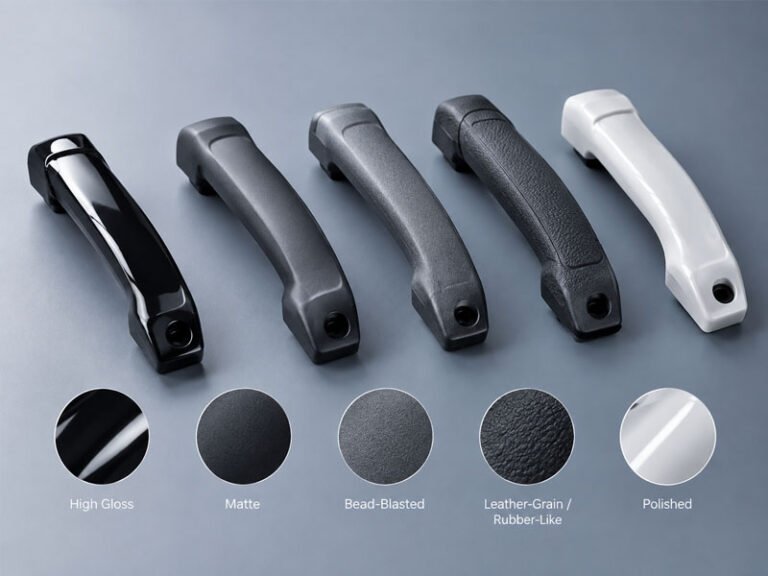
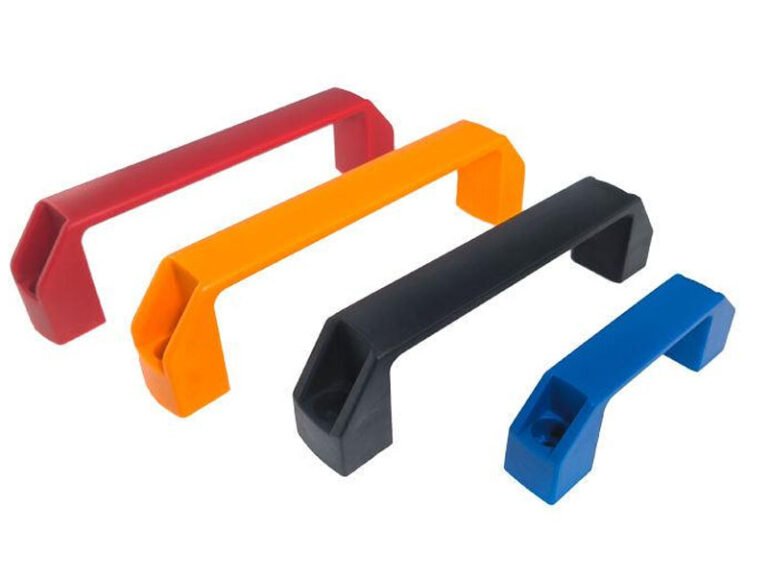
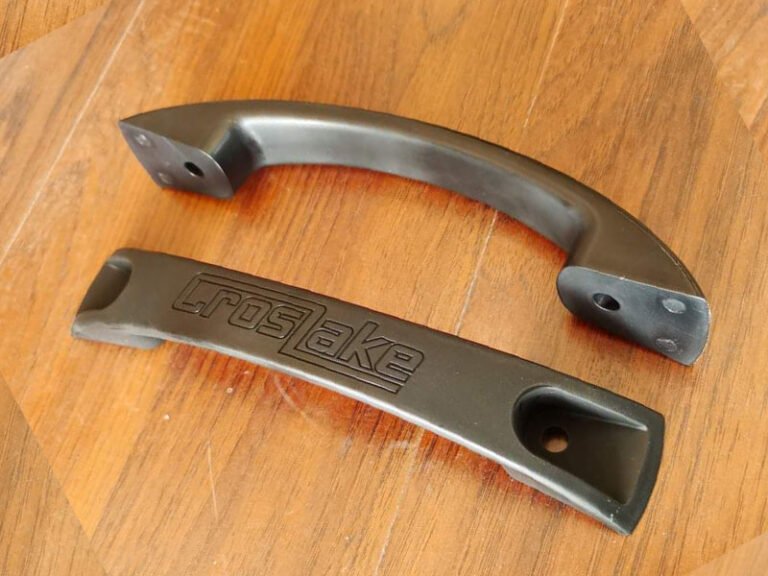
A bridge handle gets its name from its shape. The center of the handle is a raised bar, and the two ends slope down to meet the mounting surface, forming a profile that resembles a bridge. It is a pull-to-open design: a mounting hole sits at each end, and the handle is secured to a door or panel with a pair of bolts running through those holes. Bridge handles are one of several handle types that share this general pull-to-open category. A hairpin handle uses a similar raised-bar concept but with a narrower, more slender profile. A hidden, or flush, handle is designed to sit recessed into the panel surface rather than projecting outward, which matters in applications where a protruding handle could snag on something or where a flat exterior is required. Of the three, the bridge handle typically offers the largest gripping surface.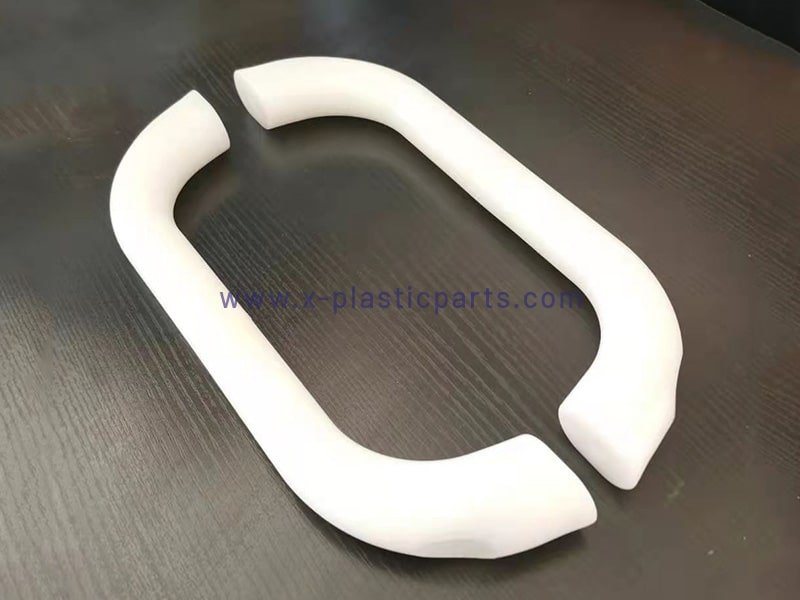
Custom Handle Solution
Key Bridge Handle Dimensions and Specifications
The correct dimensions depend on the equipment structure and how the handle will be used. A handle that fits one enclosure may not be suitable for another simply because the mounting hole pattern or required hand clearance is different.
Overall Length
Overall length is the total distance from one end of the handle to the other. Bridge handles typically range from 96mm to 800mm. For industrial equipment, the length should be selected according to the available mounting area and the required grip space. Small control boxes may use compact handles, while large cabinet doors may require longer handles.
A longer handle can provide more gripping space, but it also increases the overall footprint. Therefore, the handle should be proportionate to the door or panel rather than selected by length alone.
Width and Grip Size
The width or grip size determines how the handle feels in the user’s hand and also affects the structural design. A larger grip can provide a more substantial contact area, while a smaller grip can reduce material consumption and overall size. For a plastic Bridge Handle, grip dimensions also need to be considered together with wall thickness and internal reinforcement.
If the handle will be used frequently or subjected to higher pulling forces, the grip and mounting areas should be designed to distribute stress rather than concentrating it around a small section.
Height (Bar Projection)
Handle height is the distance between the mounting surface and the highest point of the grip. The height of the raised bar is commonly 33mm or 57mm. Greater height means more room to get a grip, but it also means more projection off the panel surface. Clearance around the enclosure should be checked before specifying a taller bar, particularly in tight installation environments.
Center-to-Center Mounting Distance
Center-to-center mounting distance is the distance between the centers of the two mounting holes. It is one of the most important dimensions when replacing an existing handle or designing a handle for a fixed panel. If the panel has already been drilled, the mounting distance must match the existing hole pattern.
For a new project, the mounting distance should be established before the handle geometry is finalized. The position of nearby components, panel edges, reinforcing structures, and internal components should also be checked.
Thread and Bore Size
Bridge Handles can use different mounting methods, including through holes, threaded holes, screws, and threaded inserts.
For plastic handles, molded-in metal inserts can be used when repeated assembly or higher fastening strength is required. They reduce the risk of thread damage in the plastic and can provide more consistent fastening performance.
Material Selection for Industrial Use
Bridge handles are typically made from steel, aluminum, or plastic, and each material fits a different set of conditions.
- Steel bridge handle offers the highest strength and wear resistance, which makes it a reasonable choice for high-frequency use or applications with a safety interlock requirement. It is also the heaviest and generally the most expensive of the three.
- Aluminum bridge handle is lighter and holds up well against corrosion, making it a common middle-ground option for moderate-load applications.
- Plastic bridge handle, typically an engineering-grade resin like nylon (PA), ABS, or POM, is the lightest of the three, offers strong electrical insulation, and can be molded as a single piece rather than assembled from multiple components.
When to Choose the Plastic Bridge Handle?
A plastic bridge handle is the better choice in several specific situations that come up often in industrial equipment.
Electrical insulation requirements. Panels near live electrical components benefit from a handle that does not conduct electricity. A plastic bridge handle removes that risk entirely, where a metal one would not.
Weight-sensitive equipment. Portable instruments and mobile enclosures accumulate weight from every metal component. A plastic handle weighs a fraction of what a comparable steel or aluminum part does.
Color matching or branding needs. Engineering resins can be colored during the molding process itself, so matching a handle to an enclosure’s finish doesn’t require a separate coating step the way a metal handle usually does.
Moderate use, non-extreme environments. For applications that don’t involve constant high-frequency operation, strong chemical exposure, or very high temperatures, plastic holds up fine and typically costs less than a metal equivalent.
Custom sizing at volume. Projects that need non-standard lengths or bolt spacing, and that will be produced in meaningful quantities, generally see a bigger per-unit cost advantage from injection molding than from custom metal fabrication.
Applications of Bridge Handles
Bridge handles show up across a range of industrial equipment, and the sizing and material decisions above play out differently depending on where the handle is being used.
Enclosures and electrical cabinets. These get opened frequently for inspection and maintenance. A bridge handle’s larger grip surface works well with gloved hands, and a plastic bridge handle adds a margin of electrical safety near live components.
Control panels. Panel space is often tight, so shorter, narrower handles are more common here. Bolt spacing needs to match the panel’s mounting layout, whether the panel itself is metal or plastic.
Server and industrial racks. Rack doors tend to be heavier and see frequent operation, which pushes the choice toward longer handles or metal construction for long-term durability.
Portable equipment enclosures. Weight matters more here than almost anywhere else, which is where plastic bridge handles are used most consistently.
Outdoor or humid environment enclosures. Corrosion resistance becomes the deciding factor. Aluminum or an engineering-grade plastic generally outperforms uncoated steel in these conditions.
Furniture and cabinetry applications — kitchens, closets, and similar residential settings — tend to prioritize appearance and finish over the durability and safety considerations that drive industrial specification. The handle shape may be the same, but the selection criteria are not.
Custom Bridge Handles: From Drawing to Production
Standard handles are not always suitable for industrial equipment. When a project needs a length, bolt spacing, or thread size outside the common ranges, or when material selection points toward a specific resin for insulation or weight reasons, a custom part is usually the more reliable path.
The process generally moves through four stages.
- It starts with a design and drawing review, where the customer provides a panel drawing or mounting hole layout, along with any non-standard dimensions and material preferences.
- Next comes material and process guidance, where we recommend a resin based on the application’s requirements — insulation, weight, or corrosion resistance — and, for plastic parts, begin evaluating what the mold development will involve.
- That’s followed by sample production, a small trial run to confirm dimensions, mounting fit, and color match before committing to volume.
- Once the sample checks out, the project moves to full production, where the per-unit cost advantage of molded plastic parts becomes more apparent at scale.
Conclusion
The handle is a small part of the enclosure, but getting it wrong will cause issues. Treating panel geometry and operating environment as the starting point, rather than an afterthought, is what keeps a bridge handle from becoming a late-stage headache on an otherwise finished design.
If your project needs a custom bridge handle, or you’re deciding between a metal and plastic bridge handle for a specific application, send over your panel drawing and mounting requirements, and we can walk through material recommendations and sample pricing.
FAQ
It depends on the material, handle design, mounting method, and panel structure. Metal handles generally handle higher loads than plastic ones, and wider, thicker profiles hold up better than narrow ones.
Yes. A plastic Bridge Handle can be used outdoors if the material has suitable UV, temperature, moisture, and weather resistance. UV-stabilized materials are recommended for long-term outdoor exposure.
Yes. The overall length, center-to-center mounting distance, grip height, bore size, and other dimensions can be customized according to your drawing or specifications.
Common thread sizes include metric threads such as M4, M5, M6, and M8, as well as imperial threads such as #8-32 and 1/4-20. To confirm compatibility, check the thread type, diameter, pitch, mounting hole size, and screw length of both the handle and the mating component.