Washers are small components used in many mechanical assemblies, but among different types of washers, choosing the wrong type can affect load distribution, sealing, electrical insulation, and assembly stability. The right washer depends on its structure, material, dimensions, and operating environment. This guide explains 12 common types of washers, compares rubber washers with plastic washers, and provides practical tips for selecting the right washer material and size.
What Is a Washer?
A washer is a component with a central hole, usually installed between a fastener and the surface of a workpiece. Depending on its design, a washer can distribute fastening loads, protect contact surfaces, provide sealing, maintain spacing, or improve electrical insulation.
Different washer types serve different purposes. A flat washer mainly distributes loads, while a spring washer provides elastic force. A sealing washer helps prevent fluid or moisture leakage, and a shoulder washer can provide positioning or electrical insulation.
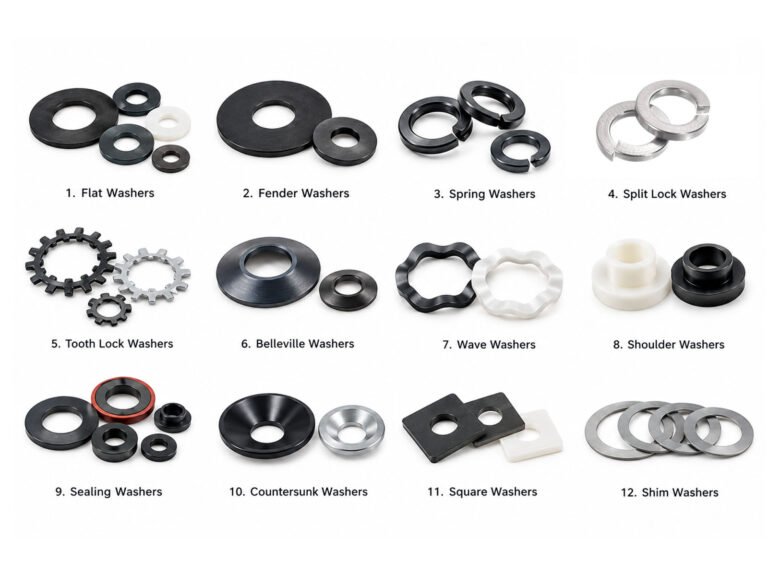
12 Common Types of Washers and Their Uses
1. Flat Washers
Flat washers are flat rings with a central hole. They distribute the load from a bolt or nut over a larger contact area and help protect the workpiece surface from damage during tightening.
Flat washers are commonly used in general mechanical assemblies, equipment housings, brackets, and plastic components. They are a practical choice when a larger bearing surface is needed without adding a specialized locking or sealing function.
2. Fender Washers
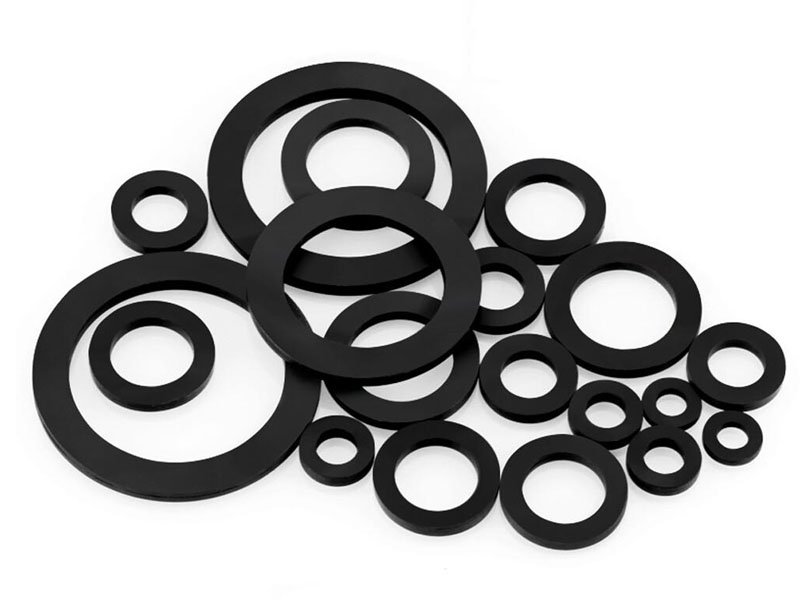
Fender washers have a larger outer diameter than standard flat washers. Their wide contact area helps distribute loads across thin materials or around oversized mounting holes, reducing local stress and the risk of surface damage.
Typical applications include sheet metal, plastic panels, automotive body components, and lightweight structures. They are useful when a standard washer does not provide enough surface coverage.
3. Spring Washers
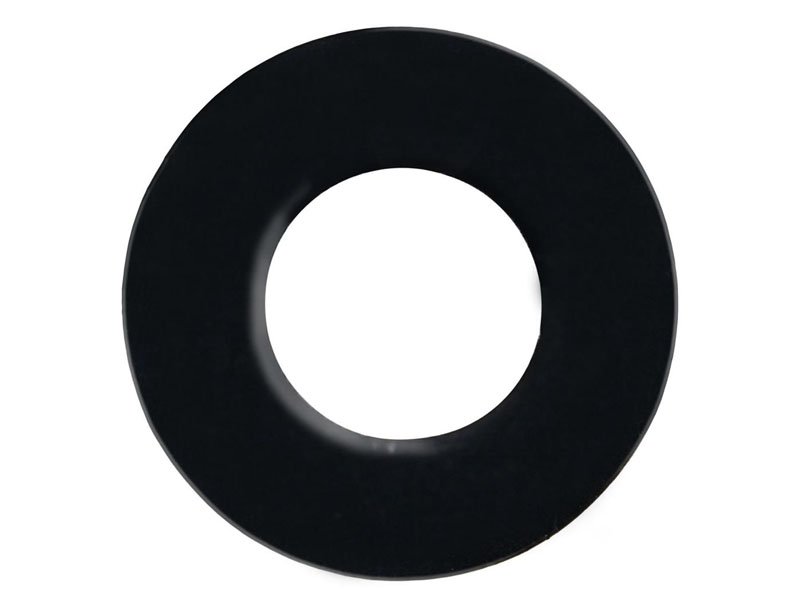
Spring washers are designed to deform elastically under axial load. Their shape allows them to generate a spring force, which can accommodate certain small movements or changes in the assembled components.
They are used in selected mechanical assemblies that require elastic compensation. The appropriate design depends on the required load and deflection. A spring washer should not automatically be considered an effective solution for preventing loosening under severe vibration.
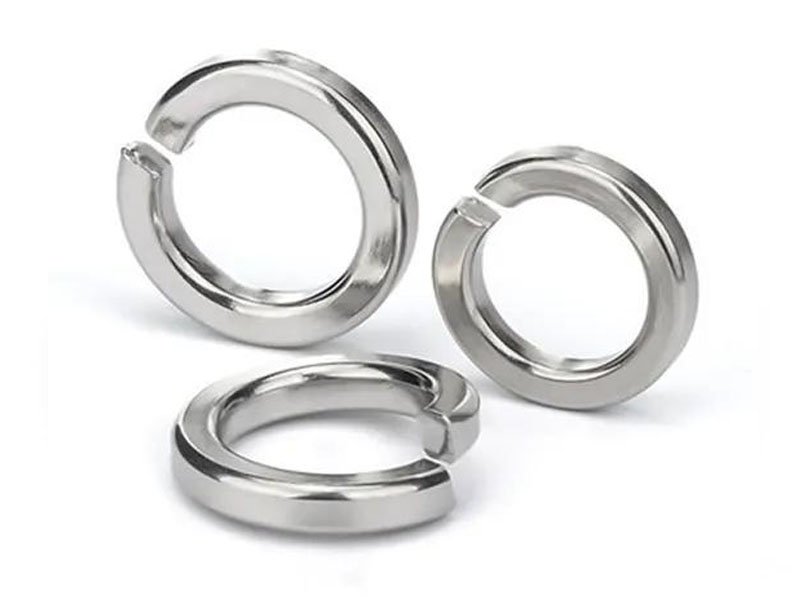
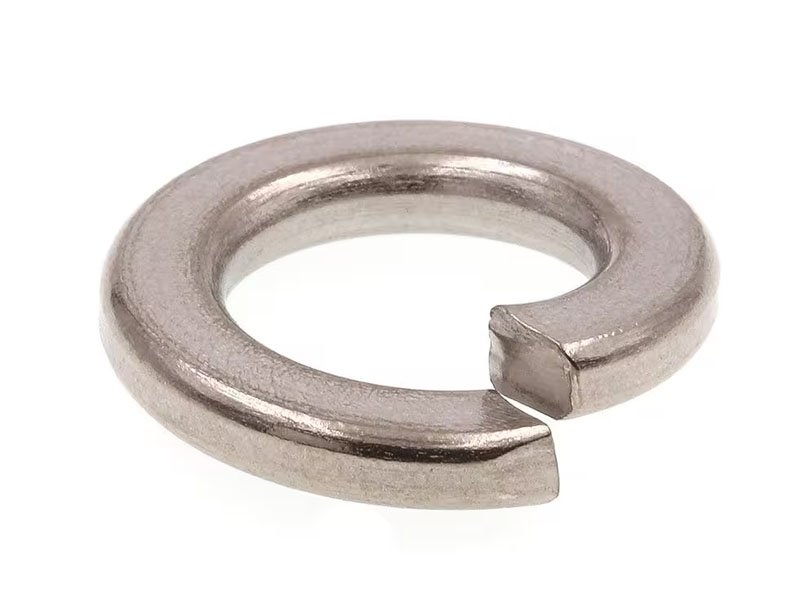
4. Split Lock Washers
Split lock washers have a split ring with slightly offset ends. When installed, they generate an elastic reaction force and may create localized contact at the washer edges.
They are used in some general fastening applications. However, their ability to prevent loosening under vibration is limited and depends on the joint design and installation conditions. For critical connections, engineers should evaluate the complete fastening system rather than rely on a split lock washer alone.
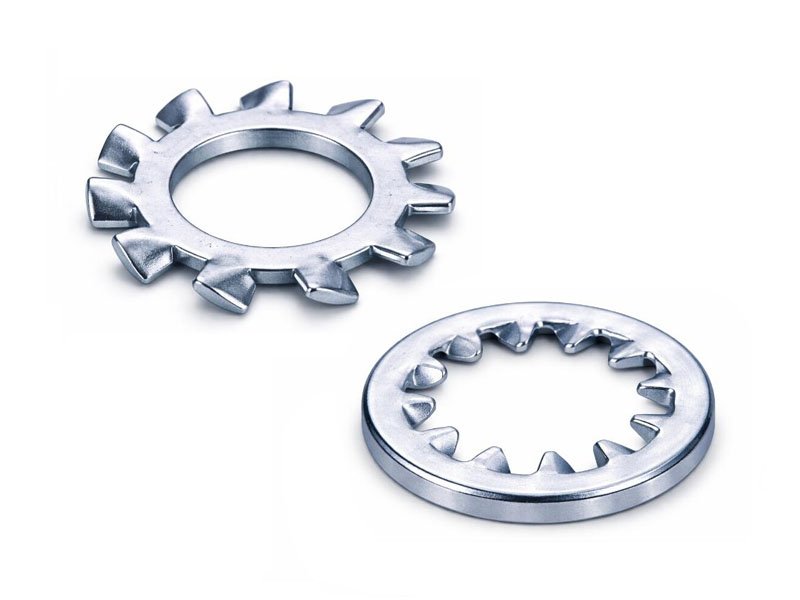
5. Tooth Lock Washers
Tooth lock washers have teeth extending inward, outward, or in both directions. During tightening, the teeth grip the adjacent surfaces and increase resistance to relative movement.
These washers are used in selected equipment panels, brackets, and electrical assemblies. When used in electrical grounding connections, the washer must meet the relevant electrical requirements, and the effects of coatings and surface conditions should be considered.
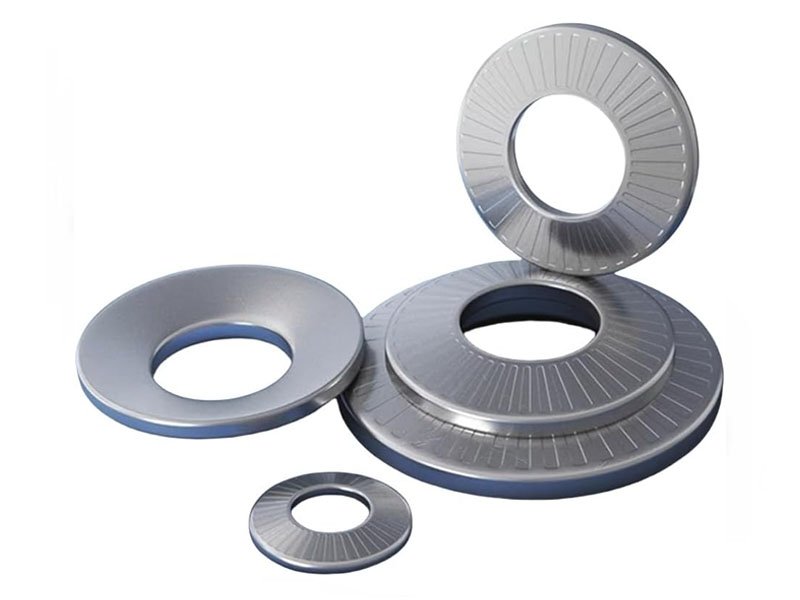
6. Belleville Washers
Belleville washers, also called disc spring washers, have a conical shape. Under axial compression, they generate a spring force within a relatively small installation space.
They are suitable for assemblies that need controlled preload or compensation for dimensional changes. Common applications include flange connections, shaft assemblies, and precision mechanical equipment. Their load-deflection characteristics must match the requirements of the application.
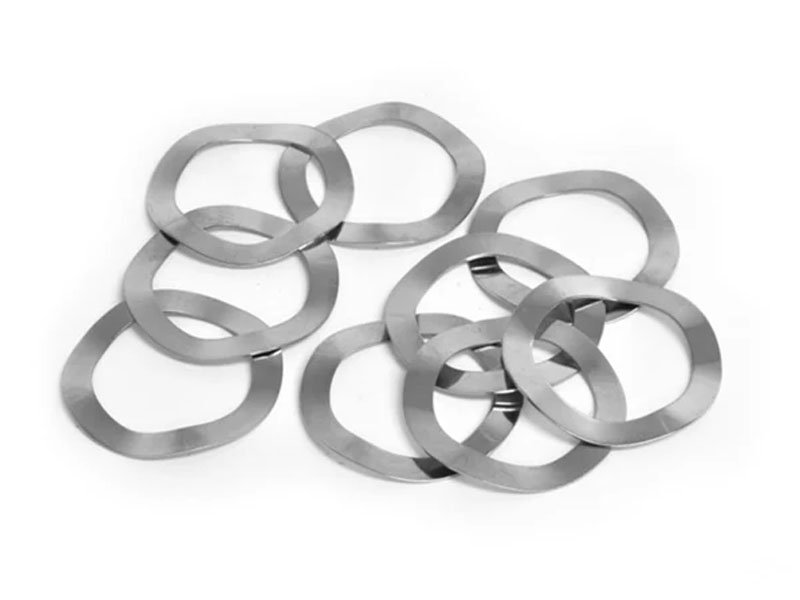
7. Wave Washers
Wave washers have a wavy profile that allows them to compress and provide axial spring force. They are useful when a component needs some elastic movement but has limited installation space.
Typical applications include small motors, bearing assemblies, and rotating mechanisms. Compared with flat washers, wave washers provide more axial compliance, but their load capacity and working range depend on their geometry and material.
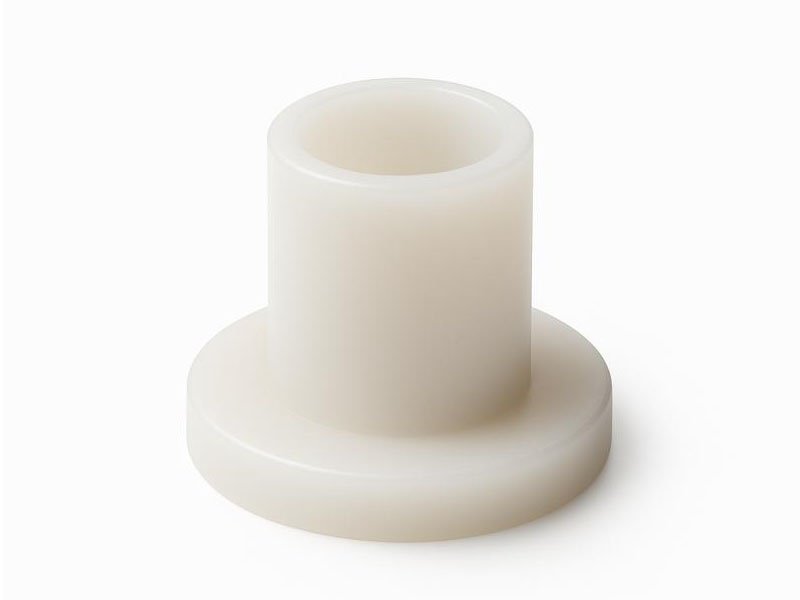
8. Shoulder Washers
Shoulder washers have a raised cylindrical section around the central hole. This shoulder can locate a component, separate a fastener from the hole wall, or prevent direct contact between different materials.
Plastic shoulder washers are commonly used in electronic equipment, circuit board assemblies, metal housings, and other applications requiring electrical insulation. Their dimensions must match the mounting hole and the component being located.
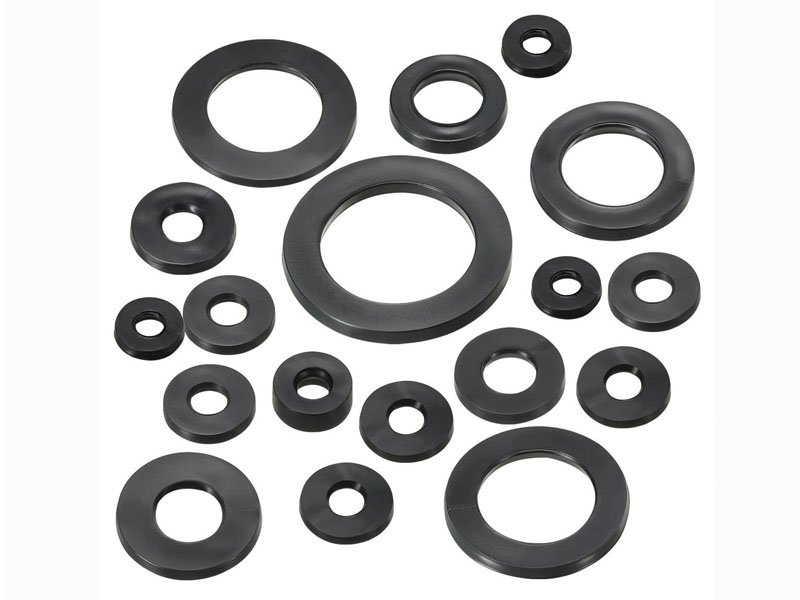
9. Sealing Washers
Sealing washers help prevent water, oil, dust, or other substances from passing through a fastening point. They may be made from rubber or designed as a combination of metal and an elastomer.
Applications include pipe connections, outdoor electrical enclosures, machinery housings, and liquid-handling equipment. Sealing performance depends on material compatibility, compression, surface finish, pressure, and temperature. A washer that seals water effectively may not be suitable for oil or chemical exposure.
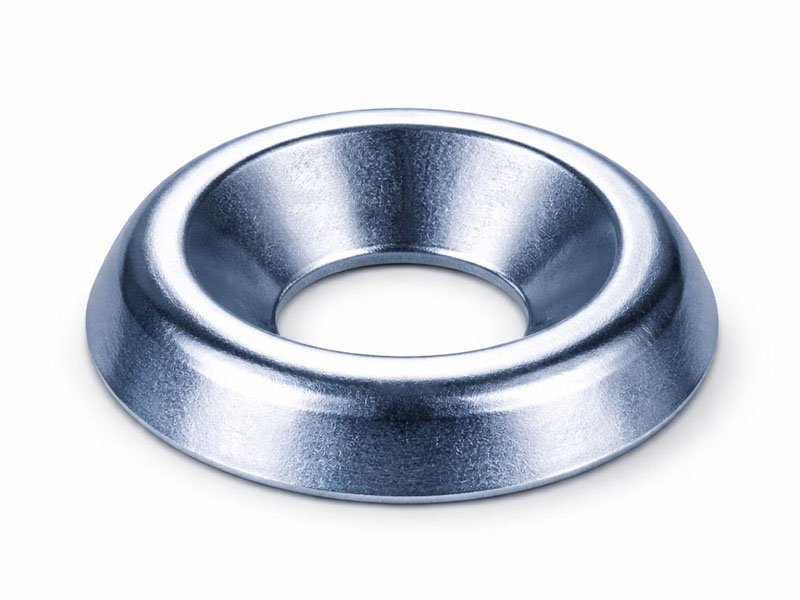
10. Countersunk Washers
Countersunk washers have a tapered recess designed to accommodate a compatible countersunk fastener. They help position the fastener correctly and can provide a more suitable bearing surface for certain installations.
They are used in equipment panels, cabinets, furniture, and assemblies where protruding fastener heads must be minimized. The washer angle must match the fastener geometry to achieve proper seating.
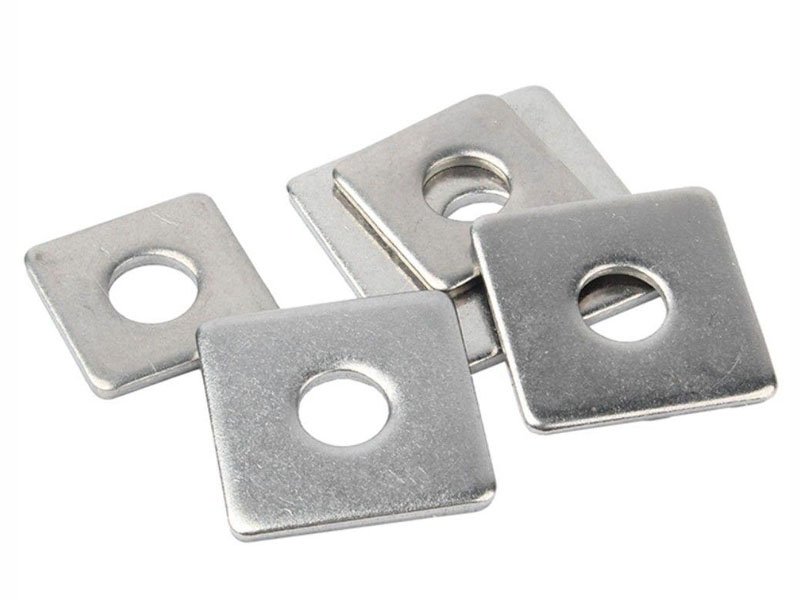
11. Square Washers
Square washers have a square outer profile and a central hole. Their shape provides a different contact area from a circular washer and can be useful in assemblies with slots or square mounting regions.
Common applications include timber structures, construction connections, and selected mechanical assemblies. The washer dimensions and material should be chosen according to the applied load and the properties of the supporting surface.
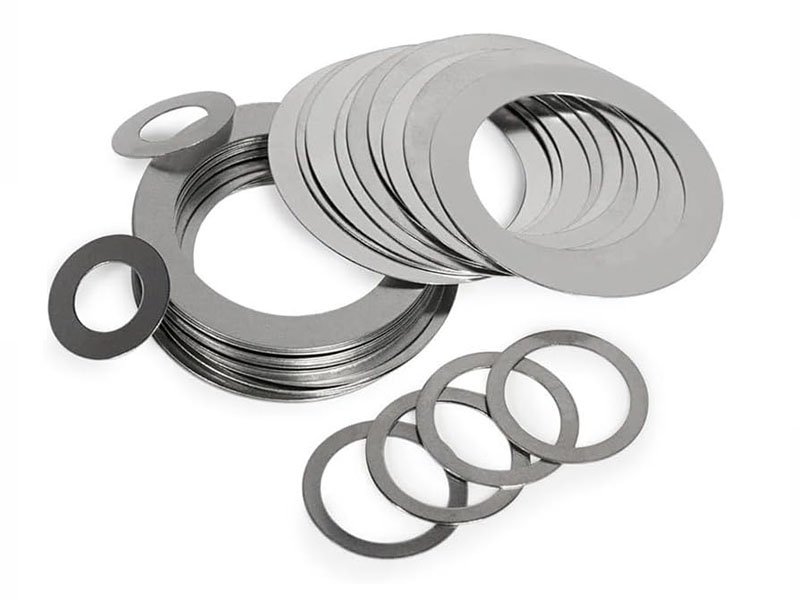
12. Shim Washers
Shim washers are thin components used to adjust spacing, axial position, or assembly height. Their thickness is often selected to achieve a specified clearance or alignment rather than to provide spring force or sealing.
They are commonly used in bearings, gears, shafts, fixtures, and precision machinery. Thickness tolerance is particularly important because small dimensional differences can affect the final assembly position.
Rubber Washers vs. Plastic Washers
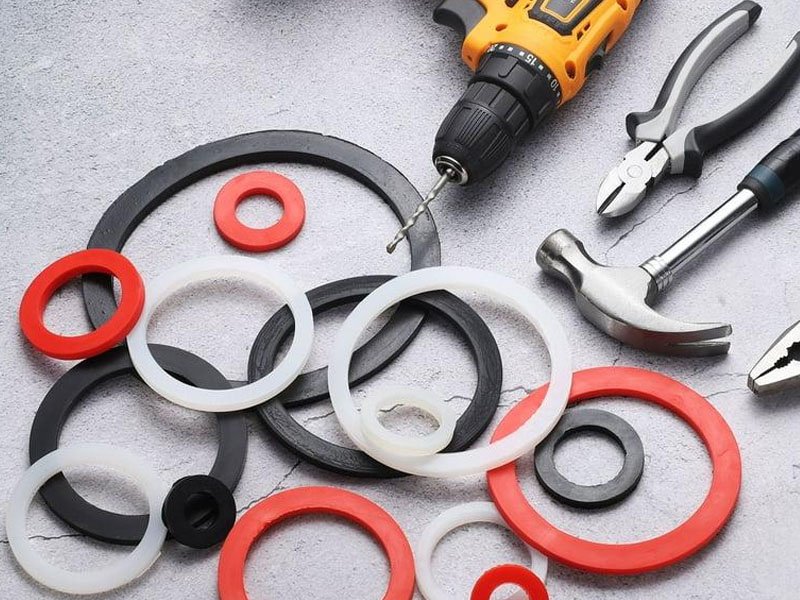
Rubber washers and plastic washers are both used in custom assemblies, but they have different mechanical properties and functional advantages.
| Performance Factor | Rubber Washers | Plastic Washers |
|---|---|---|
| Flexibility | High flexibility, good recovery | More rigid, keeps shape better |
| Sealing Performance | Excellent sealing under compression | Limited sealing ability |
| Vibration Isolation | Good vibration and shock absorption | Limited damping performance |
| Electrical Insulation | Good insulation depending on material | Excellent insulation in many grades |
| Load Bearing Capacity | More deformation under load | Higher stiffness and load support |
| Temperature Resistance | Depends on rubber type | Depends on polymer type |
| Chemical Resistance | Material-dependent (NBR, EPDM, FKM, etc.) | Some plastics offer high chemical resistance |
| Dimensional Stability | More affected by compression and swelling | Better dimensional stability |
| Common Applications | Sealing, pumps, valves, vibration isolation | Insulation, spacers, mechanical support |
In general, rubber washers are preferred when sealing, flexibility, and vibration absorption are the main requirements, while plastic washers are more suitable when electrical insulation, dimensional stability, lightweight design, or chemical resistance is required.
How to Choose the Right Washer Material and Size
Selecting the right washer requires more than matching its hole to a bolt. The dimensions and material must suit the fastening method, contact surfaces, applied load, and operating environment.
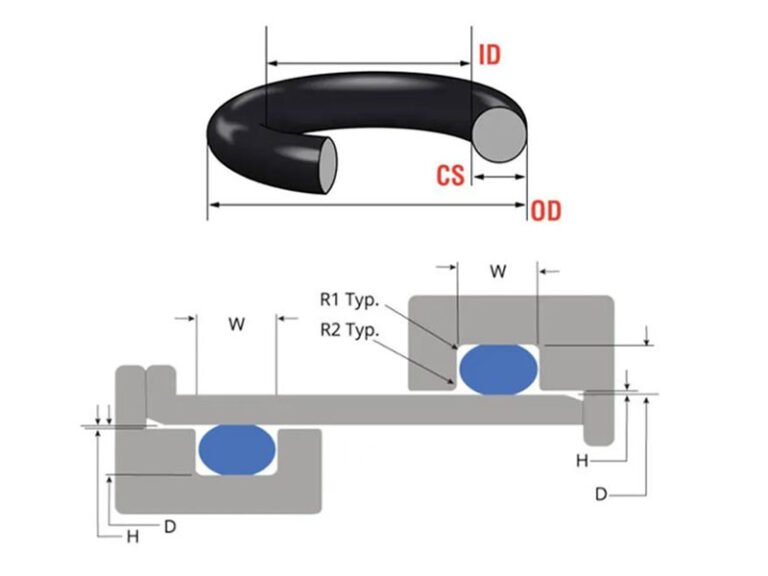
Inner Diameter (ID)
The inner diameter must accommodate the bolt, screw, or locating feature. A hole that is too small can prevent installation, while excessive clearance may affect positioning or the intended contact area.
Outer Diameter (OD)
The outer diameter determines how much surface area the washer covers. You may need a larger diameter for thin panels, soft materials, or oversized mounting holes. Check that the washer does not interfere with nearby features.
Thickness
Thickness affects load distribution, stiffness, installation height, and available compression. For rubber washers, consider the initial thickness and the compression required to achieve sealing. For shim washers, thickness tolerance may be a critical specification.
Material and Hardness
Select the material according to the required mechanical properties and operating conditions. Rubber hardness affects deformation and contact pressure, while plastic stiffness, moisture absorption, and temperature resistance vary by polymer grade.
Compression and Operating Environment
For sealing washers, define the required compression and confirm that the material can maintain its performance under the expected pressure, temperature, and chemical exposure. Also consider outdoor weathering, service life, and sustained loading.
When Do You Need Custom Rubber or Plastic Washers?
Standard washers are suitable for many general applications, but they may not meet every design requirement. Custom washers may be necessary when a component has non-standard dimensions, a special outer profile, limited installation space, or specific sealing and insulation requirements.
For a custom washer project, provide a drawing with critical dimensions and tolerances, the material requirements, the expected load, the operating temperature, and any contact with oils, water, or chemicals. If the washer provides sealing, also specify the pressure and required sealing conditions.
Conclusion
Choosing the right washer requires consideration of its function, structure, material, dimensions, and operating environment. Different types and materials of washers serve different purposes. When standard products cannot meet the required dimensions or performance, custom rubber or plastic washers may provide a more suitable solution.
Flexiparts can develop custom rubber washers for specific hardness, compression, and environmental conditions. Custom plastic washers can be designed to meet dimensional, positioning, insulation, and chemical-resistance requirements.