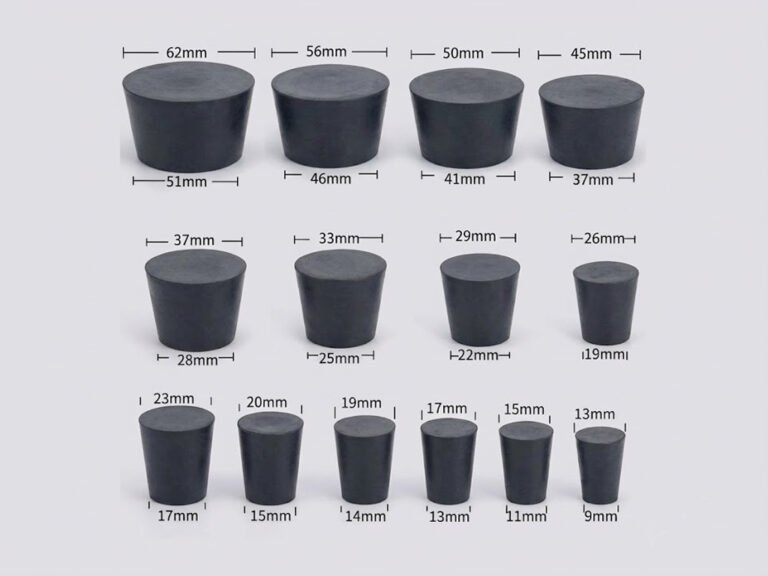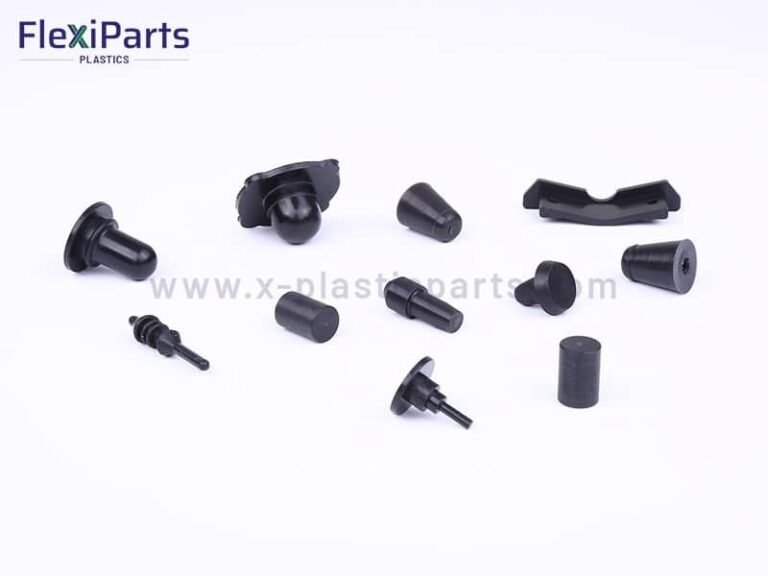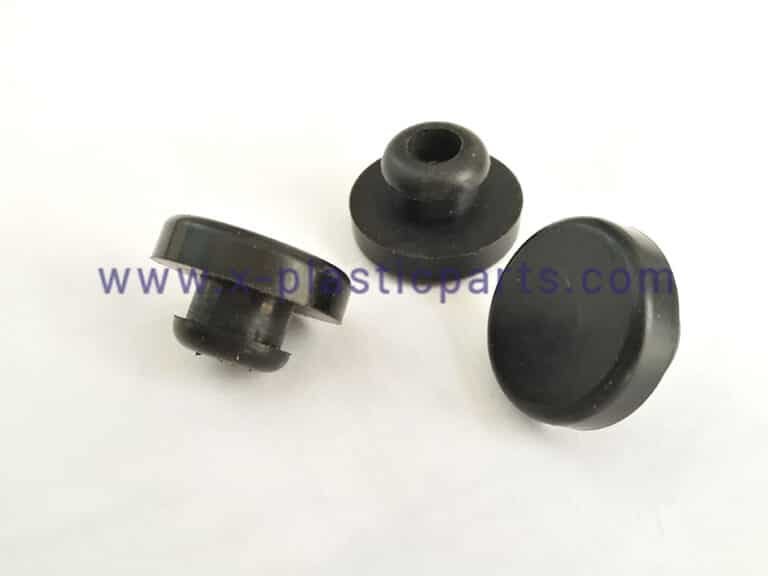
A laboratory rubber stopper is used to seal test tubes, flasks, bottles, culture vessels, and other laboratory containers. Different laboratory procedures require different sealing solutions. A stopper used for general sample storage may not be suitable for a heated chemical reaction, an anaerobic culture, repeated syringe access, or an autoclave cycle. Selecting the correct laboratory rubber stopper requires a clear understanding of the application and the conditions under which the stopper will be used.
What Is a Laboratory Rubber Stopper?
A laboratory rubber stopper is an elastic sealing part designed to close the opening of laboratory containers. Unlike ordinary plugs, laboratory stoppers are manufactured with controlled dimensions, suitable hardness, and specific material properties to meet laboratory requirements.
The primary function of a laboratory rubber stopper is to create a secure seal between the stopper and the container opening. The elasticity of rubber allows the stopper to compress slightly during installation, forming contact pressure against the inner wall of the container.
Types of Laboratory Rubber Stoppers
Laboratory rubber stoppers can be classified according to their intended laboratory use rather than only their physical shape. Different applications require different sealing structures and material properties.
Sample Storage Rubber Stoppers
Sample storage rubber stoppers are used to seal containers that hold laboratory samples, reagents, or test materials. Their main purpose is to reduce exposure to air, moisture, and contaminants. These stoppers are commonly selected based on low permeability, long-term sealing stability, and compatibility with stored substances. For sensitive samples, the rubber material must maintain stable performance during extended storage without compromising sample quality.
Chemical Reaction Rubber Stoppers
Chemical reaction rubber stoppers are designed for laboratory setups involving chemical reactions, gas generation, or controlled pressure conditions. They may include one or multiple openings for connecting gas tubes, measuring devices, and feeding systems.
The material should be resistant to acids, solvents, or reactive chemicals that can cause rubber swelling, cracking, or loss of sealing performance if the wrong material is used.
Sterile Laboratory Rubber Stoppers
Sterile laboratory rubber stoppers are commonly used in medical, biological, and pharmaceutical environments where contamination control is required. These applications usually require resistance to repeated sterilization, low extractable properties, and stable physical performance.
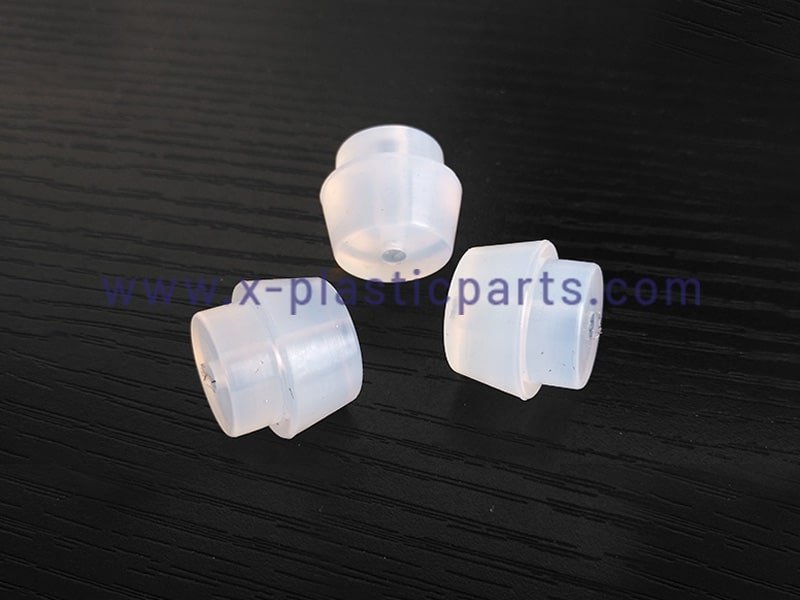
Silicone rubber is frequently selected for these applications because it can maintain flexibility under high-temperature sterilization conditions.
Customized Multi-Hole Rubber Stoppers
Some laboratory equipment requires customized stopper structures instead of standard designs. Multi-hole rubber stoppers allow different instruments or tubes to pass through the same sealing component. Customization options may include hole quantity, hole diameter, stopper dimensions, rubber hardness, and special shapes.
These designs are commonly used in research equipment, testing systems, and laboratory devices with specific connection requirements.
Material Selection Guide for Laboratory Rubber Stoppers
The material of a laboratory rubber stopper directly affects chemical compatibility, temperature resistance, durability, and sealing performance. The material should be selected according to the requirements of the application.
| Material | Main characteristics | Typical laboratory uses | Important limitations |
|---|---|---|---|
| Natural rubber | Good elasticity and flexibility | General closure, teaching laboratories, short-term storage | May have limited resistance to some solvents, oxidizers, and long-term aging |
| Silicone rubber | Wide temperature capability and good flexibility | Heated procedures, probes, biological work, sterilization-related applications | Gas permeability and solvent compatibility should be checked |
| Butyl rubber | Low permeability to air, gases, and moisture | Anaerobic culture, oxygen-sensitive samples, gas-purging systems | May not be suitable for every solvent or temperature condition |
| Bromobutyl rubber | Strong gas barrier properties and suitability for controlled environments | Anaerobic storage, gas-sensitive samples, repeated syringe access | Specific compound and sterilization data must be confirmed |
| Nitrile rubber | Good resistance to many oils and selected non-polar materials | Equipment connections and applications involving oily substances | Performance varies with solvent, temperature, and formulation |
| Neoprene rubber | Balanced flexibility, weather resistance, and chemical resistance | General chemical equipment and environmental applications | Compatibility depends on the exact chemical and compound |
| Fluorocarbon rubber | High resistance to many aggressive chemicals and elevated temperatures | Specialized chemical applications | Higher cost and possible limitations at low temperatures |
| PTFE-lined or composite structures | Low reactivity and low contamination potential | Strong chemicals and high-purity laboratory work | Reduced flexibility, more complex manufacturing, and higher cost |
Key Factors When Choosing Laboratory Rubber Stoppers
Chemical Compatibility
Chemical compatibility is one of the most important considerations when selecting a laboratory rubber stopper. Different chemicals can affect rubber materials in different ways. Exposure to incompatible substances may cause swelling, hardening, cracking, and loss of sealing ability
Identify every substance that may contact the stopper, including the main sample, cleaning agents, sterilants, and vapors. Compatibility should be evaluated for both short-term contact and long-term exposure, and choose a rubber compound with suitable resistance.
Temperature Resistance
Laboratory processes may involve heating, cooling, or sterilization. The rubber stopper must maintain its physical properties within the required temperature range. Choosing the correct material helps prevent deformation and premature failure during operation.
Sterilization Requirements
Determine whether the stopper will be disposable, reusable, autoclaved, chemically sterilized, or exposed to another treatment. Repeated sterilization may affect dimensions, hardness, and compression recovery. The selected rubber material should maintain elasticity and sealing performance after repeated sterilization cycles.
Container Dimensions
The stopper must match the opening diameter, shape, taper, and insertion depth of the container. A loose stopper may leak or fall out. An oversized stopper may be difficult to insert and may place excessive stress on glassware.
Common Applications
Laboratory rubber stoppers are used in several areas of laboratory work:
- Chemical Reactions: sealing reaction flasks while supporting thermometers, tubes, or condensers.
- Gas Collection: connecting a reaction vessel to a gas line or collection container.
- Fermentation: closing culture vessels while allowing controlled gas release.
- Sample Storage: reducing evaporation, contamination, and exposure to ambient air.
- Temperature Measurement: holding probes in a closed or partially closed vessel.
- Vacuum Procedures: supporting sealing in systems operating below atmospheric pressure.
- Biological Research: maintaining controlled conditions for cultures and samples.
- Teaching Laboratories: supporting basic experiments involving heating, gas production, and liquid handling.
Flexiparts Custom Laboratory Rubber Stopper Solutions
Standard laboratory rubber stoppers may not suit every container or experimental system. Non-standard neck dimensions, special tube diameters, multiple ports, unusual temperature ranges, and specific sterilization processes may require a custom design.
Flexiparts provides custom solutions for applications that require adjustments to stopper dimensions, hole configuration, material, hardness, or interface design. The development process should begin with practical application data, including:
- Container opening dimensions and shape.
- Inserted tube, probe, or sensor dimensions.
- Contact chemicals and sample type.
- Operating temperature and pressure.
- Cleaning and sterilization method.
- Required service life and expected number of uses.
- Required quantity and dimensional tolerances.
For custom laboratory rubber stopper requirements, customers should provide container drawings, sample dimensions, operating conditions, and material requirements. These details allow the stopper structure and compound to be assessed before a production specification is confirmed.