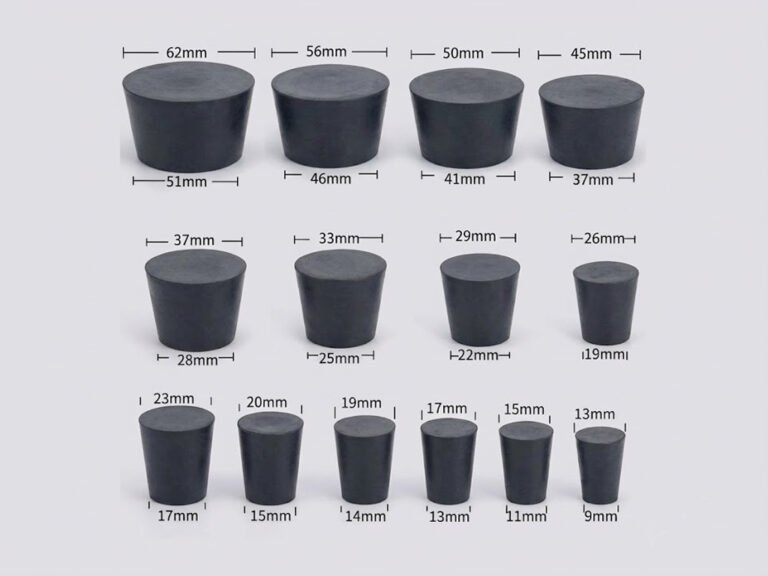
The starting point for determining the correct rubber stopper size is based on two key measurements: opening diameter and depth. However, two stoppers with exactly the same labeled dimensions may perform completely differently when installed in the same opening. The reason is simple: matching the dimensions on paper does not always mean achieving the correct sealing performance in real applications. For a complete overview of dimensions and sizing charts, refer to our rubber stopper guide.
Rubber Stopper Dimensions Explained
When defining rubber stopper dimensions, four main measurements determine the fit and sealing performance of the stopper:
- Diameter: The width of the opening the stopper must enter, typically measured at the widest point.
- Depth: The depth of the opening, which determines how long the stopper needs to be to reach the ideal sealing position.
- Taper: The gradual narrowing angle from the top to the bottom of the stopper; this is the core structure for interference-fit stoppers to achieve a seal.
- Sealing Area / Land: The sealing area, also called the land, is the section of the stopper that directly contacts the inner wall of the opening.
These four dimensions together form the complete specification of a rubber stopper. Missing any one of them can lead to inadequate sealing.
How to Measure Rubber Stopper Size?
Accurate measurement of the application opening is essential before selecting or designing a rubber stopper.
- Measure the Opening Diameter: Measure at the widest point and take the average of 3 measurements. If the opening is irregular or worn, measure multiple points to avoid relying on a single reading.
- Measure the Opening Depth: This determines the required length of the stopper to achieve the ideal sealing depth.
These two measurements can determine whether a stopper can physically fit into the opening. However, they do not guarantee that the stopper will seal properly. The actual sealing performance depends on several additional design factors.
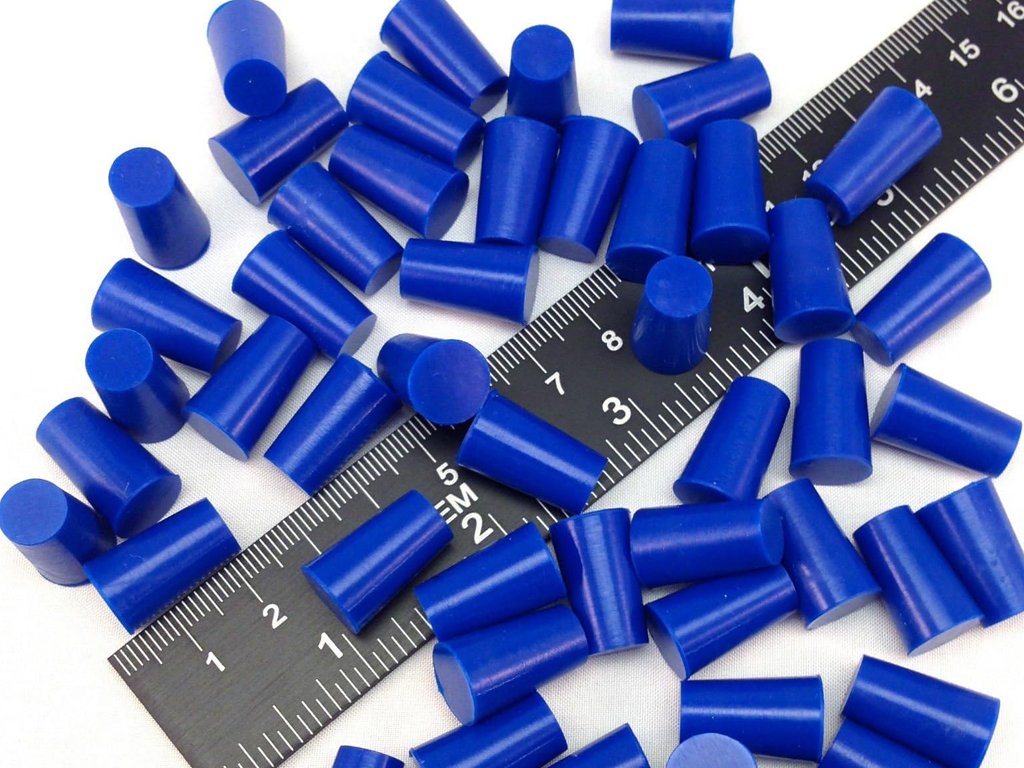
Key Variables That Determine Rubber Stopper Fit Precision
Compression Ratio
Compression ratio refers to the amount of compression applied to the rubber stopper after insertion. It directly affects sealing force and how long the stopper maintains its shape. If the compression ratio is too low, the stopper may not generate enough sealing pressure, increasing the risk of leakage. If the compression ratio is too high, the rubber may experience accelerated aging, permanent deformation, or damage during repeated insertion and removal.
Durometer (Rubber Hardness)
Softer rubber materials can better adapt to irregular surfaces and usually provide better sealing performance. However, they may wear faster during repeated insertion and removal. Harder rubber materials provide better dimensional stability and durability but require higher insertion and removal forces. The stopper compression ratio should be designed based on the selected rubber hardness, rather than determining the compression ratio first and then selecting the hardness.
Taper and Land Design
For interference-fit rubber stoppers, the taper angle and the sealing area width determine how evenly the sealing pressure is distributed. Even if the rubber stopper diameter is measured accurately, an incorrect taper design can cause uneven contact pressure. This may result in localized leakage, air leakage, or liquid leakage.
Material Shrinkage
Rubber shrinks during the vulcanization and molding process, and the shrinkage rate varies depending on the specific rubber compound. This means that even when using the same mold, the dimensions of the finished product will differ if the rubber material is changed. For custom rubber stopper manufacturing, material shrinkage must be considered during mold design. The expected shrinkage needs to be compensated in the mold dimensions to achieve the final required rubber stopper size. This factor is usually not a concern for standard rubber stoppers
When Standard Sizes Are Sufficient vs. When Custom Is Needed
Standard Rubber Stopper Sizes Suitable
Standard rubber stoppers are suitable when the opening dimensions follow common industry standards, such as typical laboratory bottles, serum bottles, or pharmaceutical containers.
If there are no special sealing requirements, standard sizes usually provide faster delivery and lower costs. In these cases, custom sizing is usually unnecessary.
Standard Rubber Stopper Sizes Not Working
- Custom rubber stopper sizing may be required in the following situations:
- Non-standard or aging equipment openings that need retrofit sealing.
- Custom-designed containers/equipment whose openings fall outside any standard range.
- Special requirements for repeated puncturing or precise internal pressure control.
- Chemical compatibility issues where standard compounds are unsuitable, requiring redesign of the overall geometry to match new material properties.
Information Required for Custom Rubber Stopper Size Design
To manufacture the correct custom rubber stopper size, customers should provide the following information:
- Opening diameter and depth. For irregular openings, multiple measurement points are recommended.
- Application conditions, including operating temperature range, contact chemicals or media, and insertion/removal frequency.
- Rubber material preference or performance requirements. If no specific material is required, the appropriate rubber compound can be recommended based on the application.
- Drawings or physical samples. Providing drawings or samples can significantly improve first-round prototype accuracy and reduce development time.