Automotive rubber vibration dampers reduce vibration and noise transmission between moving components, the chassis, and the vehicle body. By combining elastic support with material damping, they help improve NVH performance, ride comfort, component durability, and assembly stability. Automotive Rubber Vibration Dampers’ performance depends on rubber material properties, component geometry, operating conditions, and manufacturing quality. Different applications require different combinations of stiffness, damping, temperature resistance, and durability.
What Are Automotive Rubber Vibration Dampers?
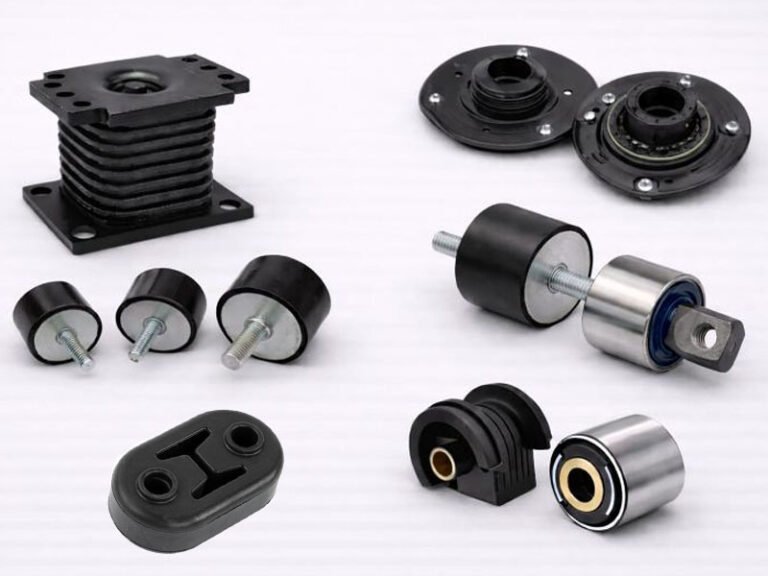
Automotive rubber vibration dampers are elastic components used to reduce vibration transmission and absorb mechanical shocks in vehicles. They are usually made from rubber or rubber bonded to metal inserts, and are commonly used in engine mounts, suspension bushings, and exhaust hangers.
These components work through the elasticity and viscoelastic properties of rubber. When compressed, stretched, or twisted, the rubber deforms and produces a restoring force while dissipating part of the vibration energy as heat. This helps isolate vibrations, reduce noise, absorb impacts, and protect connected components from repeated mechanical stress. Their performance depends on material properties, load conditions, and vibration frequency.
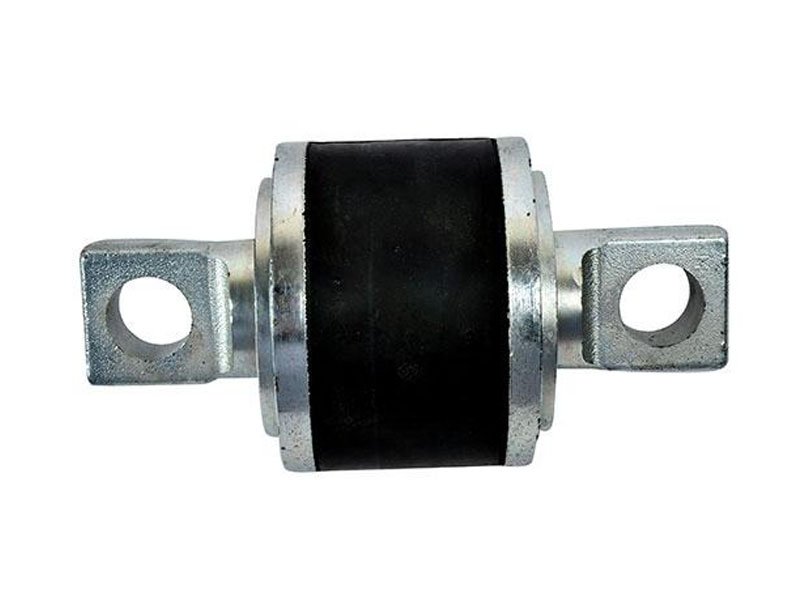
Common Types and Applications of Automotive Rubber Vibration Dampers
Automotive rubber vibration dampers are used in different vehicle systems. Their structures and performance requirements vary according to their installation position and function.
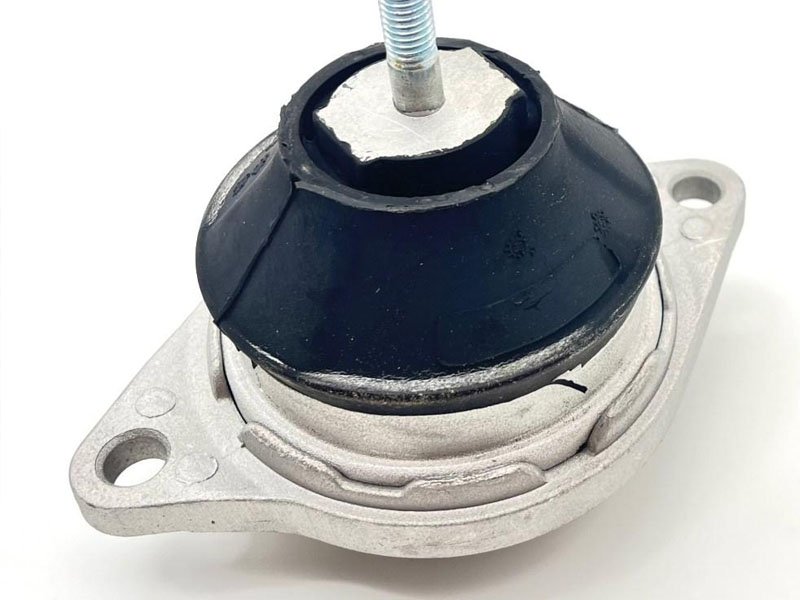
Engine Mounts
Engine mounts connect the engine to the vehicle frame or subframe. They support engine weight, reduce vibration transmission to the vehicle body, and accommodate engine movement caused by torque reactions. Most designs use rubber bonded to metal brackets and require good load capacity, temperature resistance, and fatigue performance.
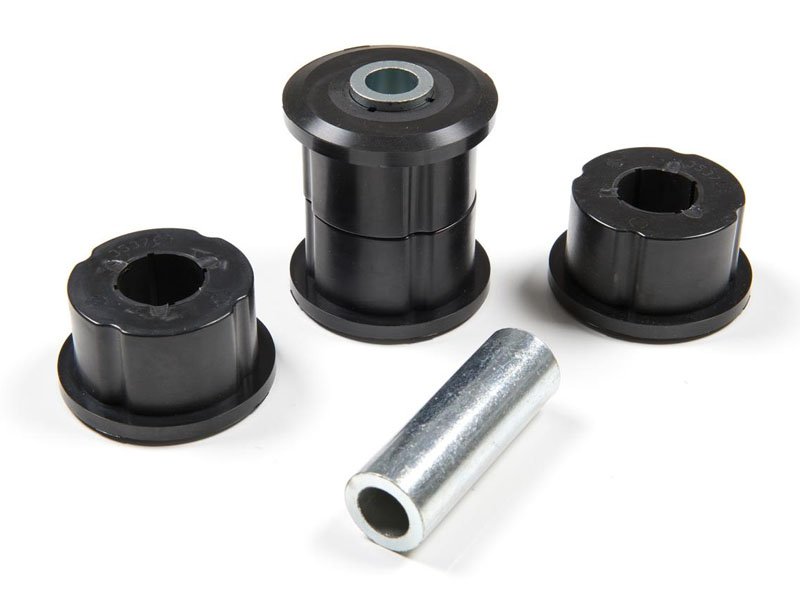
Suspension Bushings
Suspension bushings are installed at connection points such as control arms, stabilizer bars, and subframes. They allow controlled movement between connected parts while reducing road vibration and impact transmission. Their design must balance flexibility and support, with rubber hardness, wall thickness, geometry, and bonding structure affecting performance.
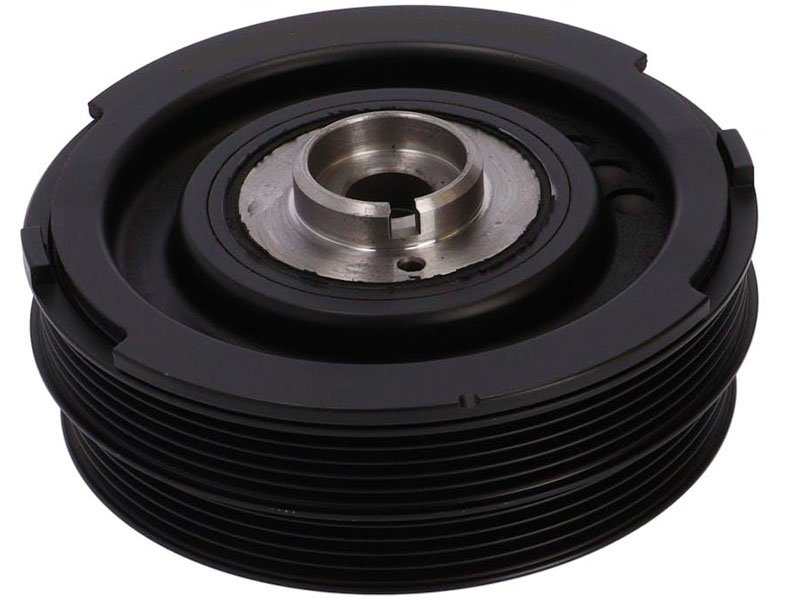
Torsional Vibration Dampers
Torsional vibration dampers are commonly used in crankshaft pulley assemblies. They typically consist of a metal hub, a rubber damping layer, and an outer inertia ring. The rubber layer reduces torsional vibration from engine rotation and helps protect the crankshaft and connected drive components. Key requirements include heat resistance, rotational stability, and fatigue durability.
Exhaust Hangers and Bump Stops
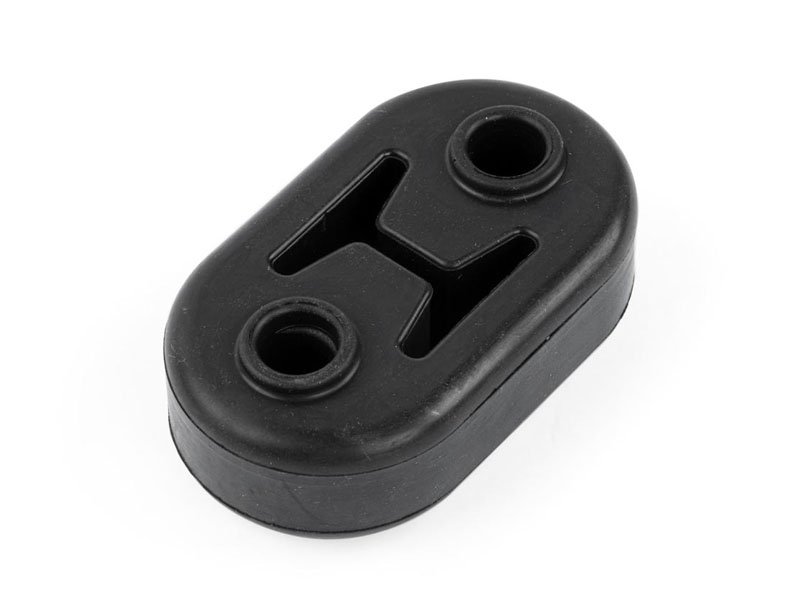
Exhaust hangers support exhaust pipes, mufflers, catalytic converters, and related components while reducing vibration transfer to the chassis. They must tolerate heat, exhaust gases, road debris, moisture, and continuous vibration.
Bump stops and limit stops control excessive movement and cushion impact events. They are commonly used in suspension systems, body mounts, and other areas where travel must be limited without transmitting excessive force.
For these applications, resistance to heat aging, ozone, ultraviolet exposure, compression set, and tearing is often more important than maximum softness.
EV-Related Applications
Electric vehicles still require vibration control, even though they do not have a conventional internal-combustion engine. Electric motors, reduction gearboxes, inverters, compressors, battery packs, and electronic control units can generate vibration and noise.
Common EV applications include:
- Electric motor and reduction-gear mounts.
- Battery-pack mounting and isolation components.
- Inverter and power-electronics vibration pads.
- Compressor and pump isolators.
- Rubber-to-metal bonded brackets for high-voltage components.
EV vibration dampers often need to address higher-frequency excitation, lightweight design requirements, thermal management, and compatibility with nearby electrical components.
Common Materials and Performance
Material selection determines how an automotive rubber vibration damper performs under load, temperature, chemical exposure, and long-term fatigue. The most suitable material depends on the installation location and operating environment.
Natural Rubber (NR)
Natural rubber provides high elasticity, good dynamic fatigue resistance, and dependable rubber-to-metal bonding performance. It is widely used in engine mounts, suspension bushings, and general vibration isolators. However, its resistance to oils, ozone, and high temperatures is limited compared with some synthetic rubber compounds.
Chloroprene Rubber (CR)
Chloroprene rubber provides a combination of mechanical strength, weather resistance, and moderate oil and heat resistance. It can be used in automotive rubber components that require balanced environmental performance.
EPDM
EPDM has good resistance to ozone, weathering, water, and heat. It is commonly used in exhaust hangers and other automotive rubber parts exposed to outdoor conditions or elevated temperatures. However, EPDM has poor resistance to mineral oils and many petroleum-based fluids, so it is not suitable for every engine compartment application.
NBR and HNBR
NBR, or nitrile rubber, offers improved resistance to oil and fuel. It is suitable for components that may contact lubricants, hydraulic fluids, or fuel-related media.
HNBR provides better heat resistance, abrasion resistance, and aging performance than standard NBR. It is often selected for demanding powertrain, driveline, and high-temperature applications.
Silicone Rubber
Silicone rubber has a wide operating temperature range and good resistance to heat and weathering. It can be considered for selected high-temperature isolation applications. However, silicone‘s mechanical strength, tear resistance, and dynamic properties need to be evaluated.
Polyurethane (PU)
Polyurethane offers good wear resistance, load-bearing capacity, and abrasion resistance. It is used in certain suspension components, bump stops, and impact-absorbing parts. Its stiffness and damping behavior can differ significantly from conventional rubber. The material should be selected according to the required deformation and vibration characteristics.
Material Selection Guide
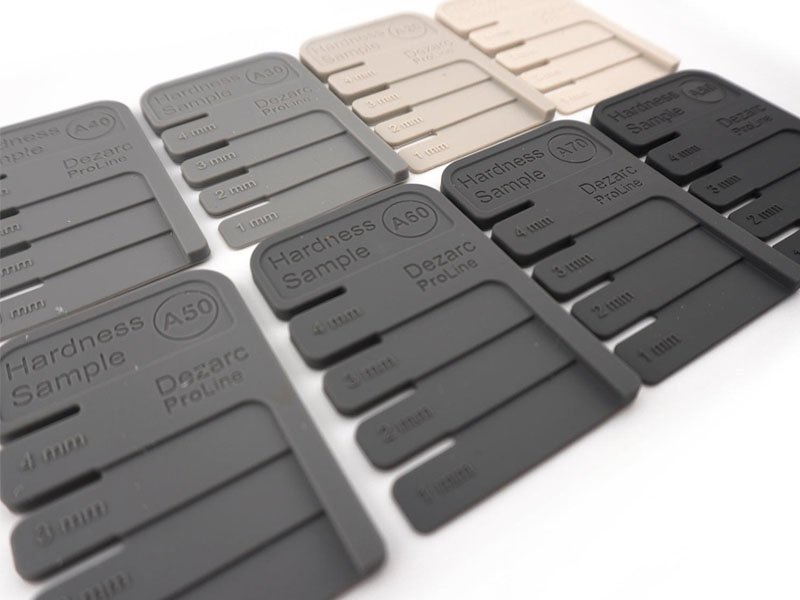
Material selection should not rely on Shore A hardness alone. Important properties include:
- Hardness: Typical automotive rubber components may range from approximately 30 to 90 Shore A, depending on load and stiffness requirements.
- Temperature Resistance: Both continuous operating temperature and short-term peak temperature must be considered.
- Damping: Higher damping can reduce vibration energy, but excessive damping may increase heat generation.
- Compression Set: Important for components under long-term compression, such as mounts and bump stops.
- Chemical Resistance: Oil, fuel, coolant, cleaning agents, ozone, UV exposure, and road salt can affect service life.
- Fatigue Life: Repeated dynamic loading can cause cracking, stiffness drift, or bond failure if the design is not suitable.
Manufacturing Processes for Automotive Rubber Vibration Dampers
Automotive rubber vibration dampers are commonly produced through compression molding, transfer molding, and rubber injection molding. The suitable process depends on component geometry, material, production volume, and the presence of metal inserts.
Compression Molding
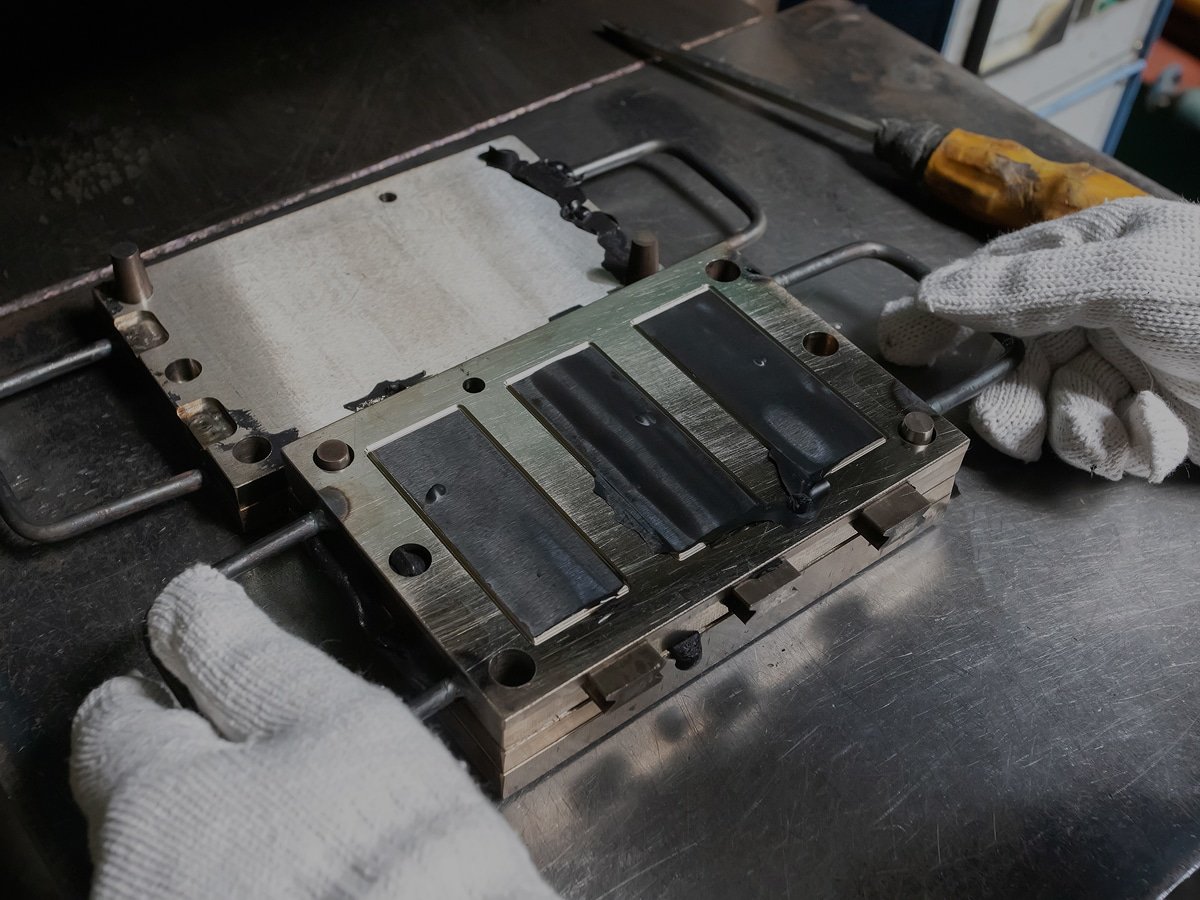
In compression molding, a measured amount of uncured rubber is placed directly into an open mold cavity. The mold is closed, and heat and pressure cure the rubber into its final shape.
This process is suitable for simpler geometries, larger parts, prototype production, and low-to-medium volume orders. It generally requires lower tooling investment than injection molding.
Transfer Molding
Transfer molding uses a separate material chamber. Pressure pushes the prepared rubber compound through a runner system into the mold cavity, where it is cured.
It is suitable for components with more complex geometries and certain rubber-to-metal bonded structures. The process can provide controlled material distribution, but runner design and material waste need to be considered.
Rubber Injection Molding
Rubber injection molding heats and plasticizes the rubber compound before injecting it into a closed mold under pressure. The material is then cured inside the mold.
This process is suitable for high-volume production, complex geometries, tight tolerances, and components requiring consistent quality. It generally offers shorter cycle times and better repeatability than compression molding, although tooling investment is higher.
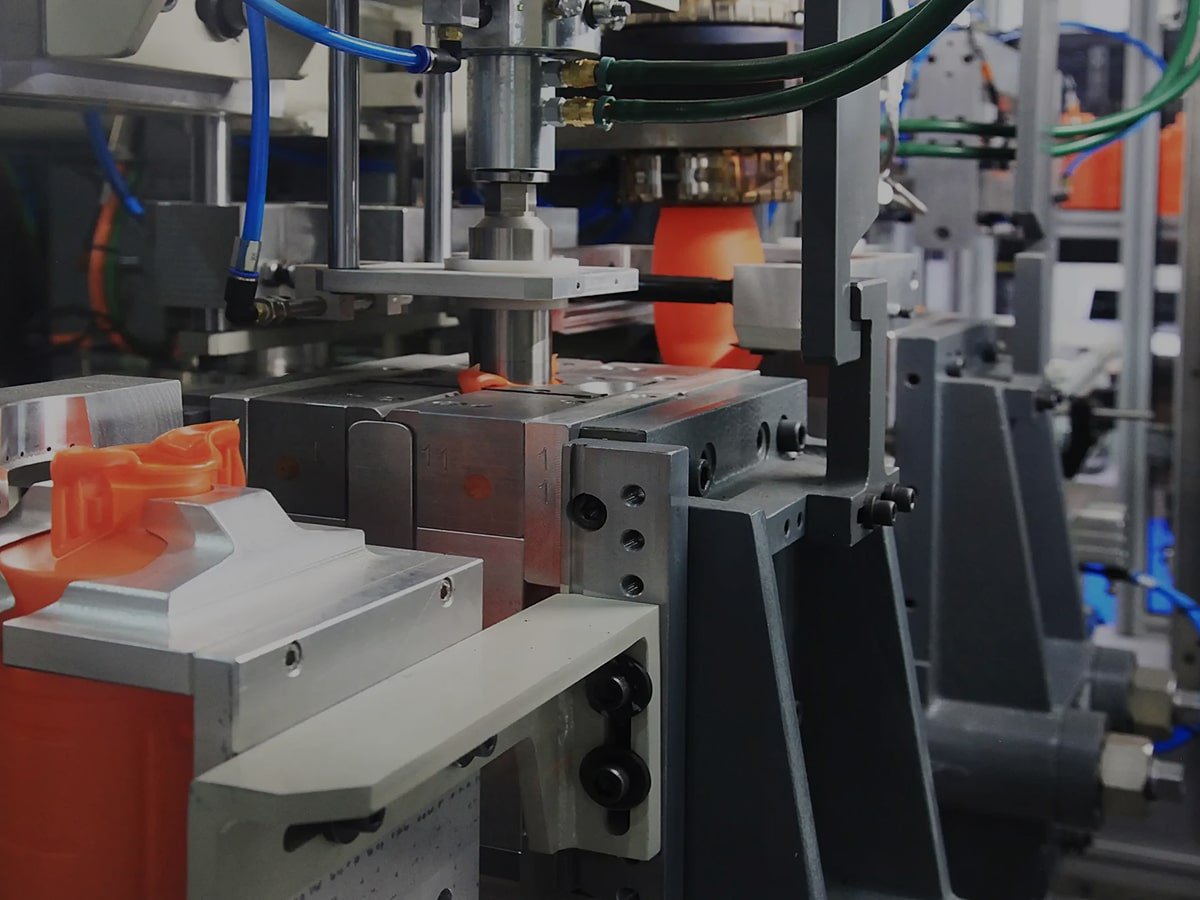
Thermoplastic injection molding melts plastic material and injects it into a mold. The material solidifies through cooling. Rubber injection molding uses an uncured rubber compound, which is injected into a heated mold and forms a cross-linked structure through vulcanization.
Key Selection and Design Considerations of Automotive Rubber Vibration Dampers
Selecting Automotive Rubber Vibration Dampers requires more than matching the product dimensions or rubber hardness. Engineers and buyers should evaluate the actual operating conditions.
Load and Stiffness Requirements
First, identify the static and dynamic loads acting on the component. Also determine whether the main load is radial, axial, or torsional.
The rubber stiffness must provide sufficient support while allowing the required movement. If the component is too soft, it may deform excessively. If it is too stiff, more vibration may be transmitted to connected structures.
Frequency and Damping Requirements
Vibration frequency affects the dynamic behavior of rubber components. Dynamic stiffness and damping characteristics can change with frequency, vibration amplitude, preload, and temperature.
Operating Temperature and Environment
Consider the normal operating temperature, short-term temperature peaks, and possible exposure to oil, fuel, water, ozone, salt, or other chemicals.
Geometry and Structural Design
Rubber thickness, cross-sectional shape, bonding area, and metal insert position all affect deformation and load distribution.
The design should avoid excessive local stress and unnecessary deformation. For rubber-to-metal bonded components, the insert structure and bonding interface must also withstand repeated loading.
Durability and Validation
Before mass production, automotive rubber vibration dampers may require several performance tests, depending on their application:
- Compression set testing.
- Fatigue and cyclic loading tests.
- Rubber-to-metal bonding strength tests.
- Heat aging and environmental resistance tests.
- Dynamic stiffness and damping tests.
Conclusion
Automotive Rubber Vibration Dampers are used in engine mounts, suspension bushings, torsional dampers, exhaust hangers, and electric vehicle systems. Their performance depends on suitable rubber materials, component geometry, dynamic stiffness, and manufacturing quality.
Custom manufacturing allows rubber hardness, material formulation, dimensions, and metal insert structures to be adjusted according to specific application requirements. Flexiparts provides custom rubber part manufacturing, including material selection, DFM evaluation, mold design, and compression, transfer, and injection molding. Contact us with your drawings or samples to discuss your automotive rubber vibration damper requirements and request a quotation.