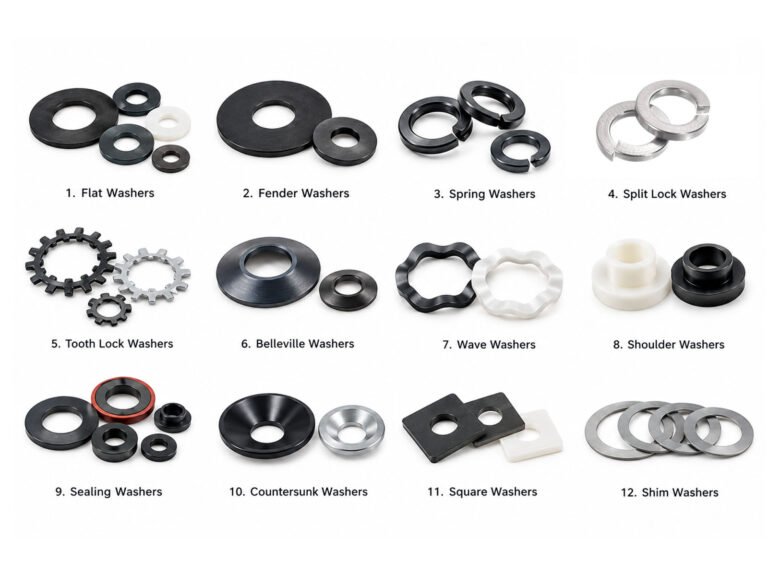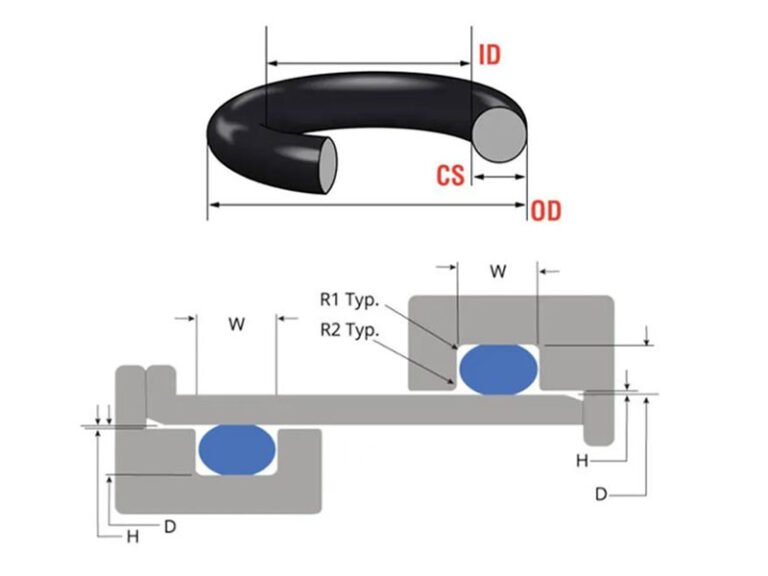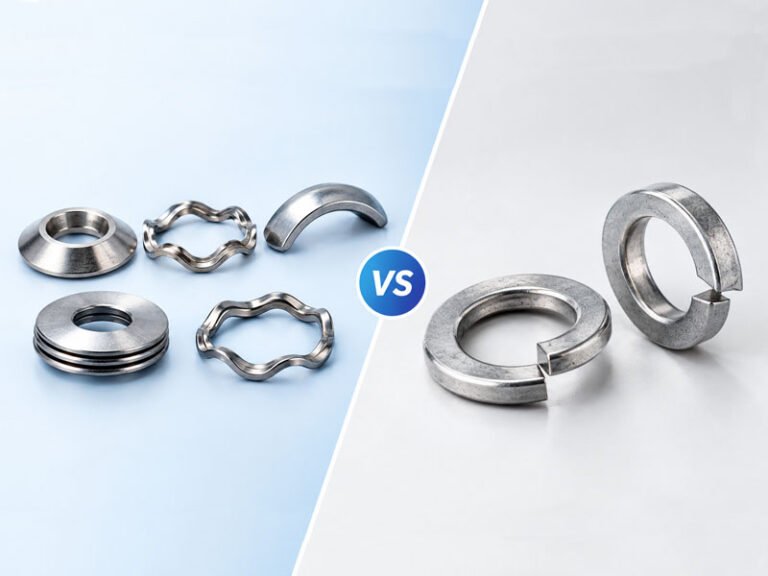
Spring washers and split lock washers are often discussed as separate fastener components. However, a split lock washer is generally one type of spring washer. The main difference is that spring washers include several designs with different load characteristics and applications, while a split lock washer has a specific open-ring structure.
What is a Spring Washer?
A spring washer is a washer designed to respond elastically when compressed. It is designed to provide axial tension, absorb dynamic shock, or maintain bolt preload within a mechanical joint.
Working Principle of Spring Washers
When a bolt is tightened, a spring washer compresses elastically along its central axis. This compression generates a continuous axial restoration force (preload) that compensates for minor thermal expansion, material shrinkage, or joint settlement. By maintaining tension on the bolt shank, spring washers reduce the likelihood of joint loosening caused by ambient temperature fluctuations or light dynamic vibration.
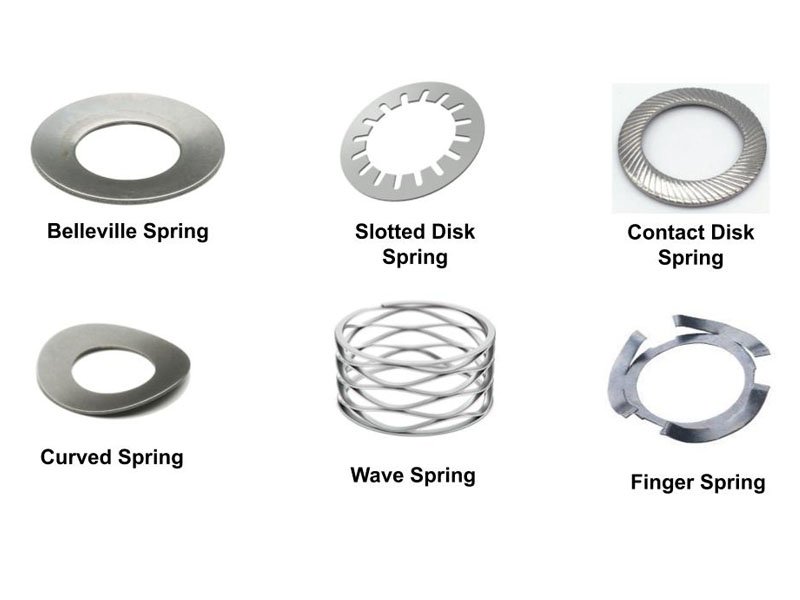
Common Types of Spring Washers
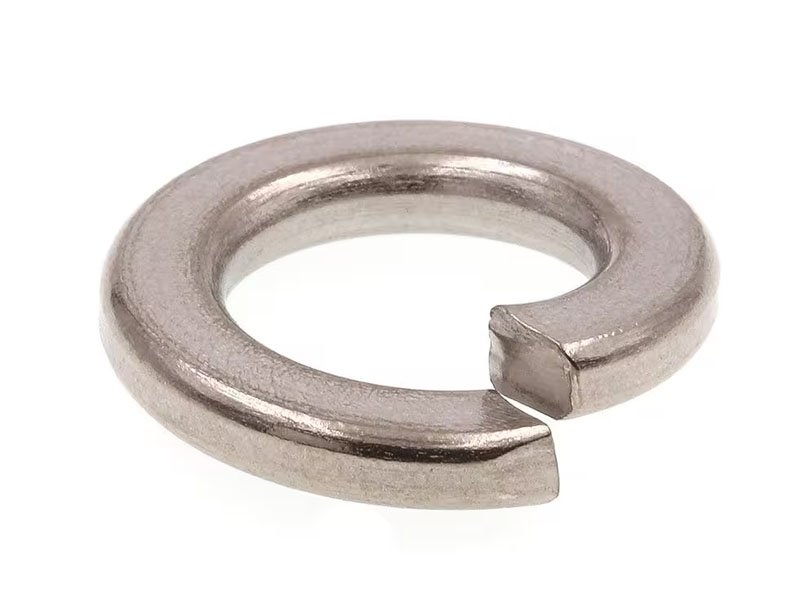
Split Lock Washers (Helical): A split lock washer has an open ring with a helical offset between its ends. It is commonly used under a bolt head or nut in conventional bolted assemblies. It combines axial spring tension with sharp edge friction.
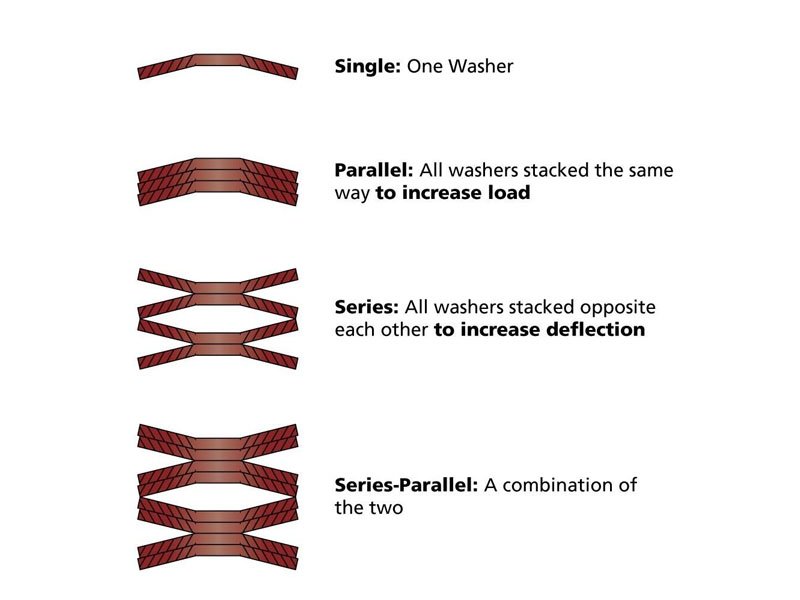
Belleville (Conical) Spring Washers: The spring washers shows belleville and conical, have a dished or conical shape. They provide a specific load-deflection response and can generate relatively high spring forces within a compact axial space.
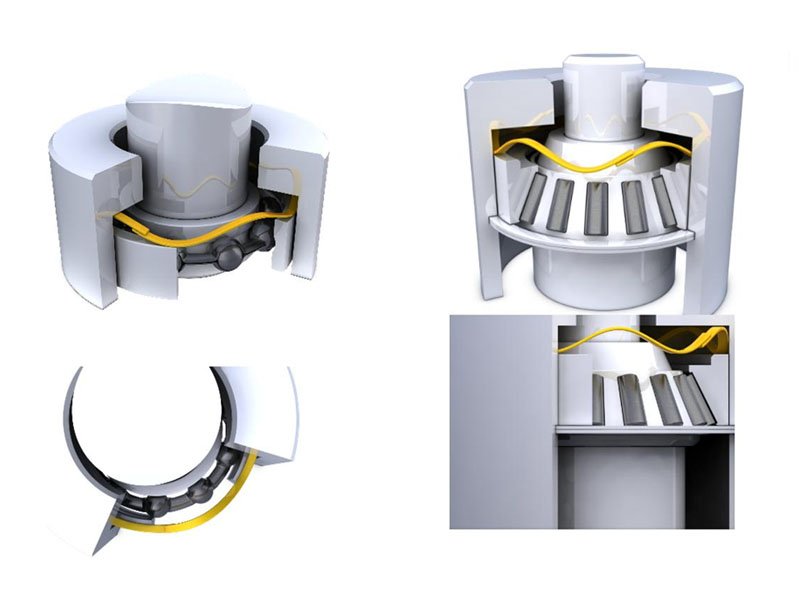
Wave Spring Washers: Wave washers have a wavy profile that provides axial spring force. They are commonly used in compact mechanical assemblies, bearing arrangements, and shaft components where installation height is limited and a defined amount of axial preload is required.
Curved / Dome Spring Washers: They offer a smooth, low-to-medium elastic deflection curve, ideal for absorbing backlash in dynamic sliding joints.
Typical Applications of Spring Washers
Spring washers are used in mechanical equipment, shaft assemblies, bearing arrangements, and bolted joints. The appropriate type depends on the required spring force and the function of the connection.
For example, a Belleville washer may be suitable when a connection needs a controlled load response, while a wave washer may be appropriate for axial preload in a compact assembly. A split lock washer may be specified for a conventional fastening application, provided its limitations are acceptable.
What is a Split Lock Washer?
A split lock washer (also referred to as a helical spring washer) is a specialized type of spring washer engineered specifically to resist fastener rotation under light-to-moderate dynamic loads.
Design and Structure of a Split Lock Washer
A split lock washer consists of a metallic ring cut at one point along its circumference. The main features include its open ring, helical offset, thickness, inner diameter, and outer diameter. These dimensions determine how the washer fits the fastener and responds to compression.
How a Split Lock Washer Works?
A split lock washer operates through a dual locking mechanism:
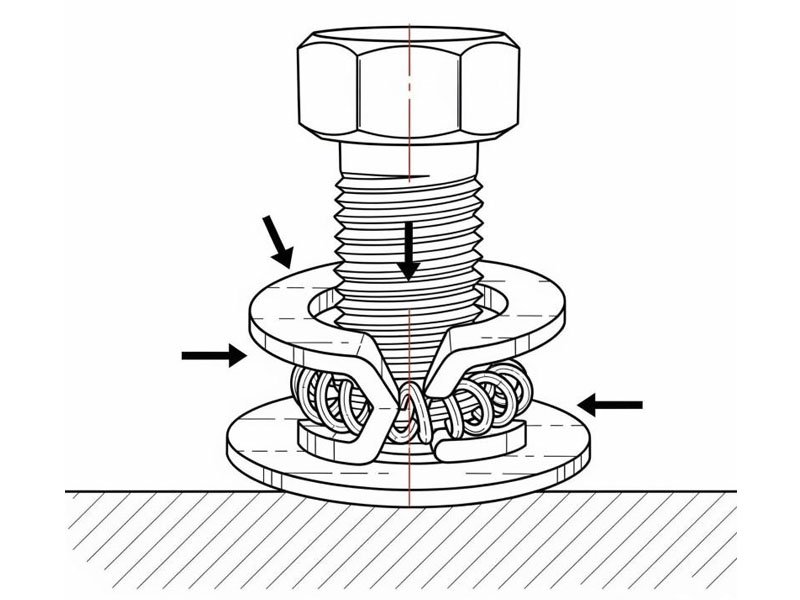
Spring Deflection: As the bolt is torque-tightened, the helical ring compresses flat, providing axial tension against the bolt head or nut.
Mechanical Edge Bite: If the bolt begins to back off under vibration, the sharp split edges dig into both the fastener head and the mating substrate, providing rotational resistance.
Common Applications and Limitations
Split lock washers are found in general mechanical assemblies, brackets, covers, and other conventional fastening applications.
Their limitations should also be considered:
- They cannot compensate for insufficient thread engagement or incorrect tightening.
- They do not guarantee resistance to loosening under strong vibration or repeated transverse loading.
- Excessive compression can reduce their elastic performance.
- Their edges may damage soft materials, protective coatings, or finished surfaces.
- They may be unsuitable for joints that require precise surface contact or controlled assembly height.
Spring Washers vs Split Lock Washers: Main Differences
To clarify the technical distinctions when comparing spring washers vs. split lock washers, the following matrix outlines their structural and functional characteristics:
| Comparison | Spring Washers | Split Lock Washers |
|---|---|---|
| Definition | A general category of elastic washers | A specific type of spring washer |
| Structure | Includes conical, wave-shaped, split, and other designs | Open ring with a helical offset |
| Primary function | Provides spring force, preload, or movement compensation, depending on design | Traditionally intended to help resist fastener loosening |
| Load characteristics | Vary with geometry and material | Depend on dimensions, material, and compression |
| Vibration performance | Depends on the washer design and joint conditions | Cannot be assumed to prevent vibration-induced loosening |
| Selection criteria | Required force, deflection, space, and application | Fastener size, joint design, specifications, and operating conditions |
| Substrate Impact | Smooth surface contact options protect coatings and soft substrates. | Sharp split edges intentionally bite into and mar substrate surfaces. |
How to Choose: Spring Washer or Split Lock Washer?
Selecting between general spring washers and split lock washers requires evaluating joint operating parameters, load limits, surface hardness, and environmental conditions.
1. Load Magnitude and Space Constraints
- High Compressive Loads: Use Belleville conical spring washers. Their high spring rate supports elevated torque values without flattening permanently.
- Tight Vertical Clearance: Use wave spring washers. Their sinusoidal shape fits within restricted axial housing pockets while maintaining continuous tension.
- Standard Light Loads: Split lock washers are suitable for general-purpose assemblies where bolt torque requirements are low-to-moderate.
2. Substrate Sensitivity
- Soft Substrates (Aluminum, Plastics, Copper): Avoid split lock washers, as their sharp split edges gouge soft surfaces, cause stress cracks, and damage protective platings. Opt for smooth Belleville or curved spring washers.
- Hardened Steel Substrates: Split lock washers can be used effectively on hardened steel surfaces where the edges can engage without causing structural degradation.
3. Severe Vibration and Shear Profiles
For critical joints subjected to continuous dynamic vibration, high transverse shear, or thermal shocks, neither traditional spring washers nor split lock washers may provide sufficient retention.
In high-vibration applications, engineers should evaluate specialized locking alternatives:
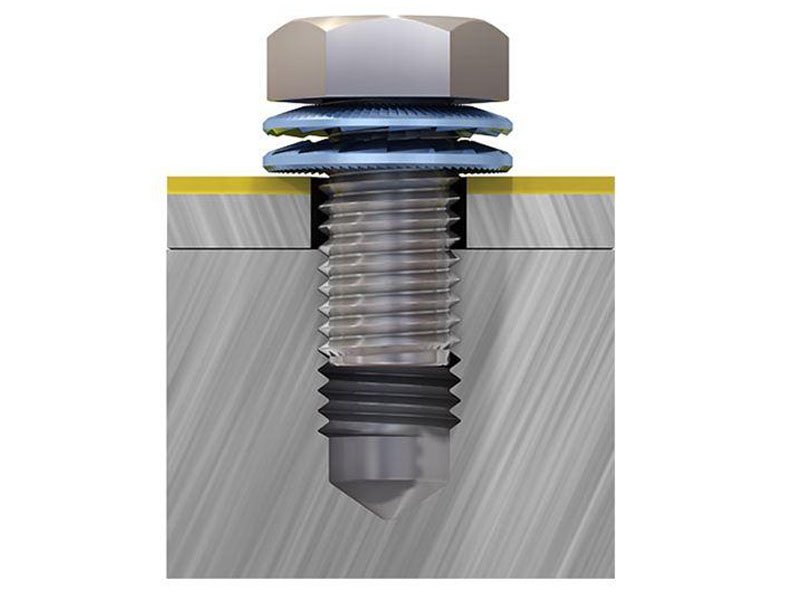
- Wedge-Locking Washers (e.g., Nord-Lock): Utilize a pair of cam-faced washers that create a wedge effect, preventing bolt loosening through tension rather than friction.
- Nyloc / Prevailing Torque Lock Nuts: Feature an integrated nylon ring or deformed threads that maintain friction along the bolt shank.
- Chemical Threadlockers: Anaerobic adhesive compounds applied to screw threads to eliminate relative motion within the thread engagement area.
Conclusion
Spring washers and split lock washers are related, but they are not interchangeable terms. A split lock washer is one specific type of spring washer, while the broader category includes designs with different load characteristics and applications. When comparing Spring Washers vs Split Lock Washers, focus on the required spring force, connection design, vibration conditions, installation space, and material compatibility.