
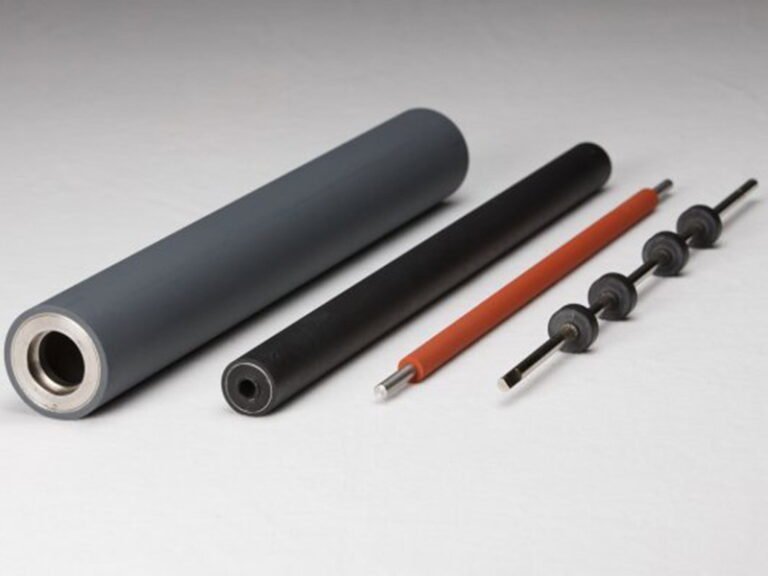
Conveyor rubber rollers are critical components in material handling and transmission systems. They rely on a rubber-coated surface to provide stable friction and ensure continuous material transportation. They are widely used in industries such as mining, printing, food processing, metallurgy, and packaging. However, many companies experience issues such as rubber peeling, rapid wear, and conveying slippage during operation. These problems are often caused by unsuitable rubber materials, incorrect hardness selection, or roller designs that do not match actual working conditions.
This article explains the key factors in selecting conveyor rubber rollers and helps you identify the right custom solution to improve equipment reliability and reduce maintenance costs.
Select the Right Rubber Material Based on Operating Conditions
The main types of conveyor rubber rollers available on the market include four common materials, each designed for different working environments.
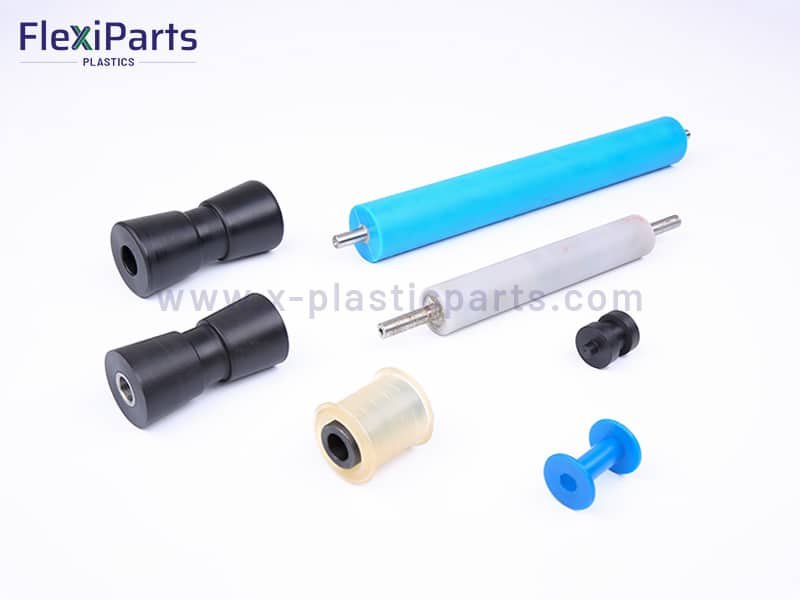
- PU (Polyurethane) conveyor rollers offer excellent wear resistance, impact resistance, and elasticity. They are suitable for heavy-load material conveying applications where durability and high friction performance are required.
- NBR (Nitrile Rubber) rollers provide excellent oil resistance and chemical resistance. They are commonly used in industrial environments involving oils, chemicals, and printing or dyeing processes.
- EPDM (Ethylene Propylene Diene Monomer) rubber rollers have strong resistance to high temperatures, weathering, and aging. They are suitable for high-temperature drying equipment and outdoor applications.
- Food-grade silicone rubber rollers are non-toxic, odorless, and compliant with food processing requirements. They are mainly used in food production and packaging conveyor systems.
When selecting a conveyor rubber roller, the first step is to evaluate the actual working environment and choose a rubber material that matches the application conditions. A proper conveyor roller material selection process helps improve wear resistance, performance stability, and service life.
Control Rubber Hardness to Ensure Stable Conveying Stability
The hardness of conveyor rubber rollers is usually measured by Shore A hardness, which directly affects conveying accuracy and performance.
- 50–60 Shore A soft rubber rollers provide higher friction and better surface contact. They are suitable for transporting lightweight materials such as paper, films, and flexible products, helping prevent surface damage or deformation.
- 70–90 Shore A hard rubber rollers offer better load-bearing capacity and resistance to deformation. They are commonly used for transporting heavy materials such as metal sheets, minerals, and industrial components, preventing roller indentation and material misalignment.
Avoid blindly choosing overly hard or overly soft rollers to prevent production line jamming or misalignment.
Check Process Details to Extend Service Life
High-quality conveyor rollers use a metal roller core + high-temperature vulcanization rubber coating process. The core is made of galvanized carbon steel or stainless steel for stronger rust resistance and load-bearing capacity. The rubber layer bonds seamlessly with the core, preventing degumming and cracking during long-term operation. At the same time, anti-slip patterns can be customized on the roller surface as needed to enhance friction and solve material slippage issues. Compared with ordinary bonding processes, service life can be increased by more than 40%.
Customize Roller Dimensions to Fit Different Equipment
Industrial conveying equipment comes in many models, and standardized conveyor rollers have limited compatibility. Professional manufacturers support personalized customization of length, diameter, and rubber thickness to precisely match old conveyors and transmission equipment without requiring machine body modifications. This reduces production line renovation costs and is a key requirement for B-end procurement.
What Information Is Needed for Custom Conveyor Rubber Roller Manufacturing?
To ensure the rubber roller design matches your actual application requirements, it is recommended to provide the following information when requesting a customized conveyor rubber roller solution:
- Original rubber roller sample, drawing, or technical specifications
- Roller length and diameter
- Shaft diameter dimensions
- Required rubber layer thickness
- Type of conveyed material
- Operating temperature
- Contact media or chemical exposure conditions
- Conveyor speed
- Load requirements
Providing these parameters allows the manufacturer to select the appropriate rubber compound, hardness, roller structure, and manufacturing process more accurately.
FAQ About Conveyor Rubber Roller
What causes frequent degumming of conveyor rollers?
There are three main reasons:
- First, it may result from manufacturing issues, such as insufficient vulcanization and curing between the rubber layer and roller core, which reduces adhesion strength.
- Second, material incompatibility can cause failure. For example, using standard rubber materials in environments exposed to oils, chemicals, acids, or alkalis may damage the bonding layer and accelerate separation.
- Third, incorrect installation can also contribute to the problem. Poor alignment or uneven equipment loading may create excessive stress on the roller surface, causing the rubber layer to tear or detach.
To reduce these issues, it is recommended to choose conveyor rubber rollers manufactured with high-temperature vulcanization processes and rubber materials selected according to the actual working environment.
