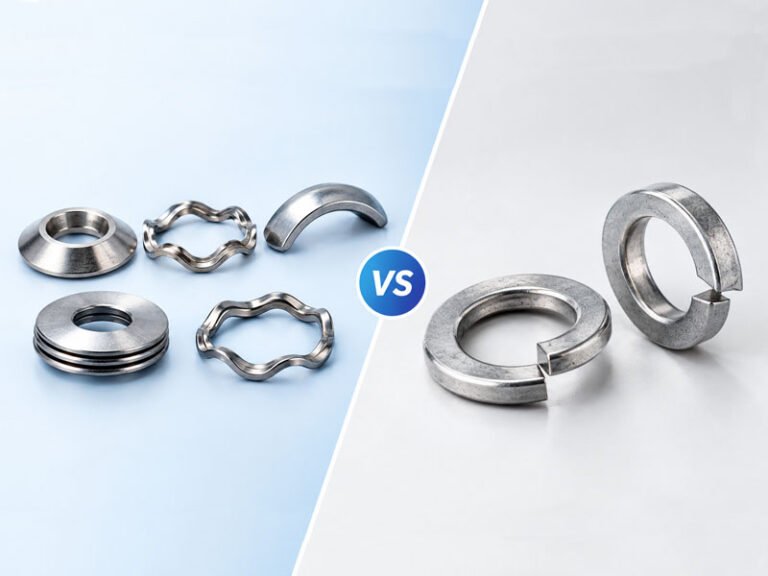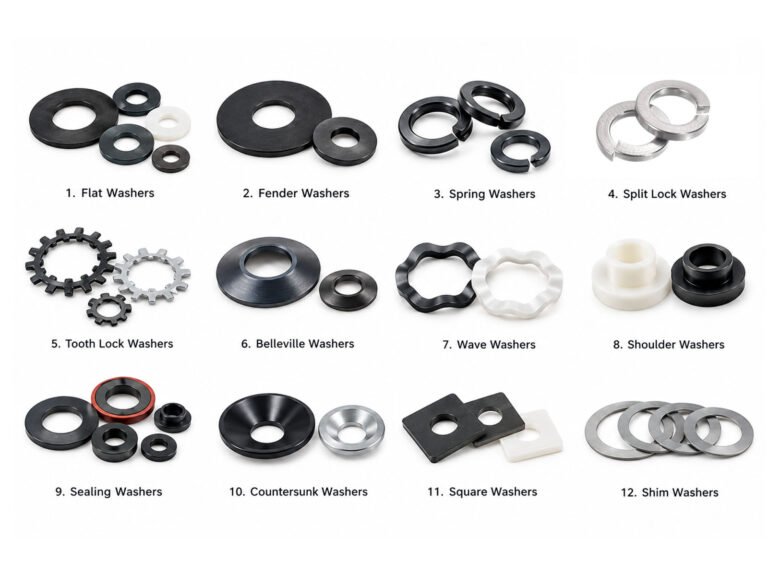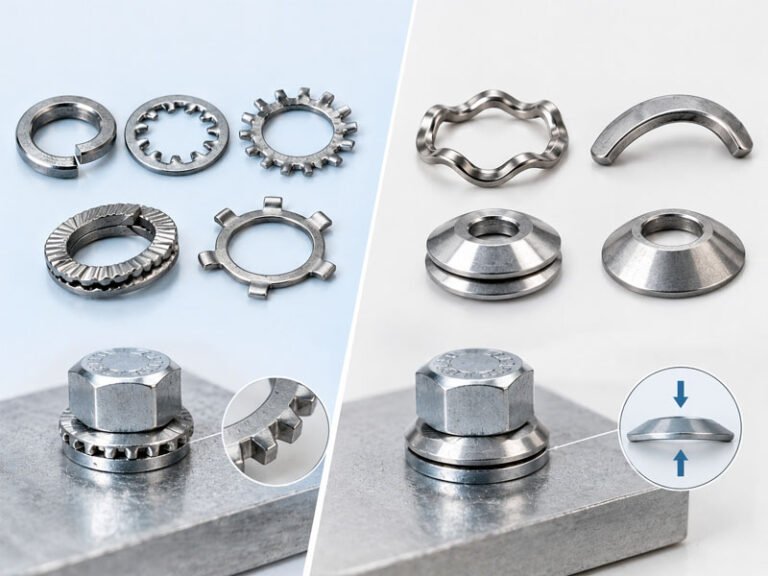
Lock washers vs spring washers are often discussed together because their names and functions can overlap. Both are placed under a bolt head or nut, and both can help maintain a more stable threaded connection. However, their designs serve different purposes. A lock washer is mainly intended to reduce the risk of fastener rotation, while a spring washer is designed to provide elastic load and compensate for limited axial movement.
Choosing between a lock washer and a spring washer should not be based on the name alone. The correct choice depends on the fastener type, applied load, vibration level, temperature changes, available installation space, and assembly requirements.
What Is a Lock Washer?
A lock washer is a washer designed to reduce the possibility that a nut, bolt, or screw will rotate loose during service. It is commonly used in mechanical assemblies where vibration, dynamic loads, or repeated temperature changes may affect the stability of a threaded joint.
How Does a Lock Washer Work?
A lock washer works by increasing resistance to relative movement between the fastener and the joined parts. Depending on the type, it may do this through one or more of the following methods:
- Increasing friction between the fastener and the bearing surface.
- Using teeth to bite into the fastener head, nut, or workpiece surface.
- Creating mechanical interference that resists rotation.
- Using cam surfaces or a paired washer design to resist loosening under vibration.
Common Types of Lock Washers
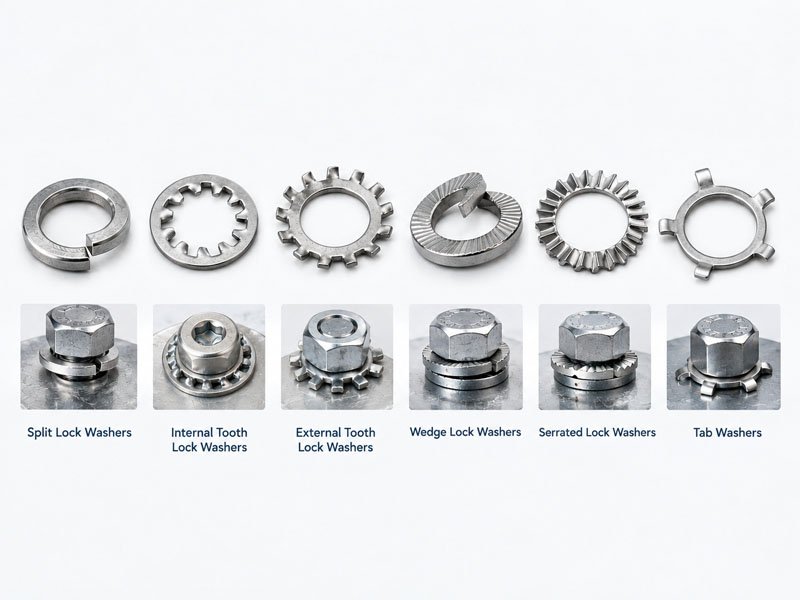
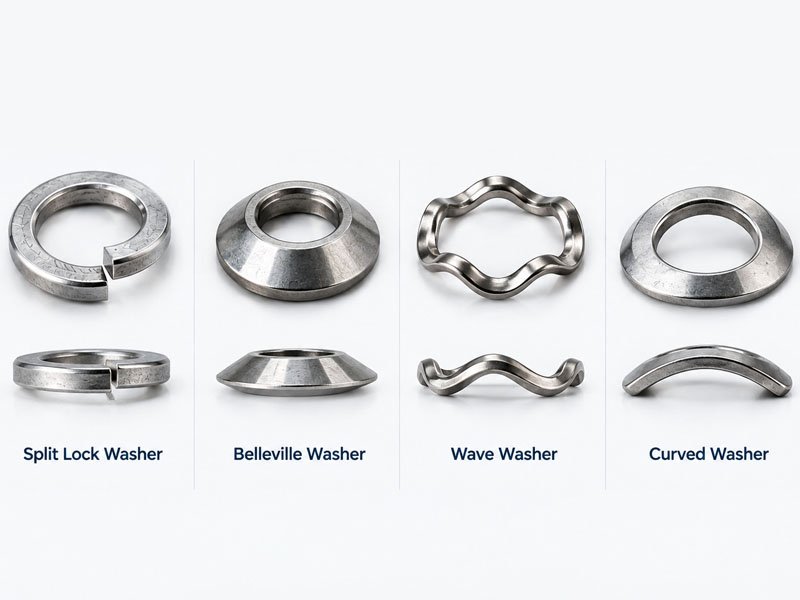
Split Lock Washers: Split lock washers, also called helical lock washers, have a partial cut and a raised end. When installed, the washer flattens under the fastener load and pushes against the adjoining surfaces. This creates additional friction and can help reduce loosening in general mechanical assemblies.
Tooth Lock Washers: Tooth lock washers have small teeth around the inner diameter, outer diameter, or both. These teeth engage the fastener and the mating surface, increasing resistance to rotation. Tooth lock washers include internal tooth lock washers and external tooth lock washers.
Other Locking Washer Types: Other locking washer designs include wedge lock washers, serrated washers, tab washers, and specialized anti-loosening washers. Wedge lock washers use two mating pieces with cam-shaped surfaces. When installed correctly, the inclined surfaces create resistance to rotation, making them suitable for high-vibration equipment and critical assemblies.
Advantages and Limitations of Lock Washers
Lock washers offer several practical benefits:
- They are easy to install with standard bolts, nuts, and screws.
- They can add resistance to fastener rotation.
- Many types are compact and suitable for confined assemblies.
- They are available in multiple materials, sizes, and finishes.
However, they also have limitations.
- Toothed washers can damage contact surfaces, especially when used with soft materials.
- Split lock washers may flatten under high torque and may not provide enough resistance in severe vibration.
- In addition, a lock washer should not be treated as a complete replacement for correct torque control, thread design, or other anti-loosening measures.
What Is a Spring Washer?
A spring washer is designed to deflect under load and return toward its original shape when the load decreases. Its main purpose is to maintain an axial force, compensate for limited movement, or accommodate small changes caused by thermal expansion, wear, or assembly tolerances.
How Does a Spring Washer Work?
When a spring washer is compressed, its shape changes and stores elastic energy. As the joint settles, heats, cools, or experiences minor movement, the washer tries to return to its original form. This recovery force helps maintain pressure between the fastener and the connected components.
The performance of a spring washer depends on several factors:
- Material strength and elasticity.
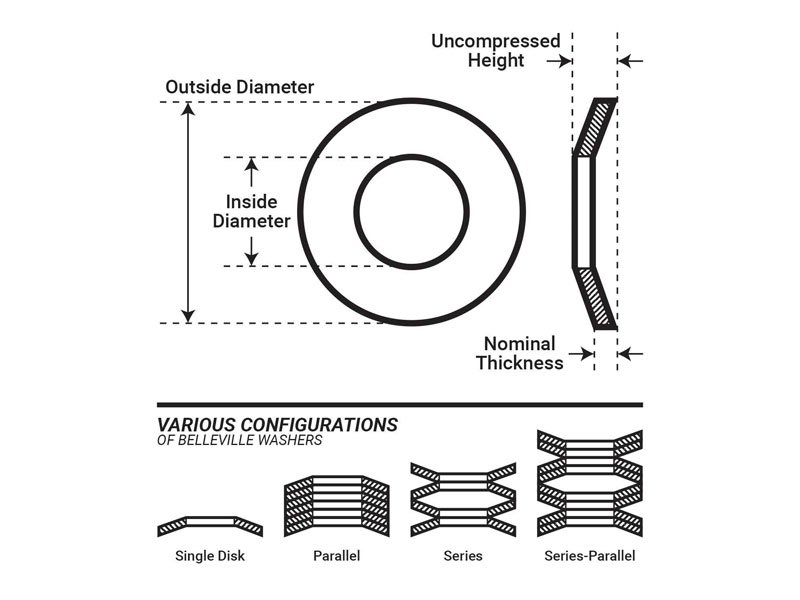
- Washer thickness and free height.
- Outer diameter and inner diameter.
- Structural design.
- Compression range and required load.
Common Types of Spring Washers
Split Spring Washers: Split spring washers are similar in appearance to split lock washers. They have an open coil structure that compresses during installation and provides a limited spring force.
Wave Washers: Wave washers have a wavy profile that provides multiple contact points and axial flexibility. They are often used where installation space is limited, but some elastic preload is still required.
Belleville Washers: Belleville washers, also called disc springs, have a conical shape. They can provide a relatively high load within a compact axial space. Their load and deflection characteristics can also be adjusted by stacking multiple washers in series, parallel, or combined arrangements.
Typical Applications of Spring Washers
Spring washers are used in many industries where axial force and movement compensation are required. Typical applications include:
- Electrical contacts, relays, switches, and terminal connections.
- Automotive components exposed to vibration or temperature changes.
- Industrial machinery and equipment assemblies.
- Home appliances and consumer products.
- Precision assemblies requiring controlled preload.
- Applications involving thermal expansion, settling, or minor wear.
Lock Washer vs Spring Washer: Key Differences
The main difference between a lock washer and a spring washer is their primary function. A lock washer focuses on preventing fastener rotation, while a spring washer focuses on maintaining elastic axial load and compensating for limited displacement.
| Aspect | Lock Washer | Spring Washer |
|---|---|---|
| Primary function | Reduces fastener rotation and loosening | Maintains axial load and compensates for limited movement |
| Working principle | Friction, tooth engagement, mechanical interference, or cam action | Elastic deflection and recovery force |
| Common types | Split, internal tooth, external tooth, wedge lock | Split spring, wave, Belleville |
| Load behavior | May contribute to joint stability but is not always the main load-bearing element | Provides axial spring force within its designed deflection range |
| Vibration performance | Depends on washer type and installation conditions | Can help maintain contact pressure but does not replace a complete anti-loosening design |
| Surface effect | Toothed types may mark or damage softer surfaces | Generally does not intentionally bite into surfaces |
| Typical applications | Machinery, automotive assemblies, electrical grounding, general bolted joints | Electrical contacts, precision assemblies, thermal expansion compensation, dynamic-load equipment |
When Should You Use a Lock Washer or Spring Washer?
Use a lock washer when the main concern is preventing a bolt, nut, or screw from rotating loose. This is common in machinery, automotive assemblies, electrical panels, and equipment exposed to vibration. For high-vibration or safety-related connections, a wedge lock washer or another engineered anti-loosening solution may be more appropriate than a basic split washer.
Use a spring washer when the connection needs to maintain axial pressure or tolerate limited movement. This includes applications involving thermal expansion, component settling, wear, assembly tolerances, or electrical contact pressure. Wave washers and Belleville washers are often selected when the required spring force or space constraints differ from those of a standard split washer.
In some projects, both requirements exist: the joint may need resistance to rotation as well as compensation for axial movement. In such cases, the washer type, fastener design, torque specification, and mating materials should be reviewed together rather than selected independently.
When Should You Consider Rubber or Plastic Washers?
Rubber and plastic washers are generally used for sealing, insulation, vibration damping, noise reduction, surface protection, or corrosion isolation.
Rubber washers can compress to form a seal and absorb vibration. Plastic washers can provide electrical insulation, reduce metal-to-metal contact, and resist corrosion in suitable environments. These materials are useful when the application requires sealing or insulation rather than high mechanical preload.
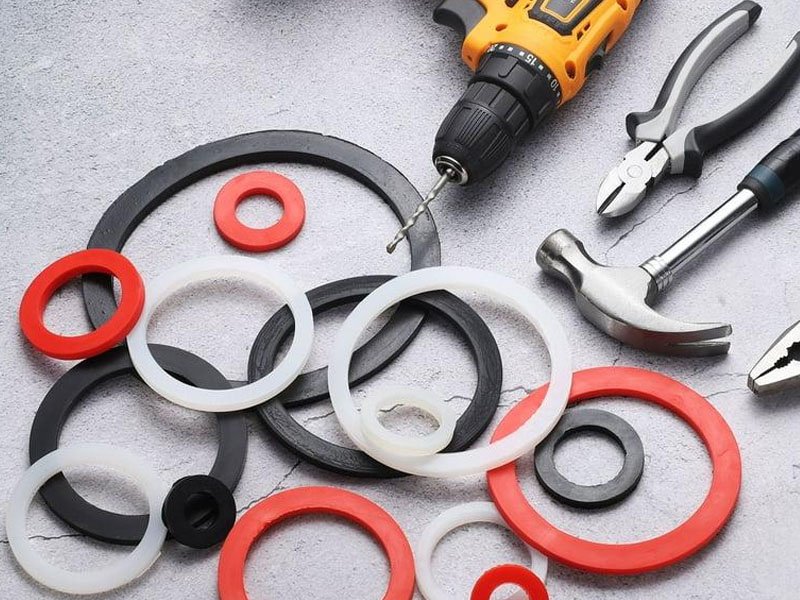
However, rubber and plastic washers usually have lower load capacity and temperature resistance than metal spring washers. Material hardness, compression set, chemical resistance, operating temperature, and long-term deformation should be considered before selecting them.
Conclusion
Lock washers and spring washers may look similar, but they address different connection requirements. When comparing lock washer vs. spring washer options, evaluate the actual failure risk: rotation, loss of preload, thermal movement, vibration, surface damage, or electrical contact requirements. The right washer should match the fastener, load condition, environment, and assembly method.
Need custom washers or injection-molded components for your project? Contact Flexiparts with your drawings, material requirements, and production quantity to discuss a suitable solution and request a quotation.