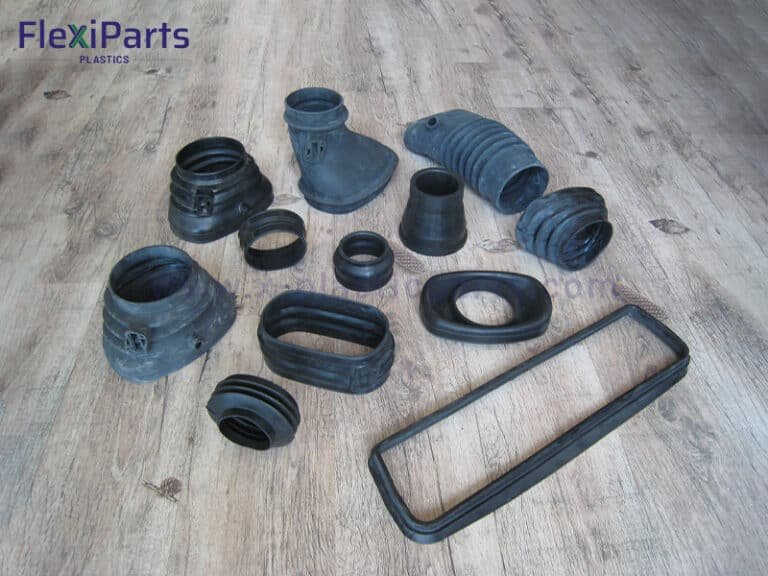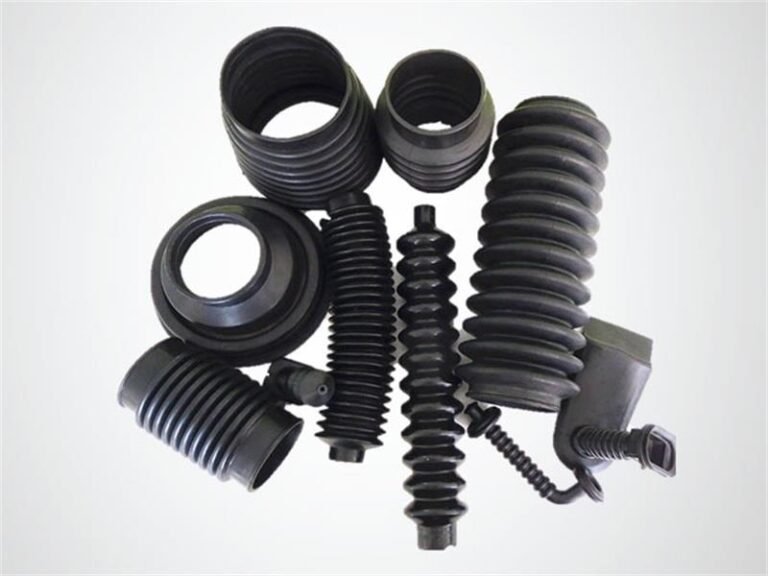
Rubber bellows have a complex folded structure that allows repeated compression, extension, and movement. Compared with standard rubber parts, their mold design requires special consideration for cavity structure, demolding, flash control, and dimensional accuracy.
Due to their flexible geometry and sealing requirements, rubber bellows molds must be carefully designed to achieve stable production and consistent part performance.
1. Rubber Bellows Mold Structure
The structure of a rubber bellows mold is designed to form both the flexible bellows section and the functional end features. Each mold component plays a specific role in achieving accurate dimensions, reliable demolding, and stable production.
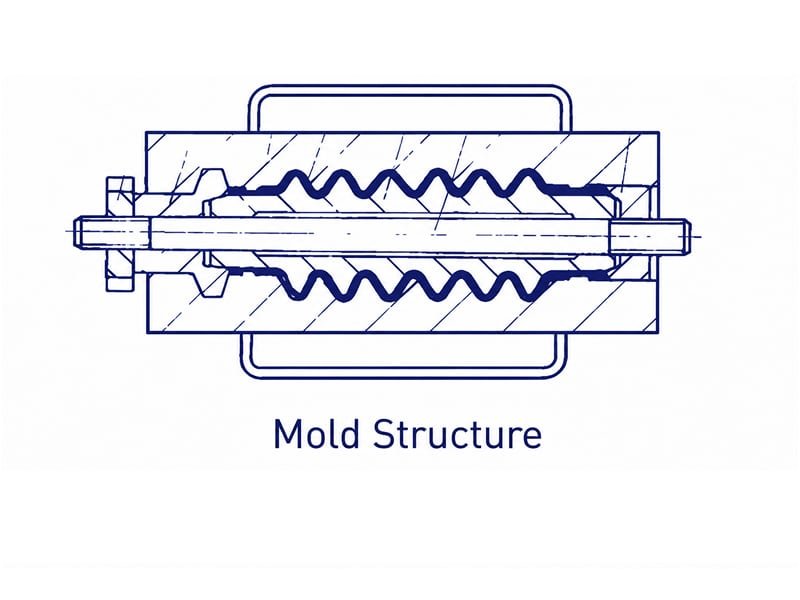
Main Components of Rubber Bellows Mold
| Component | Function |
|---|---|
| Cavity | Forms the external bellows profile |
| Core / Mandrel | Creates the internal shape and supports the bellows structure |
| Insert blocks | Form complex end features and simplify machining |
| Flash grooves | Provide space for excess rubber during compression molding |
| Guide/positioning features | Maintain accurate alignment during mold closing |
Design Challenges
The main challenge in rubber bellows mold design is forming complex end structures. When the end section and bellows body are integrated into one mold structure, machining small and irregular cavity features becomes more difficult. Therefore, mold structures need to be optimized based on part geometry and manufacturing requirements.
2. Insert Block Design for Complex Bellows Structures
Insert block structures are commonly used in rubber bellows molds when the part contains complex end geometries that are difficult to machine directly. Insert blocks allow complex end cavities and difficult-to-machine features to be produced as separate components. This design simplifies machining, improves measurement accuracy, and reduces the complexity of the overall mold structure.
In this design, the end cavity contains a 30° inclined oval-shaped section. An insert block structure is used to simplify the machining of this complex geometry, improve dimensional control, and maintain cavity stability during molding.
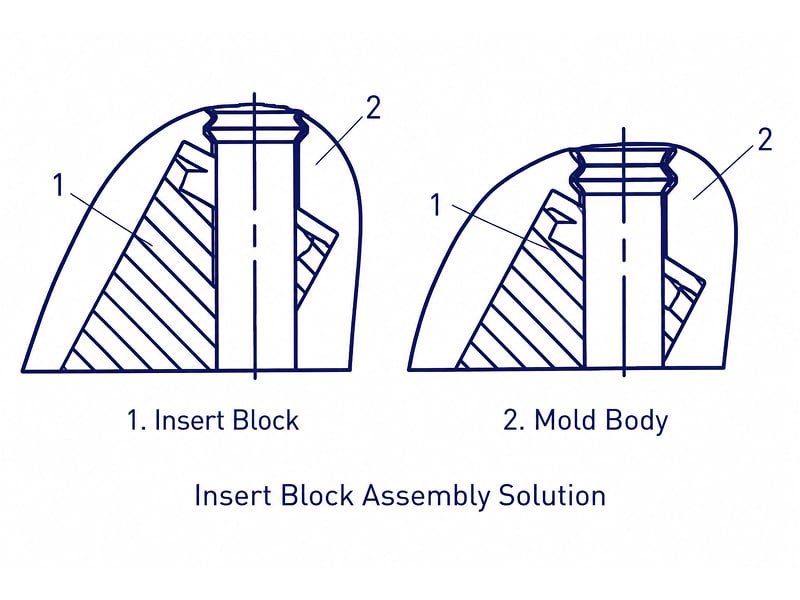
This approach helps reduce tooling complexity, improve mold maintenance, and ensure consistent quality during production.
3. Rubber Bellows Mold Machining and Assembly
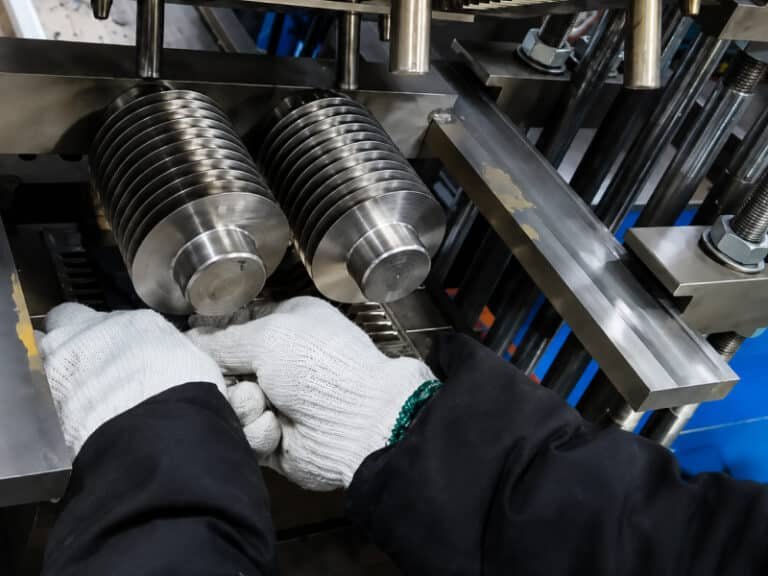
The internal structure of rubber bellows molds is more complex than standard rubber part molds due to the multiple folds and flexible geometry. To achieve accurate cavity dimensions and reliable molding performance, the inner mold is typically designed with multiple components, including split blocks, stopper blocks, and positioning blocks.
The split block structure helps form the bellows profile while allowing easier machining and assembly of complex internal features. Stopper blocks and positioning blocks are used to maintain the correct position of each mold component and ensure consistent cavity alignment during molding.
During mold assembly, the fitting accuracy between inner mold components is critical. Proper control of the clearance between assembled blocks helps prevent flash formation, maintain a smooth inner cavity surface, and improve the dimensional consistency of molded rubber bellows.
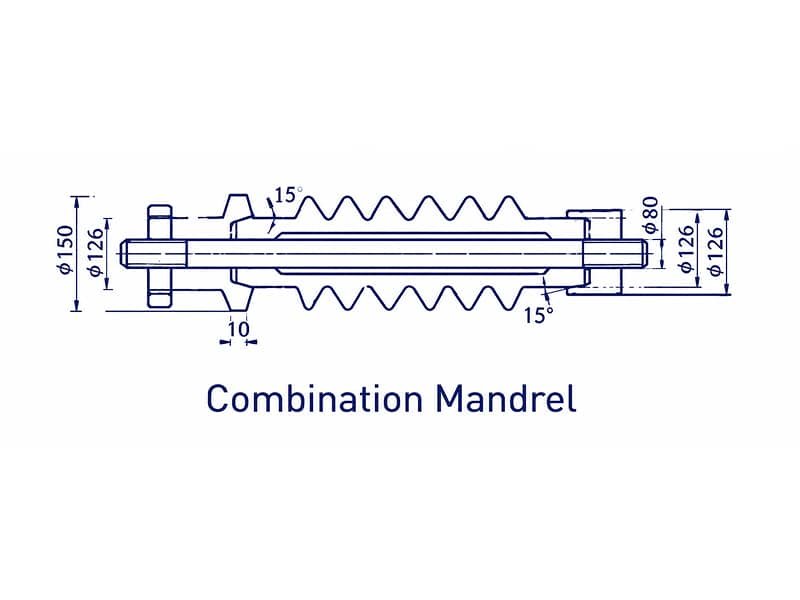
For this specific mold structure, the clearance between inner mold blocks was controlled below 0.01 mm to meet the required molding accuracy.
4. Common Challenges in Rubber Bellows Molding
Due to the flexible structure and complex geometry of rubber bellows, several factors must be carefully controlled during molding to ensure consistent part quality.
Flash Control
The multiple convolutions and sealing areas of rubber bellows make flash control more challenging than standard rubber parts. Proper mold fitting, parting line design, and cavity precision are important to minimize excess rubber and maintain sealing performance.
Demolding Performance
The folded structure of rubber bellows requires careful consideration during mold design to prevent deformation or damage during demolding. Proper core design and mold structure help ensure smooth part removal while maintaining the original shape of the bellows.
Dimensional Consistency
Due to the elastic properties of rubber materials, shrinkage and deformation can affect final part dimensions. Accurate mold design, stable molding conditions, and proper inspection help maintain consistent dimensions across production batches.
5. Custom Rubber Bellows Mold Development
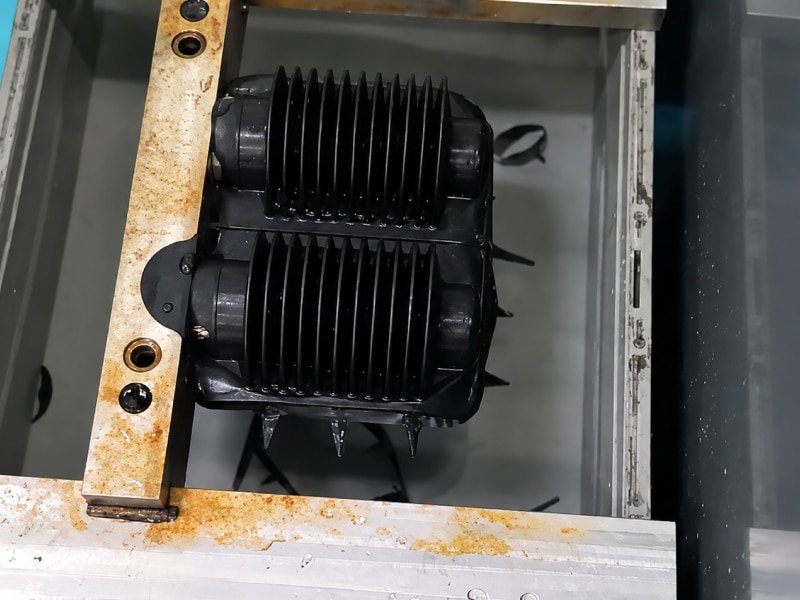
Custom rubber bellows often require specialized mold designs based on part geometry, material properties, operating conditions, and production requirements. The selected rubber compound also affects shrinkage and mold dimensions, making material selection an important consideration during mold development.
From initial mold design and structural optimization to precision machining and trial molding, each stage plays an important role in achieving reliable and repeatable production.
With experience in rubber compression molding and complex mold structures, manufacturers can develop customized rubber bellows solutions for applications requiring specific dimensions, sealing performance, and durability.