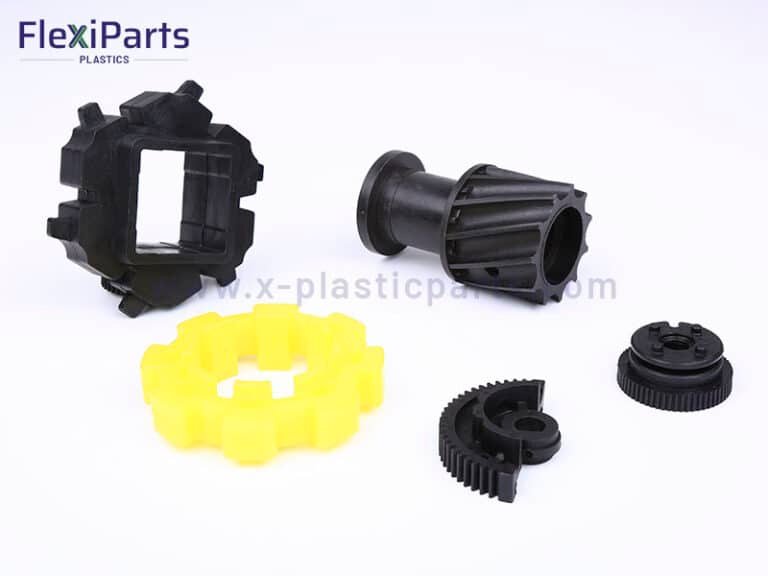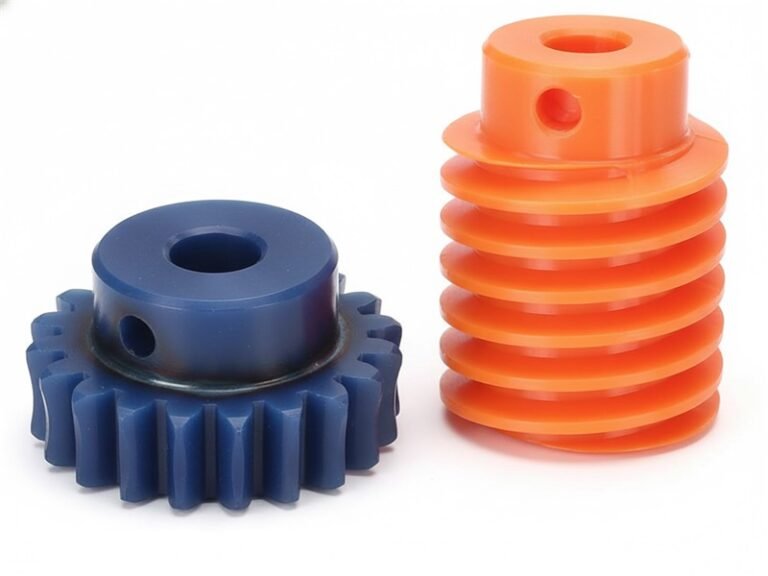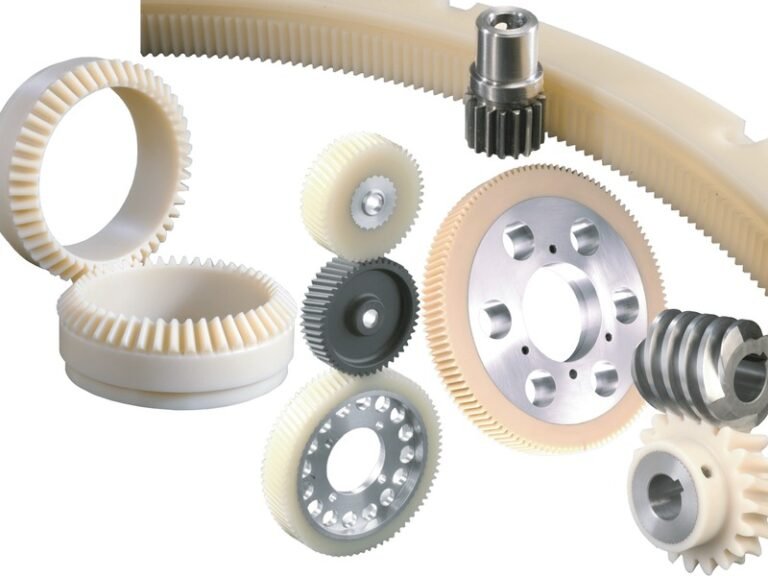
The discussion around replacing metal gears with plastic gears is often simplified into a cost-driven comparison. In practice, it is not. It is a systems engineering decision involving load behavior, thermal stability, tribology, manufacturing constraints, and long-term reliability under real operating conditions.
Metal gears have dominated industrial transmission systems for over a century. Their predictability, well-established design standards, and machining maturity make them the default choice in many engineering environments. Plastic gears, by contrast, entered large-scale industrial use much later and only became truly viable with the maturation of screw-based injection molding systems and advanced engineering polymers such as POM and PA66.
The transition is therefore not about replacement in a strict sense. It is about redesigning the transmission system around different material physics.
For a direct comparison, review plastic gears versus metal gears. Our plastic gear types guide also explains where different tooth forms and transmission layouts fit.
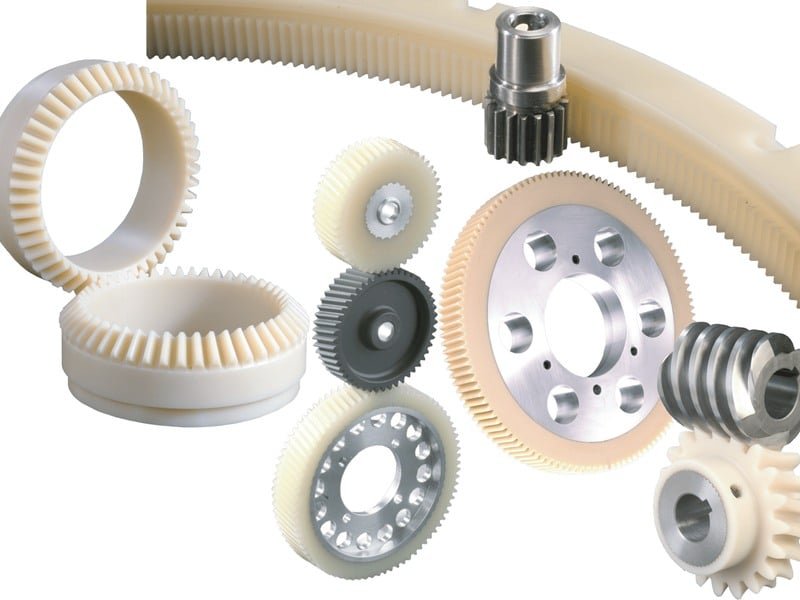
Challenges in Metal-to-Plastic Gear Transitions
Before discussing advantages, it is necessary to understand why plastic gears were historically constrained.
The first limitation is manufacturing maturity. Early injection molding equipment was not suitable for stable processing of semi-crystalline engineering plastics. Without consistent plasticization and dimensional control, gear precision and mechanical repeatability were unreliable.
The second limitation is engineering inertia. Metal gear design has a century-long optimization history. Designers are trained to think in terms of stiffness, torque capacity, and fatigue resistance in metallic systems. Plastic gear systems, however, behave differently. They introduce viscoelastic deformation, thermal expansion sensitivity, and lubrication-dependent wear mechanisms.
The third limitation is systemic. A gear is not an isolated component—it is part of a transmission architecture. Changing material requires rethinking lubrication strategy, housing stiffness, load distribution, and noise control.
The Six Core Design Foundations of Plastic Gear Systems
At Flexiparts, plastic gear development is not treated as a material swap. It is governed by six interdependent engineering foundations.
1. Gear Geometry and Tooth Profile Design
Tooth profile design determines load distribution, contact stress, and noise behavior. In plastic gears, modifications are often required compared to metal standards. Flexiparts utilizes proprietary gear design software to modify the pressure angles, add tip relief, and optimize tooth profiles, maximizing contact ratios and distributing loads evenly to prevent root fracture.
2. Mold Tooling Design and Precision Manufacturing
Unlike machined metal gears, plastic gears are defined by mold accuracy. Gate position, cooling channel layout, shrinkage compensation, and cavity balance directly influence dimensional stability and concentricity. Flexiparts develops high-precision molds with integrated cooling channels to ensure uniform thermal contraction, maintaining tight dimensional tolerances.
3. Material Selection and Tribological Matching
Material selection is not limited to strength. It includes wear resistance, creep behavior, moisture absorption, thermal stability, and friction coefficient. Common engineering materials include POM, PA66, reinforced nylons, and high-performance wear-modified polymers. Flexiparts selects and customizes high-performance grades, utilizing reinforcements and built-in lubricants to resist creep, heat, and wear without degrading acoustic-dampening properties. And often recommends custom compounds tailored to specific operating environments.
4. Injection Molding Process Optimization
Process parameters like melt temperature, injection speed, and pack pressure determine the internal stress state and microstructural uniformity of the gear. At Flexiparts, we fine-tune parameters like packing pressure, cooling time, and gate design to achieve tight tolerances and superior mechanical properties.
5. Testing and Performance Validation
Plastic gears require validation beyond dimensional inspection. Wear testing, torque endurance, thermal cycling, and noise evaluation are essential. Our lab runs accelerated life testing, torque cycling, noise analysis, and environmental simulations. This data-driven validation catches issues early.
6. System-Level Application Integration
The most overlooked factor is system integration. Gear performance depends on housing rigidity, alignment accuracy, lubrication strategy, and load fluctuation patterns. Without understanding the full gearbox system, even a well-designed gear can fail prematurely. Flexiparts evaluates the entire gearbox assembly—analyzing thermal expansion differentials between plastic gears and metal housings, shaft deflections, and structural backlash—to ensure long-term reliability.
How to Choose Between Plastic and Metal Gears?
The decision between plastic and metal gears should be based on functional requirements rather than convention.
Start with operating conditions. High-torque, high-speed, or extremely high-temperature applications may still favor metal, especially hardened steel or powder metallurgy options. However, for moderate loads, intermittent duty, or noise-sensitive environments, engineered plastics often outperform.
Consider weight. Plastic gears can slash mass by 50-80%, reducing inertia and energy consumption—vital in robotics, automotive, or renewable energy systems. Noise reduction is another major win; plastics naturally dampen vibrations. Self-lubricating properties in materials like modified POM or specialty nylons can eliminate grease in some cases, cutting maintenance and contamination risks.
Cost tells a complex story. Tooling investment is higher upfront for plastic, but per-part costs drop dramatically at volume. Machining metal gears (hobbing, grinding) remains expensive for complex profiles. Lead times also favor injection molding once tooling is ready.
Environmental factors matter too. Plastics excel in corrosive settings—chemical exposure, moisture, or outdoor weathering—where metals might rust or pit. But plastics have limits: extreme loads, very high temperatures (above 120-150°C continuous for most), or requirements for ultra-precise backlash may push you back toward metal.
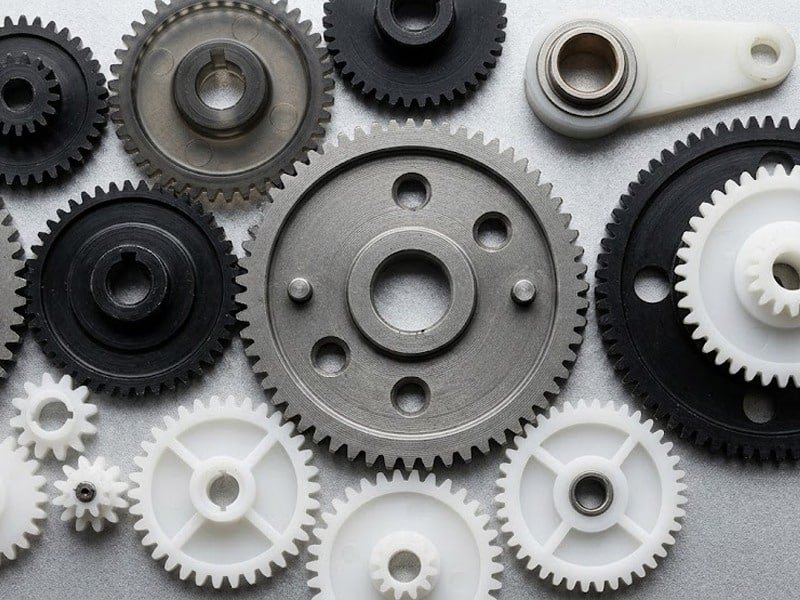
Plastic Gears Advantages and Application Case
When conditions align, plastic gears deliver impressive gains. They run quieter, weigh less, resist corrosion, and often cost less at scale. Self-lubricating grades reduce or eliminate maintenance. Better damping improves system longevity by cutting vibration-induced fatigue.
The Industrial Case
The solar energy sector is a typical example. Solar trackers must endure harsh outdoor conditions while delivering precise movement and high torque. Traditional all-metal planetary gearboxes worked but brought noise, weight, and higher processing costs. By incorporating high-performance wear-resistant plastic gears in the first stage, systems achieved significantly extended fatigue life along with noticeable noise reduction and simplified lubrication requirements. Production efficiency soared because injection molding outpaces metal hobbing for high volumes. These gains helped accelerate the deployment of solar tracking technology, contributing to higher energy yields and lower levelized costs of electricity.
Such successes aren’t limited to solar. Similar benefits appear in e-bikes, automotive steering systems, pumps, and industrial automation. The key lies in proper design and material selection rather than simple substitution.
How Flexiparts Supports Plastic Gear Development
At Flexiparts, plastic gear manufacturing is structured as an engineering collaboration process rather than a simple production service.
Step 1: Requirement and Load Analysis
We begin with a detailed analysis of torque curves, speed profiles, environmental conditions, and duty cycles. This defines whether plastic gearing is viable and where it should be applied in the system.
Step 2: Gear and System Design Optimization
Our engineering team reviews tooth geometry, backlash requirements, and contact stress distribution. Where necessary, we adjust design parameters to align with polymer behavior rather than metal assumptions.
Step 3: Material Recommendation and Selection
Based on operating conditions, we recommend appropriate engineering polymers, balancing wear resistance, creep stability, thermal resistance, and cost constraints.
Step 4: Mold Design and DFM Validation
We develop mold flow analysis, shrinkage compensation models, and cavity balancing strategies. Design-for-manufacturing reviews are conducted to reduce risk before tooling begins.
Step 5: Prototype Production and Testing
Initial samples are produced for dimensional inspection and functional testing. Torque endurance, wear behavior, and noise performance are evaluated under simulated working conditions.
Step 6: Iteration and Mass Production Scaling
Based on test feedback, we refine both mold and process parameters. Once validated, the system transitions into stable mass production with controlled process windows.