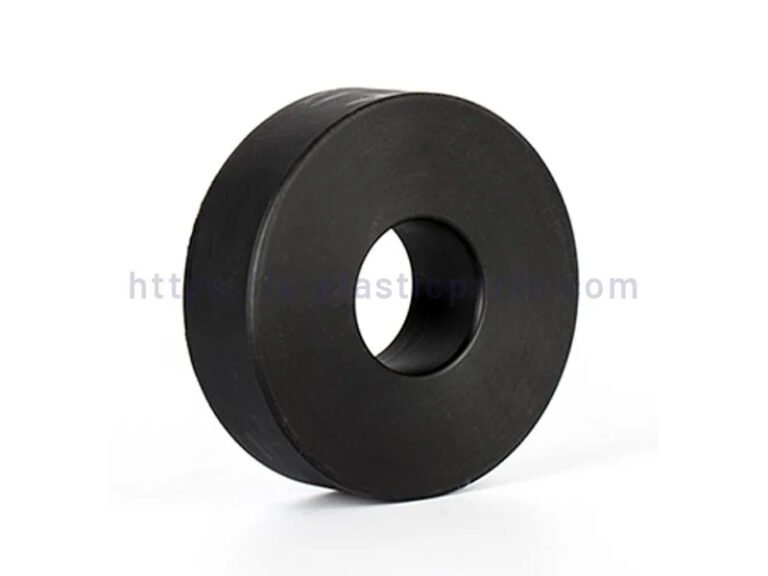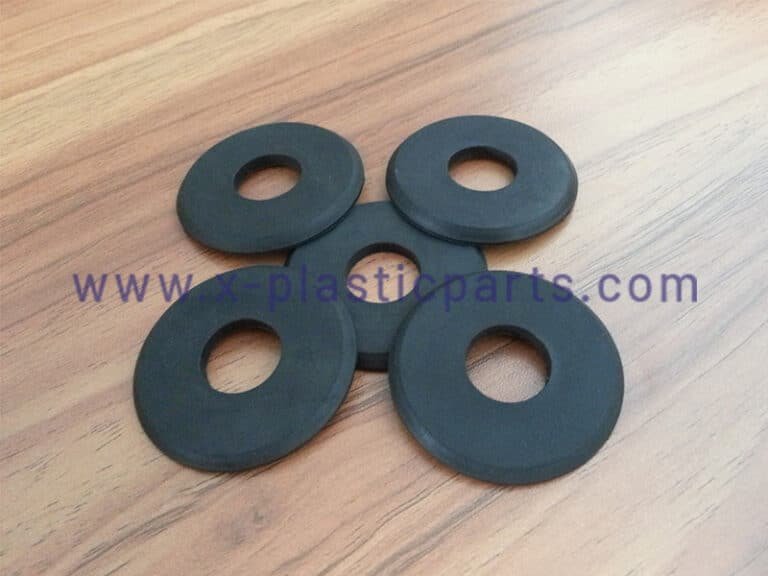
Leakage, vibration, and loosening are common issues in many mechanical assemblies, often caused by improper sealing components. A rubber washer is a simple but essential part used to improve sealing and reduce mechanical stress between connected surfaces. However, selecting the wrong type or material can easily lead to performance problems in real applications.
What is a Rubber Washer?
A rubber washer is a flat or slightly shaped ring made from elastomeric material with a central hole. It sits between two surfaces or around a fastener to create a seal, distribute pressure evenly, or reduce vibration transmission. Unlike metal or plastic washers, rubber versions compress under load and conform to minor surface irregularities. This flexibility makes them suitable for applications where rigid materials would fail to maintain contact.
Rubber washers serve three primary functions:
- First, they prevent fluid or gas leakage in plumbing, pumps, and valves.
- Second, they absorb shock and dampen vibration in machinery and equipment mounts.
- Third, they protect surfaces from damage caused by metal-to-metal contact.
Thickness, inner diameter, and outer diameter determine performance in each case.
Common Types of Rubber Washer
The specific geometric profile of the rubber washer governs its compression ratio, pressure rating, and sealing behavior. Understanding the types of rubber washers is essential for selecting the right solution.
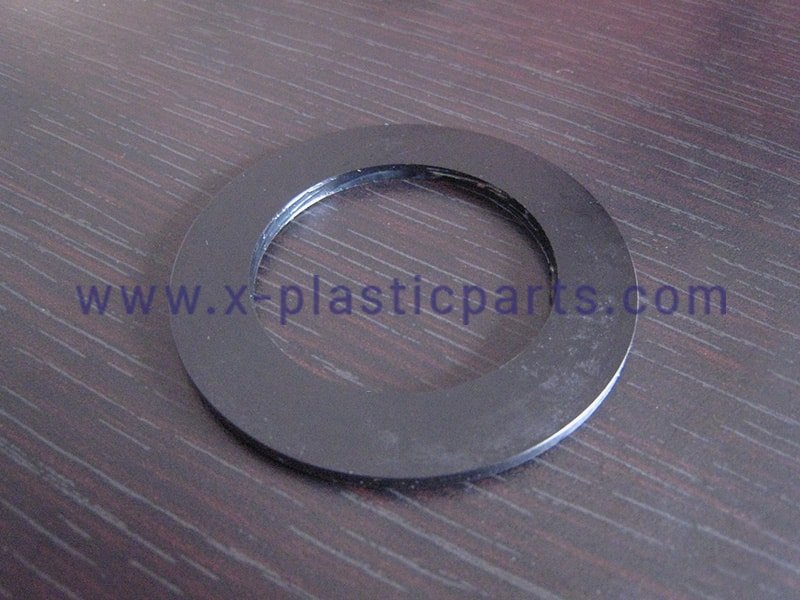
Flat Washers
Flat rubber washers are the most common type. They feature a simple disc shape with uniform thickness, flat parallel faces with concentric inner diameters (ID) and outer diameters (OD). They are used in static sealing applications such as faucets, flanges, and electrical enclosures. Their straightforward design allows easy installation and reliable performance in low to moderate pressure environments.
O-Rings
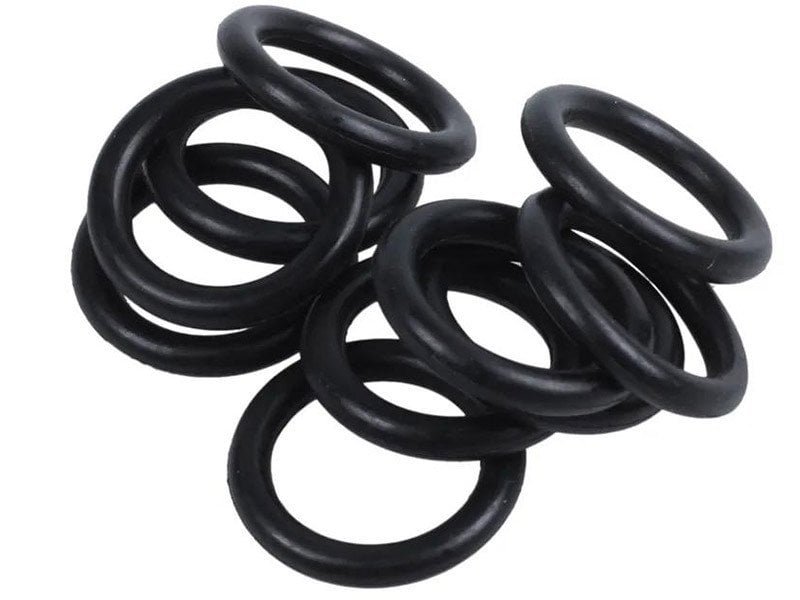
An O-Ring is a toroidal elastomeric loop with a circular cross-section. When seated inside a precisely machined groove, it operates under both axial and radial pressure. As internal fluid pressure increases, the cross-section deforms against the downstream walls of the groove. O-Rings are highly effective in dynamic or high-pressure sealing situations, such as hydraulic systems and pneumatic cylinders.
Bonded Sealing Washer
Bonded rubber washers combine a rubber layer with a metal insert. This construction provides additional strength while retaining the sealing properties of the elastomer. They are frequently specified in automotive and heavy equipment applications where both compression set resistance and structural integrity matter.
Flanged Rubber Washer
Flanged rubber washers include a raised rim or flange around the outer edge. This design improves retention and provides a broader sealing surface, which helps prevent the washer from being pulled through holes under pressure. They are commonly specified in plumbing connections, such as sink drains and toilet installations.
Conical Rubber Washer
Conical rubber washers have a tapered, cone-shaped profile. This geometry allows them to compress progressively and create a tight seal against angled or irregular surfaces. They are frequently used in plumbing fixtures like faucets and valves, as well as in applications requiring some spring-like compensation for thermal expansion or minor movement.
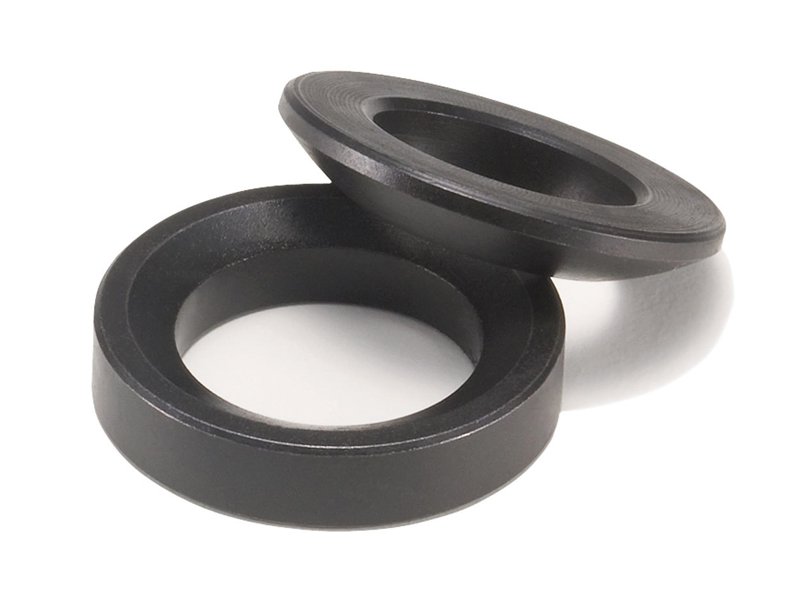
Custom Rubber Washer
When standard dimensions or materials fall short, custom rubber washers become the practical choice. We produce these to exact client specifications, including non-standard inner and outer diameters, unusual thicknesses, or complex profiles. Custom rubber washers can incorporate special features such as grooves, multiple holes, or integrated seals. The custom washers can be based on the work conditions, such as chemical exposure, temperature ranges, or pressure levels, to control every variable, resulting in longer service.
Custom washer Solution
Common Material Selection Based on Application Conditions
The performance of a rubber washer depends primarily on the material used. Different elastomers provide different resistance properties.
EPDM
EPDM rubber performs well in outdoor and water-based applications. It resists weathering, ozone, and UV exposure effectively, which is why it appears in plumbing, roofing, and HVAC systems. EPDM maintains flexibility across a broad temperature spectrum and does not degrade quickly when exposed to steam or certain chemicals.
NBR
Nitrile rubber (NBR) offers strong resistance to oils, fuels, and greases. It is a frequent choice for automotive and industrial machinery applications where petroleum-based fluids are present. Its temperature range typically covers -40°C to 120°C, making it reliable in many workshop environments.
Silicone Rubber
Silicone rubber suits high-temperature and food-grade requirements. It remains stable from -60°C to 230°C in many formulations and complies with relevant hygiene standards. Medical equipment and food processing lines often specify silicone rubber washers where cleanliness and thermal stability are priorities.
Viton
Viton (fluoroelastomer) provides superior resistance to aggressive chemicals, acids, and high temperatures. Although more expensive, it solves problems in chemical processing plants and oil exploration equipment where other materials would fail rapidly.
Neoprene Rubber
Neoprene balances general-purpose durability with moderate oil and weather resistance. It is commonly used in marine and electrical applications. Natural rubber delivers excellent elasticity and abrasion resistance but requires careful evaluation for ozone or oil exposure.
Here is a table that outlines materials’ properties and working conditions.
| Materials | Working Temp. Range | Working Conditions |
|---|---|---|
| NBR | -40℃ to +120℃ | Petroleum oils, hydraulic fluids, diesel fuel, water. |
| EPDM | -50℃ to +150℃ | Outdoor weathering, UV/Ozone, high-pressure steam, polar solvents. |
| Silicone | -60℃ to +260℃ | Extreme thermal cycling, electrical insulation, medical/food contact. |
| FKM / Viton | -20℃ to +200℃ | Strong acids/alkalis, aircraft fuels, high vacuum. |
| NR | -50℃ to +80℃ | High-impact shock absorption, heavy vibration dampening, mechanical tearing. |
How to Choose the Right Rubber Washer?
Choosing the right rubber washer involves systematic evaluation of several factors.
- Begin by documenting the operating environment: maximum and minimum temperatures, types of fluids or gases in contact, and exposure to sunlight or ozone.
- Next, record the required dimensions — inner diameter must fit the fastener or shaft properly, while outer diameter and thickness must provide sufficient sealing surface and compression.
- Consider mechanical demands. Will the washer experience continuous vibration, cyclic loading, or high pressure? These conditions influence both material hardness (durometer) and thickness selection.
- Regulatory needs matter in food, drinking water, or medical applications; ensure the chosen rubber washer meets necessary compliance standards.
- Budget and order volume also affect decisions. While initial cost is important, total cost of ownership — including replacement frequency and maintenance labor — often favors higher-performing materials or custom designs.
Common selection mistakes include ignoring chemical compatibility or selecting thickness based only on availability rather than engineering requirements.
When and How to Custom Rubber Washers
While standard rubber washers cover many general applications, they are not always suitable for complex or demanding environments. When those prove insufficient, custom processing offers a direct solution.
Typical scenarios include equipment with non-standard bolt patterns, extreme operating conditions outside published ranges, or the need for integrated multi-function components.
Our custom manufacturing process starts with detailed specifications. We use CNC cutting, compression molding, or waterjet techniques depending on quantity and complexity. This approach ensures exact dimensional accuracy and material formulation tailored to the application. Custom rubber washers can incorporate reinforcements, special surface finishes, or color coding for assembly identification.
The custom rubber washers reduced leakage rates, extended maintenance intervals, and eliminated vibration-related failures.
Conclusion
The rubber washer’s performance depends on selecting the right type, material, and design based on actual working conditions. In cases where standard options cannot meet specific requirements, custom solutions provide a more reliable and application-focused approach. If you are looking for rubber washers for your project or need a custom design based on your operating conditions, feel free to contact us for technical support and manufacturing solutions.