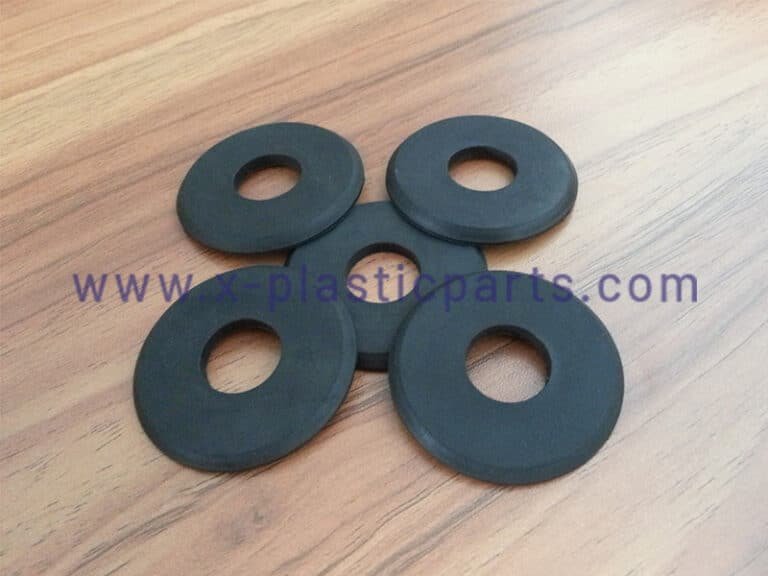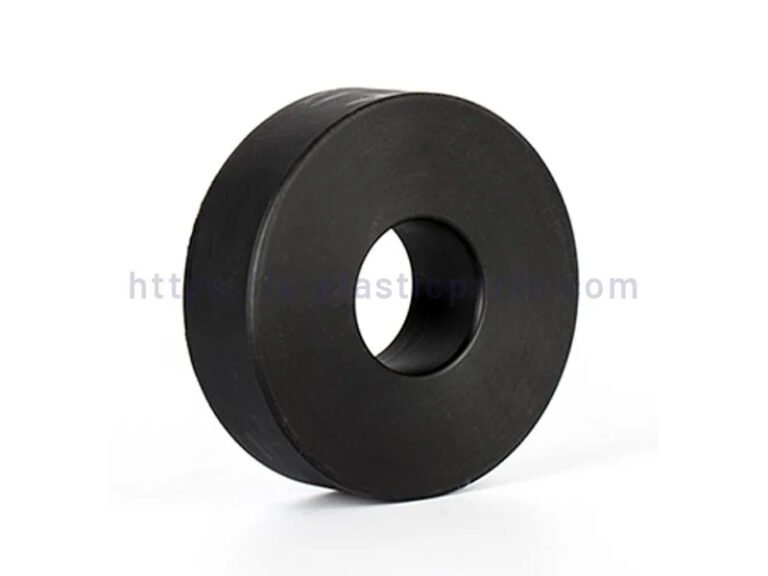
In fastening systems exposed to moisture, temperature variation, or moderate chemical contact, Neoprene rubber washers serve an important role. They offer a balanced combination of mechanical stability and environmental resistance and provide reliable sealing, load distribution, and vibration control.
What Is a Neoprene Rubber Washer?
A neoprene rubber washer is a flat, ring-shaped component manufactured from neoprene rubber, also known as polychloroprene. It was placed under the head of a bolt or nut, or between two joined surfaces. Its primary functions include creating a seal against fluids, distributing pressure evenly, reducing vibration transmission, and protecting the joined materials from direct contact wear.
Neoprene rubber washers come in various thicknesses and diameters. Some versions feature closed-cell structures that improve compression set resistance. Unlike metal washers, these rubber versions compress under load and conform to surface irregularities. This compression helps prevent leaks in assemblies exposed to moisture or pressure changes. Standard production methods include die-cutting sheets of neoprene rubber to precise inner and outer diameters. Thickness typically ranges from 1 mm to 6 mm or more, depending on the required performance.

Main Properties of Neoprene Rubber
Neoprene rubber provides a balanced set of physical and chemical characteristics that support its use in washers. The material resists degradation from several common industrial exposures while maintaining flexibility over time.
| Property | Typical Range / Value | Description |
|---|---|---|
| Temperature Resistance | Typically -20°C to 100°C (continuous) | Suitable for moderate temperature environments |
| Oil and Chemical Resistance | Moderate | Good against petroleum-based fluids |
| Weather/UV Resistance | Excellent | Performs reliably in outdoor conditions |
| Compression Set | Moderate | Maintains sealing under sustained pressure |
| Flexibility | Good elasticity | Absorbs vibration and mechanical movement |
| Elastic Recovery | High | Returns to shape after compression |
| Hardness (Durometer) | 40–90 Shore A | Allows selection between soft sealing and firm load-bearing |
| Tensile Strength | 10–20 MPa | Resistance to pulling forces |
| Abrasion Resistance | Moderate to good | Withstands surface wear |
Advantages and Disadvantages of Neoprene Rubber Washers
Advantages of Neoprene Rubber Wahsers
Neoprene rubber washers’ resistance to weathering, ozone, and UV exposure makes them suitable for outdoor applications where natural rubber would degrade more quickly. They also exhibit moderate resistance to oils and chemicals, allowing use in environments where light industrial fluids are present.
Another important characteristic is mechanical stability. Neoprene maintains its elasticity over time, which helps preserve sealing performance under repeated compression cycles. In addition, the material is cost-effective compared to high-performance elastomers such as fluorocarbon or silicone.
Disadvantages of Neoprene Rubber Washers
Despite their versatility, neoprene rubber washers are not suitable for all conditions. Their temperature resistance is limited, which restricts their use in high-temperature environments. Prolonged exposure to strong acids, solvents, or aggressive chemicals can lead to material degradation.
The compression set of neoprene is moderate rather than low. Under continuous high load, deformation may become permanent, reducing sealing efficiency. For applications requiring long-term compression recovery, alternative materials may be more appropriate.
Comparison with Other Rubber Gasket Materials
Selection often involves comparing neoprene rubber washers to alternatives such as natural rubber, EPDM, nitrile (NBR), and silicone.
| Material | Strengths | Limitations | Best Use Case |
|---|---|---|---|
| Neoprene | Balanced performance | Limited extreme resistance | General industrial sealing |
| EPDM | Excellent weather resistance | Poor oil resistance | Outdoor and water systems |
| Nitrile (NBR) | Strong oil resistance | Poor UV resistance | Automotive and fuel systems |
| Silicone | High temperature resistance | Lower mechanical strength | High-temperature environments |
Neoprene Washers Common Applications
Neoprene rubber washers are used across multiple industries due to their versatility.
In the automotive sector, they are applied in sealing and vibration isolation where moderate oil exposure and temperature variation are expected. Their flexibility allows them to accommodate movement between components.
In plumbing and piping systems, they create watertight connections between flanges or under valve bolts. The material’s resistance to water and mild chemicals supports long service in these settings.
In construction, neoprene washers are used for weatherproofing and sealing in exterior assemblies. Their resistance to UV and ozone ensures stable performance over time.
Electrical applications also rely on neoprene washers for environmental sealing and insulation. The material helps protect components from moisture and dust ingress.
In marine environments, neoprene performs adequately in the presence of water and moderate salt exposure, making it suitable for sealing and cushioning applications.
How to Choose the Right Neoprene Rubber Washer?
Selecting the correct neoprene rubber washer requires evaluating several factors. A mismatch between material properties and application conditions often leads to premature failure.
Working Environment
The installation environment determines exposure to external elements. Indoor controlled settings allow standard grades, while outdoor or humid locations need formulations with strong weather resistance.
Media Exposure
The type of fluid or substance in contact with the washer must be considered. Neoprene is compatible with water and performs adequately with light oils. However, it is not recommended for strong chemicals or aggressive solvents. In such cases, alternative materials should be evaluated.
Temperature Range
Confirm that the expected operating temperatures fall within -20°C to 100°C for continuous use. Brief excursions slightly outside this range may be acceptable, but sustained extremes reduce lifespan.
Hardness (Shore A)
Hardness determines how the washer responds to compression. Softer materials provide better sealing by conforming to surface irregularities. Harder versions resist compression set and handle heavier loads without excessive deformation. Typical choices fall between 50 and 80 Shore A for most washer applications.
Dimensions and Tolerances
Dimensions matter as well. The inner diameter must fit the fastener shaft properly. The outer diameter should provide enough surface area for load distribution without interfering with adjacent parts. Thickness influences the amount of compression possible—thicker washers offer more cushioning but may require longer fasteners.
Custom Neoprene Rubber Washers from Felxiparts
Standard neoprene rubber washers are suitable for many applications, but they may not meet all requirements. Non-standard dimensions, specific hardness levels, or unique environmental conditions often require customization.
Flexiparts provides custom rubber washer service to match precise specifications. The custom includes adjustments in material formulation, thickness, and geometry. Manufacturing processes such as die-cutting or molding allow for tighter tolerances and improved consistency. Welcome to contact us and get a custom solution for your sealing project.
FAQ
Yes. Neoprene washers have good water resistance and create effective seals against water and moisture.
Yes. They resist weather, ozone, and UV exposure well, making them suitable for outdoor use.
They are moderately oil-resistant. Neoprene can handle light oils and greases, but it is not suitable for heavy oils, fuels, or strong hydrocarbon exposure.
Yes. Neoprene washers can be custom manufactured in different sizes, thicknesses, hardness levels, and shapes based on application requirements.
Their lifespan depends on operating conditions. In normal environments, they can last several years. High heat, heavy load, or chemical exposure will shorten their service life.
Neoprene has better oil resistance and balanced general performance. EPDM performs better in outdoor and water-based environments but has very poor oil resistance.