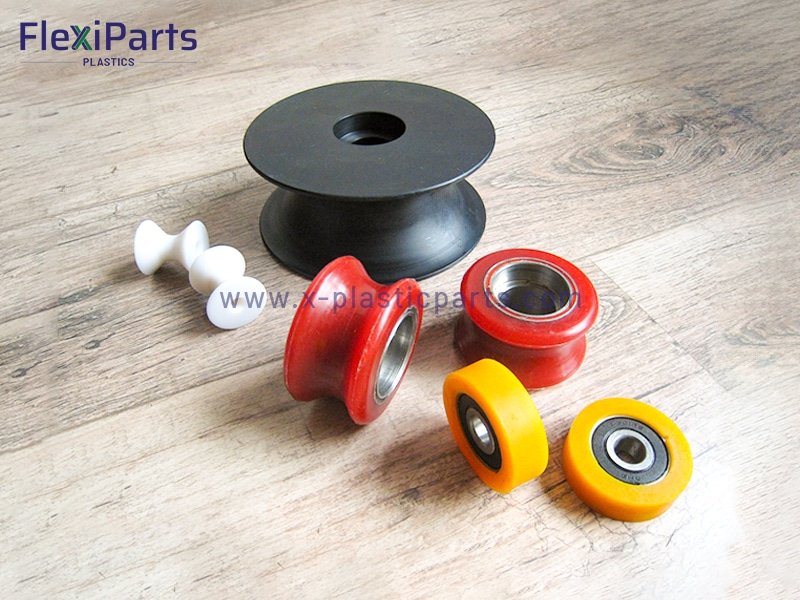
Common Materials for Fixed Pulleys
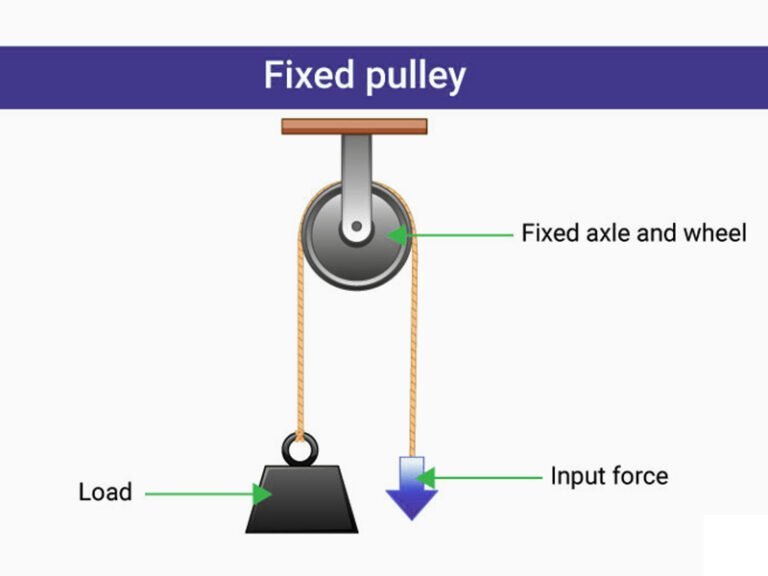
Because a fixed pulley carries the full reaction load through a stationary mount rather than distributing it across a moving system, material choice here is driven mainly by groove wear and bearing friction — not by minimizing weight the way it might be for a movable pulley that travels with the load.
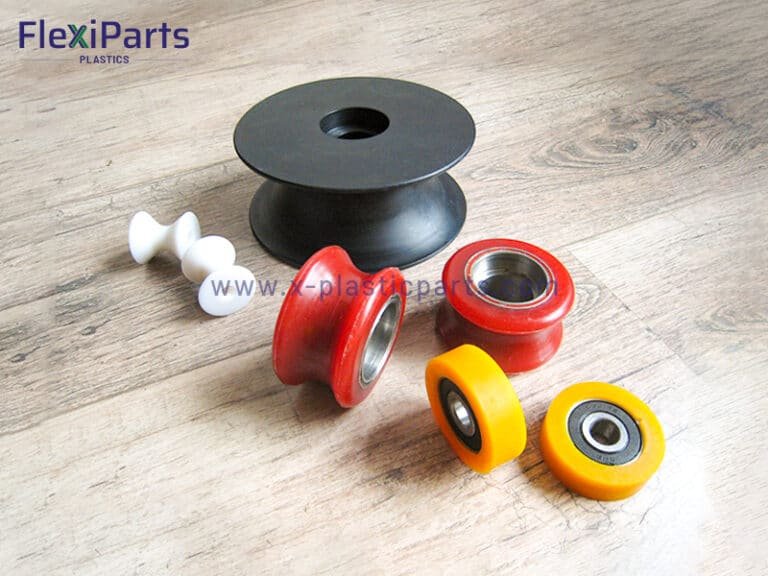
- Nylon — low-friction, quiet operation without added lubrication; since a fixed pulley’s efficiency is so sensitive to bearing and groove friction, nylon’s self-lubricating surface is a common default for light-duty, noise-sensitive settings such as fitness equipment or indoor fixtures.
- POM (Acetal) — tighter dimensional stability under load and temperature swings than nylon. Because a fixed pulley’s groove geometry directly affects how much of the pulling force reaches the load, POM’s stability matters more here than in systems where a mechanical advantage buffers minor dimensional drift.
- UHMW-PE — strong abrasion and impact resistance; suited to outdoor or high-cycle-count fixed installations, where the same groove sees the same rope path repeatedly and wear accumulates in one place rather than being spread across a traveling wheel.
- Aluminum — a metal alternative for higher load ceilings than engineering plastics allow, useful where the stationary mount needs to carry a heavier full reaction load than a plastic groove can handle long-term.
Material choice should follow from the load and environment factors below, not the other way around.
Factors to Consider When Designing a Custom Fixed Pulley
- Load capacity — since a fixed pulley transmits the full load through its mount rather than sharing it across a moving system, capacity needs to be engineered to the application’s actual working load and duty cycle, not a generic catalog rating.
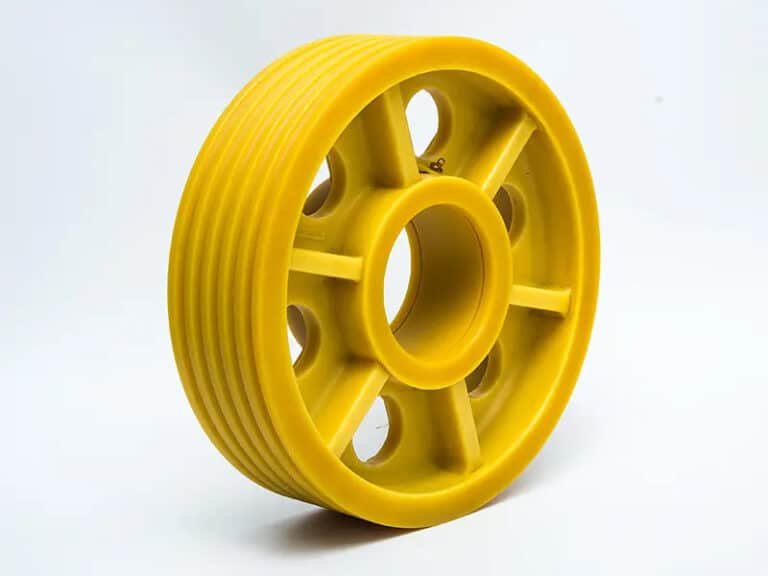
- Groove profile — matched to your rope, cable, or belt type (V-groove, flat, or custom cross-section). Because there’s no mechanical advantage to mask slippage or uneven wear, groove fit has a more direct effect on both wear rate and how much effort the operator actually feels.
- Bearing selection — a fixed pulley’s bearing sees a steady, non-traveling reaction load rather than the shifting dynamic load a movable pulley’s bearing carries — sealed ball bearings, bushings, or oil-impregnated bearings are chosen based on that steady load, plus rotational speed and maintenance interval.
- Environment — corrosion resistance, UV exposure, or washdown requirements matter more for a fixed pulley precisely because it stays mounted in one location and one orientation continuously, rather than being repositioned as part of a load-bearing system.
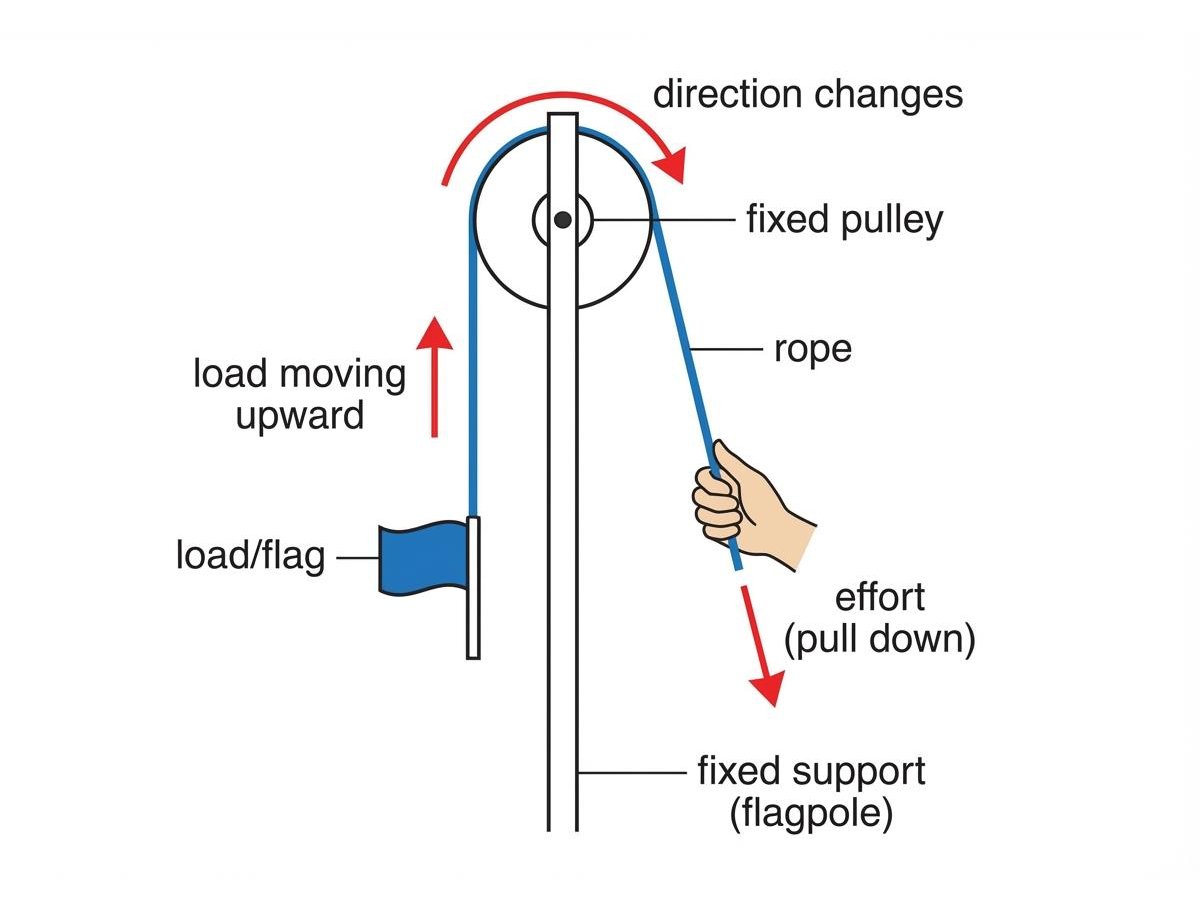
Applications of Custom Fixed Pulleys
Fixed pulleys show up wherever a system needs to redirect force or guide a line without adding mechanical complexity — the simplicity that makes them a poor fit for heavy lifting is exactly why they’re the default choice in these settings:
- Conveyor and material handling lines — guiding belts around corners or over gaps, where the pulley’s job is purely to change the belt’s path, not to reduce the motor’s load.
- Rigging and theatrical systems — redirecting rope or cable through fixed points on a truss or grid, where the load is already supported and only the direction of pull needs to change.
- Fitness and resistance equipment — routing cables through a fixed frame so a single pull translates directly to resistance, without the added moving mass a traveling pulley would introduce.
- Sailing and rigging hardware — blocks mounted to a mast or deck that redirect line without adding purchase, used where crew need directional control more than mechanical advantage.
- Access and industrial doors — counterweight and cable-guide systems where the pulley’s mount never moves, only the cable running through it.
In each case, the deciding factor is the same one covered above: no mechanical advantage is needed, so a fixed pulley’s simpler design, lower part count, and lower maintenance burden win out over a movable or compound system.
Custom Fixed Pulley Manufacturing
Standard fixed pulleys cover common sizes and load ratings, but most real-world installations need a closer match between the groove, bearing, and mount than an off-the-shelf part provides — especially since, as covered above, small mismatches show up directly as extra pulling effort rather than being absorbed by mechanical advantage. We manufacture fixed pulleys to your specified bore and shaft diameter, groove profile, bearing type, and surface treatment, engineered to your actual working load and mounting conditions.