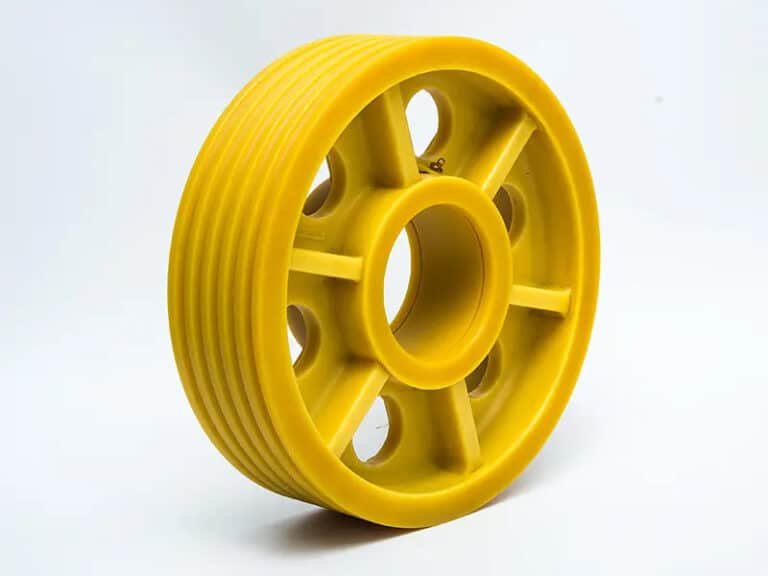
MC nylon pulleys have gained favor among elevator manufacturers for their low cost, lightweight, and ease of installation. Although the use of MC nylon pulleys in elevators spans only about ten to fifteen years, their adoption has grown rapidly.
These elevator nylon pulleys are mainly applied in car return pulleys, counterweight return pulleys, guide pulleys, and speed governor tension pulleys. Because return pulleys are key load-bearing components in the suspension system and are rotating parts, any failure can have serious consequences.
As service time increases, issues with MC nylon pulleys have become more evident during operation. Common problems include abnormal vibration and noise, bearing seizure that prevents rotation, and in severe cases, loss of support that may result in car or counterweight descent. This article examines the main problems observed with elevator nylon pulleys in use and analyzes their causes.
Common Structures of MC Nylon Elevator Pulleys
Current elevator nylon pulley designs primarily fall into three categories:
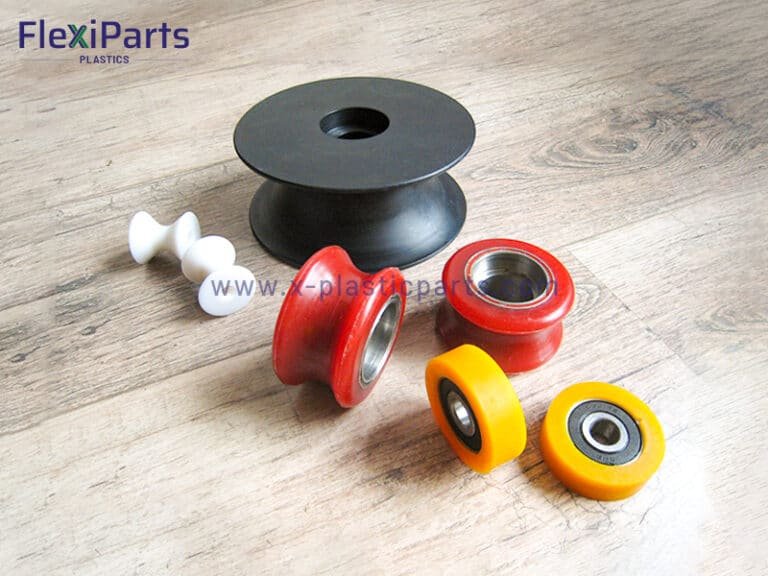
- Bearings are pressed directly into a machined hole in the MC nylon pulley body. This structure relies on a controlled interference fit between the bearing and the pulley hole to achieve preload.
- A steel ring of specified thickness is pressed into the MC nylon pulley hole, after which the bearing is pressed into the steel ring. This design requires proper interference at two interfaces: bearing-to-steel ring and steel ring-to-nylon pulley.
- Metal bushings are embedded into the MC nylon pulley during the casting process. Grooves or keys on the metal bushing create strong bonding with the nylon material as it solidifies.
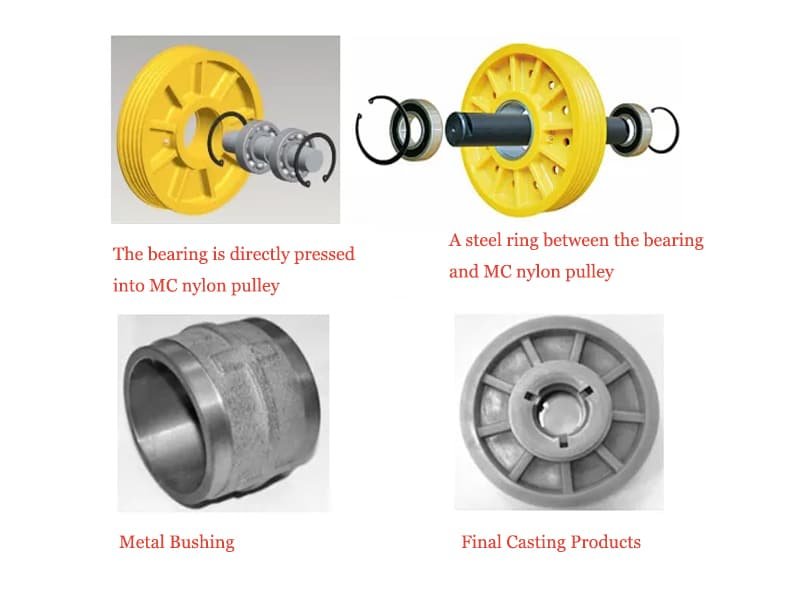
The bonding strength between the embedded metal bushing and the nylon pulley during casting is generally higher than that achieved by pressing a steel ring or bearing into the pulley hole. Regardless of structure, adequate and sustained preload or bonding force remains essential for reliable long-term operation of nylon elevator pulleys.
Main Issues with Bearing Fit in MC Nylon Elevator Pulleys
Field experience shows higher damage rates for MC nylon pulleys, especially in early designs using direct bearing press-fit or steel ring intermediate structures. Resulting problems include noise, vibration, bearing seizure, traction rope jumping out of the groove, and pulley detachment.
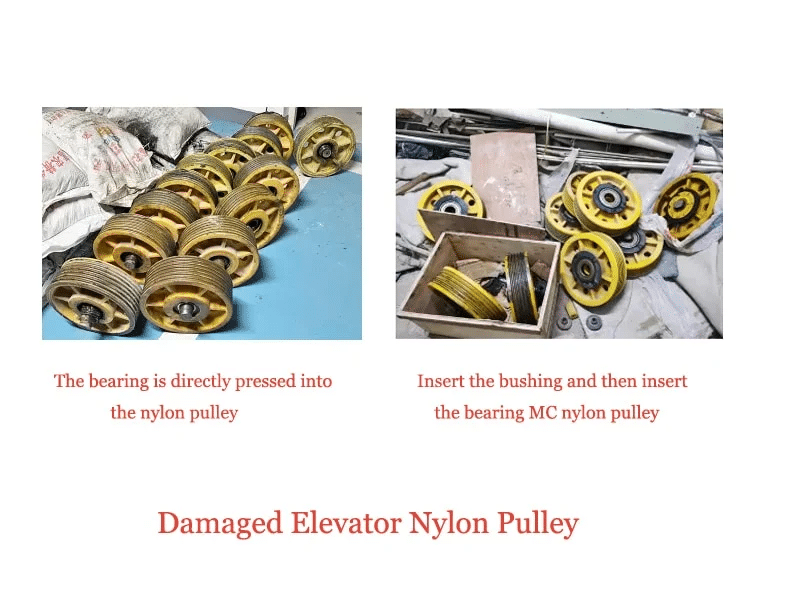
Noise and Vibration Caused by Bearing Damage
This is the most frequent issue with elevator nylon pulleys, particularly after extended operation in high summer temperatures. Nylon and cast iron materials differ significantly in elastic modulus and linear thermal expansion coefficient. Without proper interference fit, the pulley hole and bearing interface may become too tight or too loose, altering bearing clearance and worsening load conditions. This leads to abnormal sounds and noise during operation. Poor installation, incorrect bearing assembly, or inadequate lubrication of non-maintenance-free bearings can cause frictional heating between balls and raceways, accelerating damage and generating noise and vibration.
Bearing Failure
If noise and abnormal vibration from MC nylon pulleys are not addressed promptly, continued operation can result in complete bearing failure. This may involve broken balls, damaged cages, ball seizure, or overheating that causes the bearing to lock.
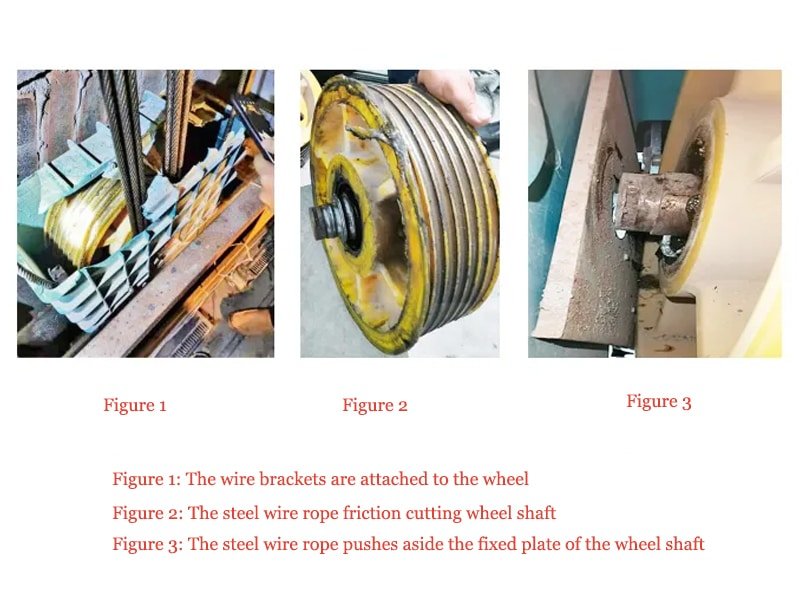
Loss of Support Balance, Pulley tilt, Rope Jumping Out of Groove, and Detachment
Unresolved noise and vibration can damage bearings. Once bearings fail, the return pulley loses balance and tilts, allowing traction ropes to exit the grooves. Continued operation may cause the dislodged rope to cut or press against the shaft or fixing plate, potentially severing the shaft or dislodging the fixing structure. This can lead to complete rope detachment from the pulley, suspension system collapse, and uncontrolled descent of the car or counterweight.
Other Issues with MC Nylon Elevator Pulleys
Uneven Groove Wear
Uneven tension in traction ropes affects MC nylon pulleys significantly. Nylon material is softer than steel wire rope, making it more susceptible to wear during friction. Uneven rope tension causes inconsistent groove wear. This imbalance further aggravates tension differences across ropes, which can intensify wear on specific grooves and, in severe cases, cut into the nylon pulley body.
Installation and Protection Issues
Improper assembly due to human factors can cause dents or scratches on the nylon pulley. Missing or incorrectly installed protective devices may allow foreign objects to enter between rope and groove, or permit slack ropes to jump out, creating safety risks. Personnel involved in installation, maintenance, and inspection should carefully verify protective devices on elevator nylon pulleys and correct any abnormalities to prevent rope dislodgement, pulley or shaft deflection, and deformation of fixing structures.
Measures to Address MC Nylon Elevator Pulley Failures
Mechanical damage, abnormal wear, corrosion, cracks, and material aging can occur during manufacturing, storage, transport, installation, maintenance, and inspection. Proper protection and timely replacement in each stage help prevent elevator incidents caused by pulley failure.
Measures for Elevator Manufacturers
- Strictly control quality when sourcing MC nylon pulleys and provide adequate protection during storage and handling.
- Publicize maintenance requirements and scrap criteria, and conduct training.
- Track field performance, collect data, analyze issues, and implement design improvements where needed.
- Initiate product recalls for the same batch or configuration if common defects or failures are identified.
Measures for Installation and Maintenance Units
- During transport and site storage, protect MC nylon pulleys from rainwater (nylon absorbs moisture readily, leading to swelling that affects dimensional stability and mechanical strength), dust, prolonged sun exposure (which can cause oxidation, cracking, and thermal expansion issues), and impact.
- When lifting or installing, avoid using lightening holes in the pulley as load-bearing points, especially when handling complete cars or counterweight frames, to prevent localized cracking.
- Adjust traction rope tension properly. Due to hardness differences between nylon and metal, significant tension variations can cause uneven contact and accelerated wear in individual grooves.
- For pulleys with non-sealed bearings, perform regular lubrication according to maintenance standards and manufacturer guidelines to prevent stiffness or wear from insufficient lubrication.
- Inspect pulleys against established scrap criteria. Replace immediately if abnormal vibration or noise occurs, grooves show severe wear or missing sections, obvious slippage or clearance appears between hub and bearing or shaft and bearing, or cracks, severe deformation, or aging appear. When replacement is needed, replace the complete pulley assembly rather than individual components.
- Ensure anti-rope-jump devices are installed and that pulleys rotate freely. Monitor for inner ring-to-bearing clearance or outer edge wear after prolonged use.
- For elevators that remain idle for long periods, inspect MC nylon pulleys before resuming operation, as sustained load combined with hardness differences can cause creep deformation over time.
Conclusion
MC nylon pulleys continue to see wider application in elevators due to their inherent advantages. Compared with metal pulleys, however, they exhibit more noticeable quality and stability issues over their service life. However, recent improvements in material properties, casting and assembly processes, and tolerance selection have largely resolved these concerns. With effective quality control, reasonable maintenance costs, and proper handling during installation, operation, and inspection, elevator nylon pulleys are expected to achieve even broader use in the industry.