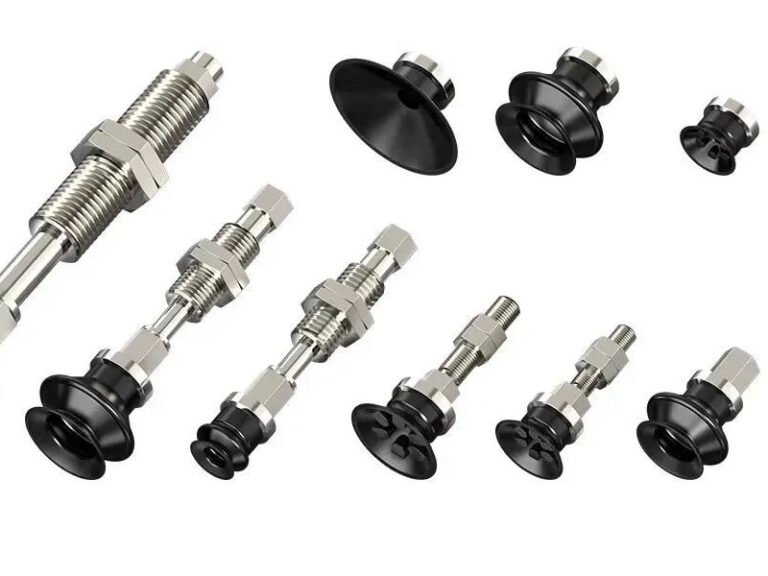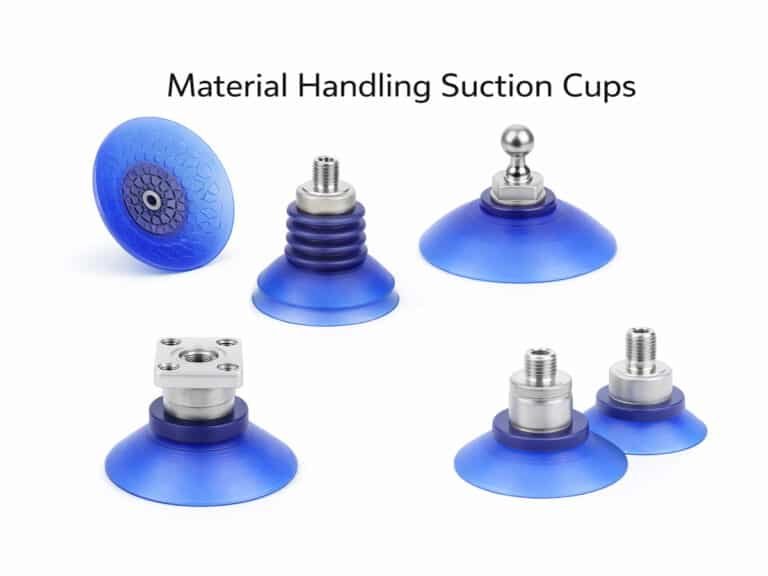
Material handling suction cups are widely used in automation lines to lift, move, and position products without mechanical clamping. However, choosing the wrong suction cup can lead to slipping, marking, vacuum loss, or unstable handling. This guide focuses on how to match suction cup material and shape to common material handling scenarios — for the full workpiece analysis and force calculation process, see our vacuum suction cup selection guide.
How to Choose the Right Suction Cup Materials?
Material handling suction cups are available in a variety of materials, each offering specific advantages depending on the application. Understanding the properties of each material can help you choose the best option for your needs.
Nitrile Rubber (NBR)
Nitrile rubber is a durable and cost-effective material often used for applications where oil resistance and abrasion resistance are essential. NBR suction cups are commonly used in industrial environments, where they perform well on rougher surfaces and offer good wear resistance. NBR typically has a hardness range of 50-65 Shore A and operates effectively between -20°C and 100°C. They are a solid choice for applications involving metal or plastic parts that are heavy and subject to frequent handling.
Silicone
Silicone is another widely used suction cup material for material handling suction cups. It offers flexibility and a broad temperature tolerance from -60°C to 220°C, which is ideal for applications involving heated glass or frozen products. Silicone’s non-marking property makes it appropriate for delicate surfaces like electronics or painted items. Food-grade versions comply with FDA standards, supporting use in packaging lines for consumables.
Polyurethane (PU)
Polyurethane (PU) serves as a durable suction cup material in high-wear environments. It excels in resistance to tearing and abrasion, fitting material handling suction cups for automated systems — including robotic pick-and-place lines — or for lifting materials with rougher surfaces. See our robot gripper guide for how suction cups integrate with different gripper types. PU can handle temperatures up to 90°C and is often chosen for longevity in repetitive cycles, though it comes at a higher cost than NBR.
Fluorocarbon Rubber
Fluorocarbon rubber, such as Viton or FKM, is selected as a suction cup material for challenging conditions. It resists chemicals and high temperatures up to 250°C, making it suitable for material handling suction cups in chemical processing or heat-treated metal transport. This material is less flexible but provides long-term stability in aggressive settings.
Polyvinyl Chloride (PVC)
Polyvinyl Chloride (PVC) acts as an economical suction cup material alternative. It offers moderate durability and is used in material handling suction cups for general-purpose tasks with low demands, such as handling cardboard boxes. PVC performs in ambient temperatures but lacks the specialized resistance of other options.
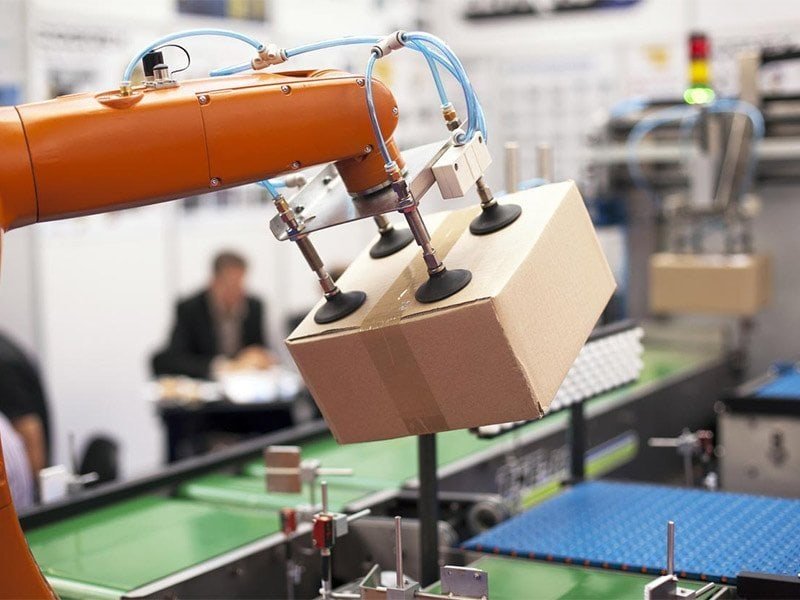
Suction Cup Types for Material Handling Applications
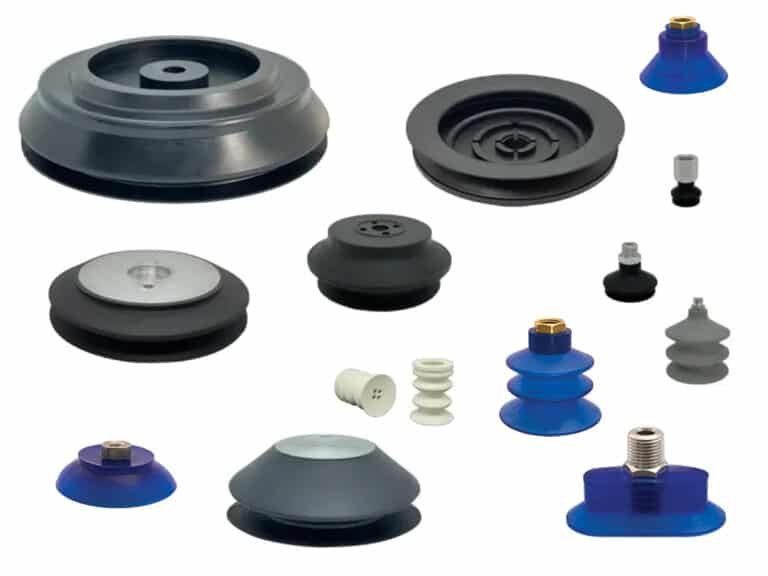
Material handling suction cups come in various types, each designed to accommodate specific material surfaces and characteristics. Proper matching improves grip and prevents failures.
Flat Suction Cups
Flat suction cups are the most common type and are best suited for smooth, non-porous surfaces. These cups provide a strong grip on materials such as glass, metal, and plastic. They are ideal for applications where the surface is consistent and the material is stable. They provide the highest theoretical holding force on clean, flat surfaces.
Bellows Suction Cups
Bellows-style suction cups are designed with flexible, accordion-like segments that allow them to adjust to uneven or curved surfaces. These cups are ideal for handling materials that are not flat or have irregular shapes. They are often used in applications where flexibility and adaptability are necessary, such as in the packaging or automotive industries. They are also useful when products vary slightly in height.
Special Lip Design Suction Cups
Suction cups with special lip designs are used for specific applications where extra suction power is needed. The lip helps create a better seal, improving the grip on materials that might otherwise be difficult to lift, such as irregularly shaped or porous items.
Oval or Rectangular Suction Cups
Oval or rectangular suction cups are designed to accommodate elongated or narrow materials. These shapes provide better coverage for items like bars or profiles, distributing the vacuum force along the length. Material handling suction cups of this type often use NBR for metal handling or PU for abrasive conditions.
Dual-durometer Suction Cups
Dual-durometer suction cups feature a combination of hard and soft layers. The outer soft lip grips delicate surfaces without damage, and the inner rigid body provides stability. These material handling suction cups match well with electronics or coated metals, using Silicone for the lip and PU for the base.
Common Problems in Material Handling
Surface Marking or Residue
This is the issue most specific to material handling: hard or incompatible suction cup materials leave marks or residue, especially on polished or coated surfaces. We typically resolve this with soft silicone or non-marking compounds, paired with routine cleaning protocols.
Dropping Items During Acceleration
Items can fall during sudden acceleration or stops, even when static holding force looks sufficient on paper — this usually points to an undersized safety factor for the line’s actual speed, not a bad cup choice.
For a full troubleshooting breakdown of leakage, slippage, and instability across all applications (not just material handling), see our suction cup design guide.
Conclusion
Choosing the right material handling suction cups requires careful consideration of factors such as surface characteristics, material properties, and environmental conditions. While standard suction cups may work for many applications, specialized materials and designs are available for more demanding environments. Flexiparts provides a tailored solution for custom suction cups. Welcome to contact Flexiparts and get a custom solution.