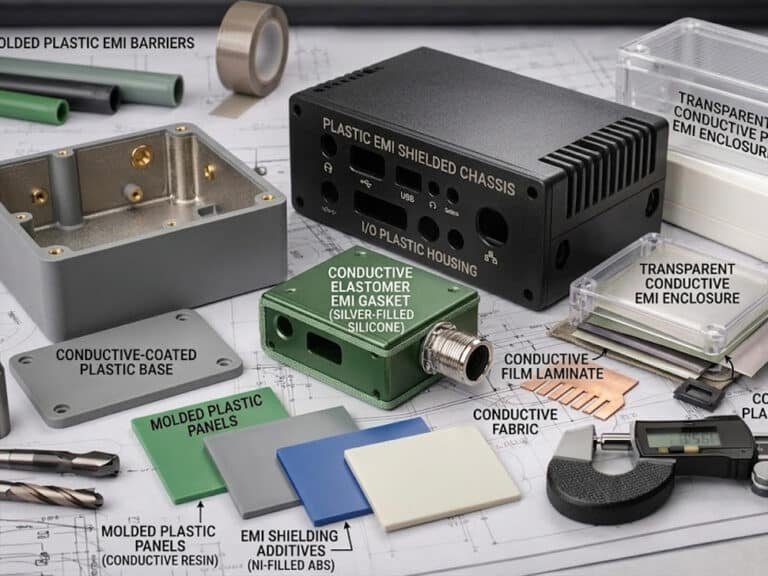
For electronic devices containing sensitive circuit boards, enclosure design must address both physical protection and electromagnetic interference. A properly designed PCB Enclosure Box can provide physical protection while also incorporating shielding features when electromagnetic interference is a concern. Effective EMI management requires a coordinated approach that combines enclosure structure, manufacturing processes, and detailed design considerations. An EMI shielded enclosure must be carefully engineered to prevent interference that could compromise device performance or violate regulatory standards.
When Does a Product Need an EMI Shielded Enclosure?
We can determine the need for an EMI shielded enclosure by evaluating specific products and environmental factors.
- When the circuit operates with clock frequencies above 50 MHz, uses high-speed differential signals, or includes switching power supplies rated over 100 W.
- When the PCB layout is highly integrated, with power and signal lines spaced less than 5 mm apart, the device will operate near strong interference sources such as 5G base stations or medical imaging equipment.
- When the product must pass strict EMC standards, including FCC Part 15, CE EMC, or MIL-STD-461, with no allowance for schedule delays.
If two or more of these conditions apply, incorporating an EMI shielded enclosure early in the design phase is recommended to avoid later delays and additional expenses.
What Is an EMI Shielded Enclosure?
An EMI shielded enclosure is a conductive enclosure designed to limit the transmission of electromagnetic energy. It restricts external electromagnetic fields from entering the internal circuitry and prevents internally generated noise from affecting surrounding devices. The enclosure creates a controlled conductive boundary that reflects, absorbs, or attenuates electromagnetic waves through continuous conductive paths, reliable grounding, and minimized aperture sizes.
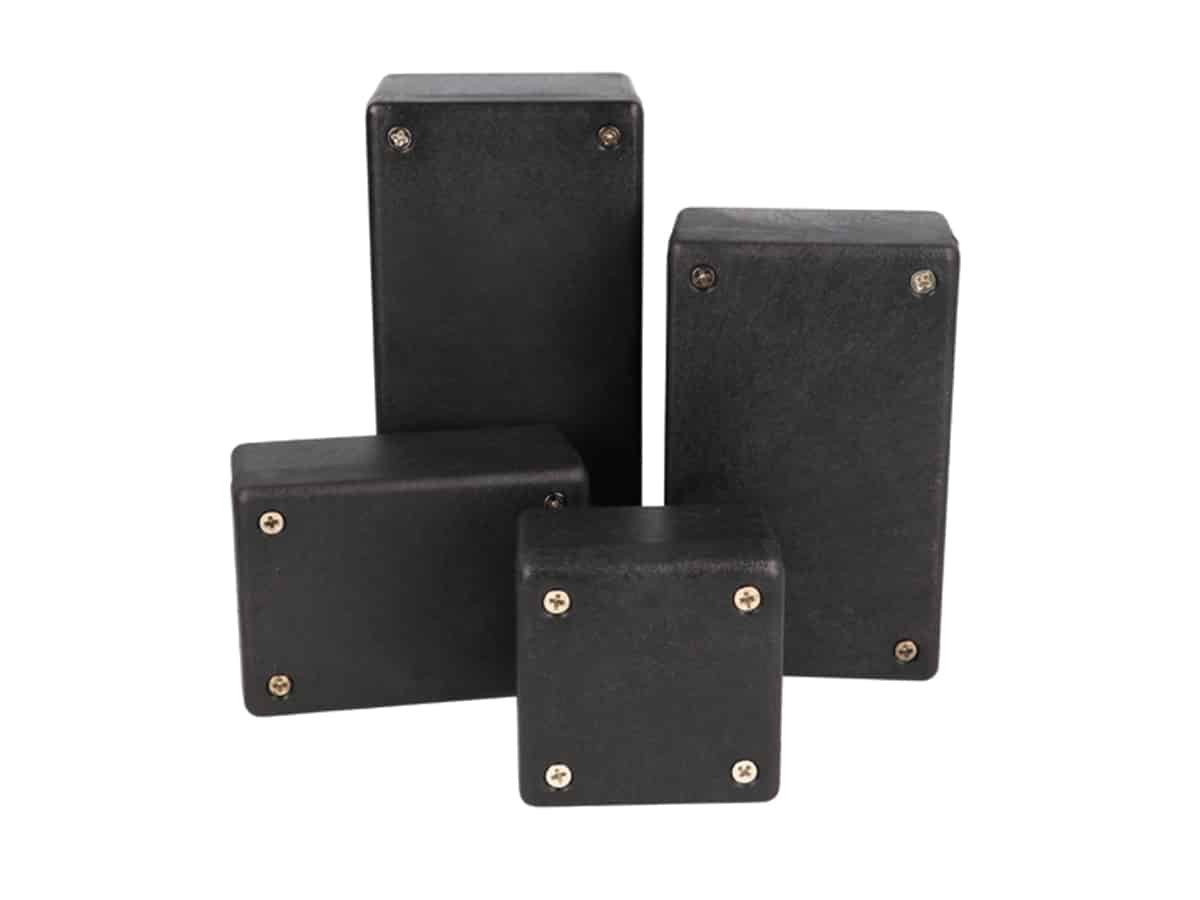
Why EMI Shielding is Critical for Plastic Enclosures
Plastic electronic enclosures are widely used in electronic devices due to their light weight, design flexibility, and cost advantages. However, without proper shielding, these enclosures can allow electromagnetic interference to penetrate the housing, potentially disrupting sensitive electronics or causing non-compliance with regulatory standards.
Why Plastic Enclosures Do Not Naturally Block EMI?
Plastic enclosures do not naturally block EMI because standard plastic materials are electrically non-conductive. They contain no free electrons capable of interacting with electromagnetic fields. As a result, plastic neither reflects nor absorbs electromagnetic energy in any significant way. Electromagnetic waves generated inside the device can pass through the enclosure with minimal attenuation, and external interference can enter just as easily. This feature makes additional shielding measures necessary when plastic is used as the enclosure material.
Principles of EMI Shielding in Plastic Enclosures
The basic principle of EMI shielding plastic enclosures is to establish a conductive path that can redirect or absorb electromagnetic energy.
Common methods include:
- Applying conductive coatings such as nickel, copper, or carbon-based paints to form a continuous conductive layer on the inner surfaces.
- Using conductive fillers in the plastic resin or inserting metal meshes and frames during molding.
- Combining vacuum metallization, electroless plating, or overmolding techniques to bond a metal layer permanently to the plastic structure.
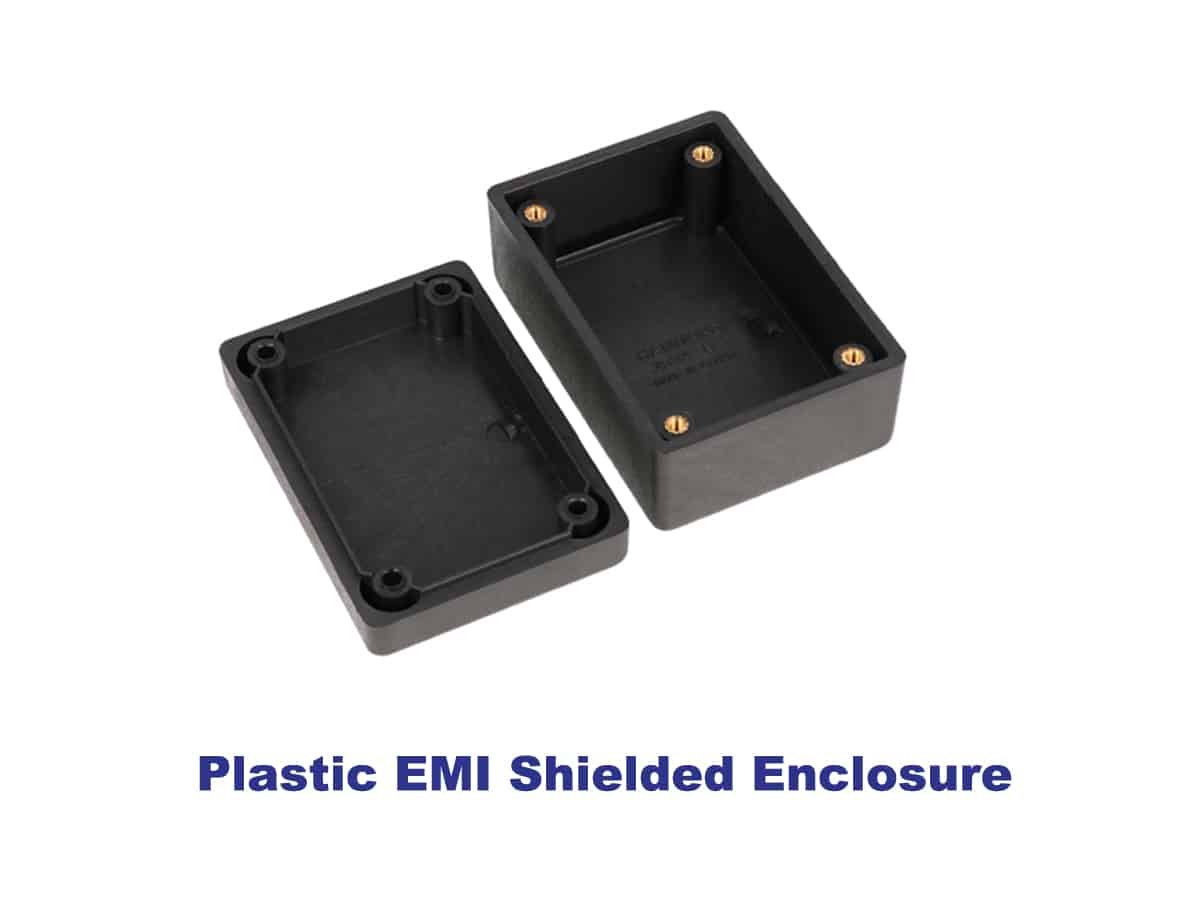
Key Design Factors That Affect EMI Performance
Several practical factors determine the actual shielding effectiveness of an EMI shielded enclosure beyond theoretical calculations:
- Gap and Seam Continuity: The width, flatness, and consistent contact pressure at seams and joints directly influence the quality of the conductive path.
- Aperture and Ventilation Design: Standard ventilation holes can act as significant leakage points and often require replacement with honeycomb waveguides or shielded vents.
- Grounding and Bonding Strategy: The number, placement, and contact impedance of grounding points affect the overall enclosure performance.
- Tolerance and Warpage Control: Variations in wall thickness or assembly pressure during injection molding can lead to micro-cracks or coating delamination in production units.
- Process Consistency: Surface preparation quality, coating thickness uniformity, and repeatable assembly procedures are critical for reliable results.
Taken together, these factors play an important role in achieving a reliable and manufacturable enclosure. For more details on plastic enclosure design, see our Plastic Enclosure Design for Injection Molding guide.
Common EMI Design Errors
Frequent issues observed in practice include:
- Treating shielding as a late-stage coating or painting process without integrating it with the structural design.
- Designing ventilation openings based only on thermal requirements while ignoring the waveguide cutoff frequency.
- Using fastener spacing or torque values that are too loose can lead to seam separation over time.
- Selecting materials based primarily on appearance and cost while overlooking coating adhesion and long-term stability.
- Assuming prototype test results will directly translate to mass production without accounting for tolerance stack-up.
Plastic vs Metal Enclosures for EMI Shielding
Plastic and metal enclosures offer different trade-offs when used for EMI shielding.
Metal enclosures (typically aluminum, steel, or copper) provide inherent conductivity and high shielding effectiveness with relatively straightforward seam management. However, they are heavier, more expensive to manufacture in complex shapes, susceptible to corrosion, and limited in aesthetic options.
Plastic enclosures are 30–50% lighter, lower in cost, allow greater design freedom, and offer good electrical insulation. They require secondary processes such as conductive coatings or metal inserts to achieve comparable shielding performance, and their long-term reliability depends more heavily on process control.
The choice depends on application requirements. Portable consumer electronics and handheld medical devices often favor EMI shielding plastic enclosures for weight and cost advantages. Aerospace, military, and high-interference outdoor environments tend to use metal enclosures or hybrid designs. Many current high-performance solutions combine a plastic outer shell with an internal metal shielding frame to balance lightweight construction and reliable EMI performance.
Conclusion
An effective EMI shielded enclosure results from the integration of structural design, manufacturing processes, and engineering decisions made early in development. Addressing these elements together reduces the risk of EMI-related issues during testing or in actual use.