Table of Contents

Heat-Resistant Gaskets: Materail, Benefits, Applications & Selection Guide

Heat resistant gaskets provide reliable sealing in environments where temperatures rise well above normal operating levels. Unlike standard gaskets, heat-resistant gaskets maintain their sealing properties under prolonged exposure to high heat.

What Are Heat Resistant Gaskets?

Heat resistant gaskets are specialized sealing components designed to withstand elevated temperatures, typically starting from 200°C (392°F) and extending much higher depending on the material. Their primary function is to create a tight seal between two surfaces to prevent leaks of fluids, gases, or steam while resisting thermal degradation.

These gaskets perform under conditions of high heat, pressure, and often exposure to chemicals or oils. They compress to fill surface irregularities and maintain elasticity even after repeated heating and cooling cycles.

Standard rubber or basic fiber gaskets often harden, crack, or lose compression set at moderate temperatures, leading to leaks. High temperature gaskets retain strength and flexibility in extreme conditions, resulting in longer service life and improved system reliability.
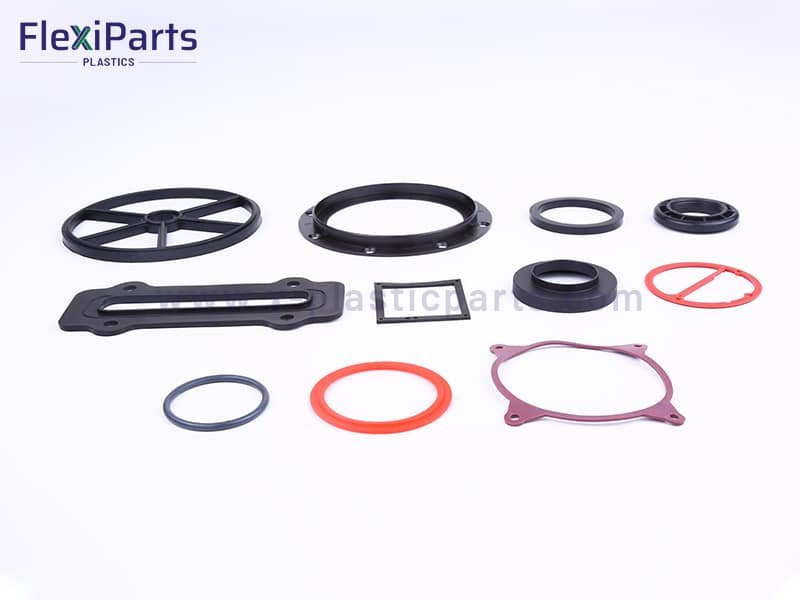
Custom Rubber Gasket

Common Heat Resistant Gasket Materials

Material selection directly affects performance in high-heat applications. The table below summarizes widely used options for high temp gaskets.
Material Temperature Range Key Characteristics Typical Applications
Silicone Rubber -60°C to +230°C Flexible, good compression recovery, ozone resistant Automotive engines, HVAC, food-grade applications
Viton (FKM/Fluorocarbon) -20°C to +250°C Excellent chemical and oil resistance Automotive, chemical processing, fuel systems
Graphite Up to +550°C (in steam) High thermal conductivity, good for extreme heat Boilers, exhaust systems, power generation
Non-Asbestos Fiber Up to +450°C Strong mechanical properties, asbestos-free Industrial piping, steam joints
Metal Wound / Spiral Wound Up to +800°C+ High pressure and temperature resistance Refineries, heavy industrial flanges
Ceramic Fiber / Mica Up to +1000°C+ Superior thermal insulation Furnaces, kilns, aerospace
PTFE (Polytetrafluoroethylene) Up to 260–300°C Non-stick, chemically inert, very low friction Food processing, chemical handling, pharmaceuticals
Metal or Metal-Composite 600°C+ Extreme temperature and pressure resistance, durable Steam systems, industrial boilers, high-pressure valves

Benefits of High-Temperature Gaskets

High-temperature gaskets offer multiple advantages over standard seals, including:

  • Reliable Sealing at Extreme Temperatures: They maintain integrity under heat stress, preventing leaks that could compromise safety or efficiency.
  • Chemical and Corrosion Resistance: Many high-temperature materials resist aggressive chemicals, oils, and fuels, reducing the risk of degradation.
  • Longevity and Maintenance Reduction: Durable materials decrease downtime for replacements, extending the operational lifespan of equipment.
  • Versatility Across Industries: From automotive exhaust systems to industrial boilers, these gaskets accommodate a wide range of applications without losing performance.

Key Applications of Heat Resistant Gaskets

High-temperature gaskets are indispensable in industries and scenarios where standard gaskets simply cannot perform. Common applications include:

  • Automotive and Engine Systems: Exhaust manifolds, cylinder heads, turbochargers, fuel systems, and EGR systems.
  • Industrial Boilers and Heat Exchangers: Steam, hot water, and high-pressure systems.
  • Chemical and Petrochemical Plants: Pipelines, valves, and heat exchangers.
  • Power Generation Facilities: Turbines, generators, and exhaust systems.

How to Choose the Right Heat Resistant Gaskets?

Choosing suitable heat resistant gaskets requires attention to several factors.

  1. Begin by identifying the maximum operating temperature, pressure, and the type of media (steam, oil, chemicals, gases) the gasket will contact.
  2. Next, examine the flange or mating surface condition, including flatness, roughness, and bolt load. These details influence the required compressibility and recovery properties.
  3. Consider certifications such as asbestos-free compliance or industry-specific approvals.
  4. Gasket thickness, size, and installation method also matter.
  5. In critical applications, request test data on compression set, thermal aging, and chemical compatibility.

Conclusion

High-temperature gaskets are essential components in systems exposed to extreme heat, pressure, and aggressive chemicals. Their performance hinges on choosing the right material, ensuring proper installation, and partnering with reliable suppliers. Selecting a certified, experienced supplier ensures that the gaskets meet the exacting demands of your application. Flexiparts is a professional manufacturer with rich experience. Welcome to contact us and get a custom solution for your specific requirements.