What is a Sheave?
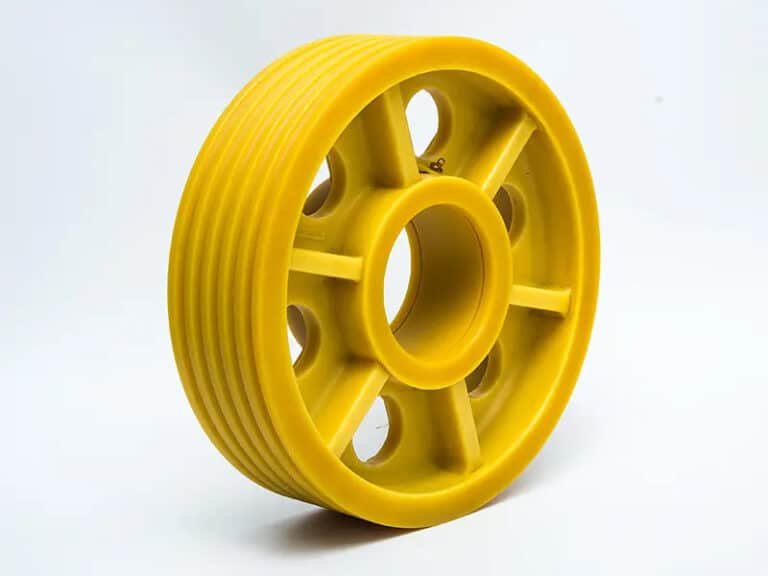
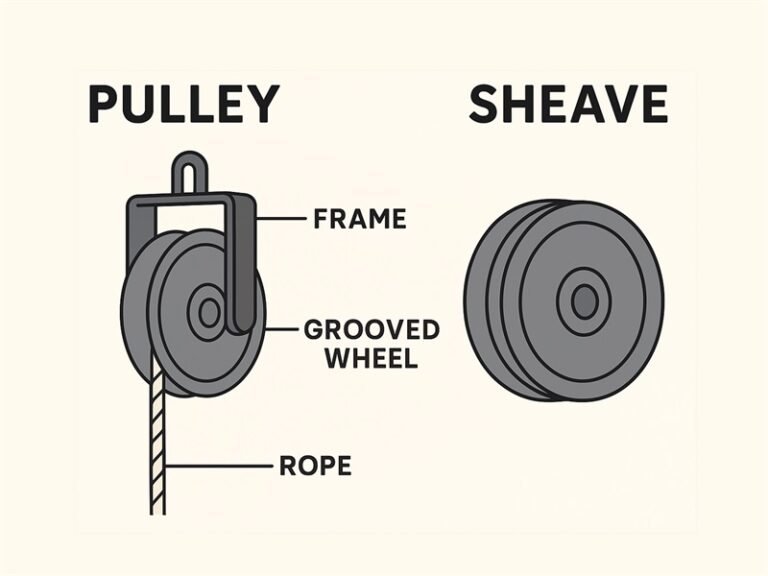
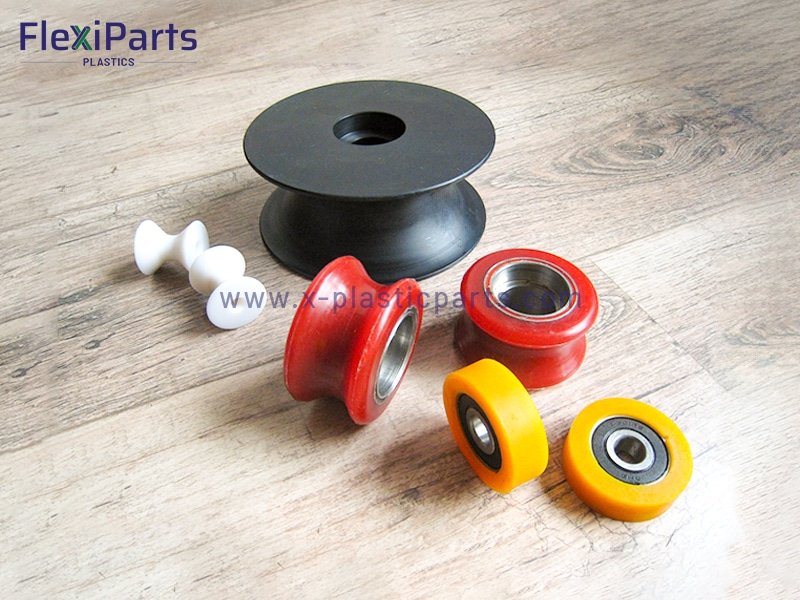
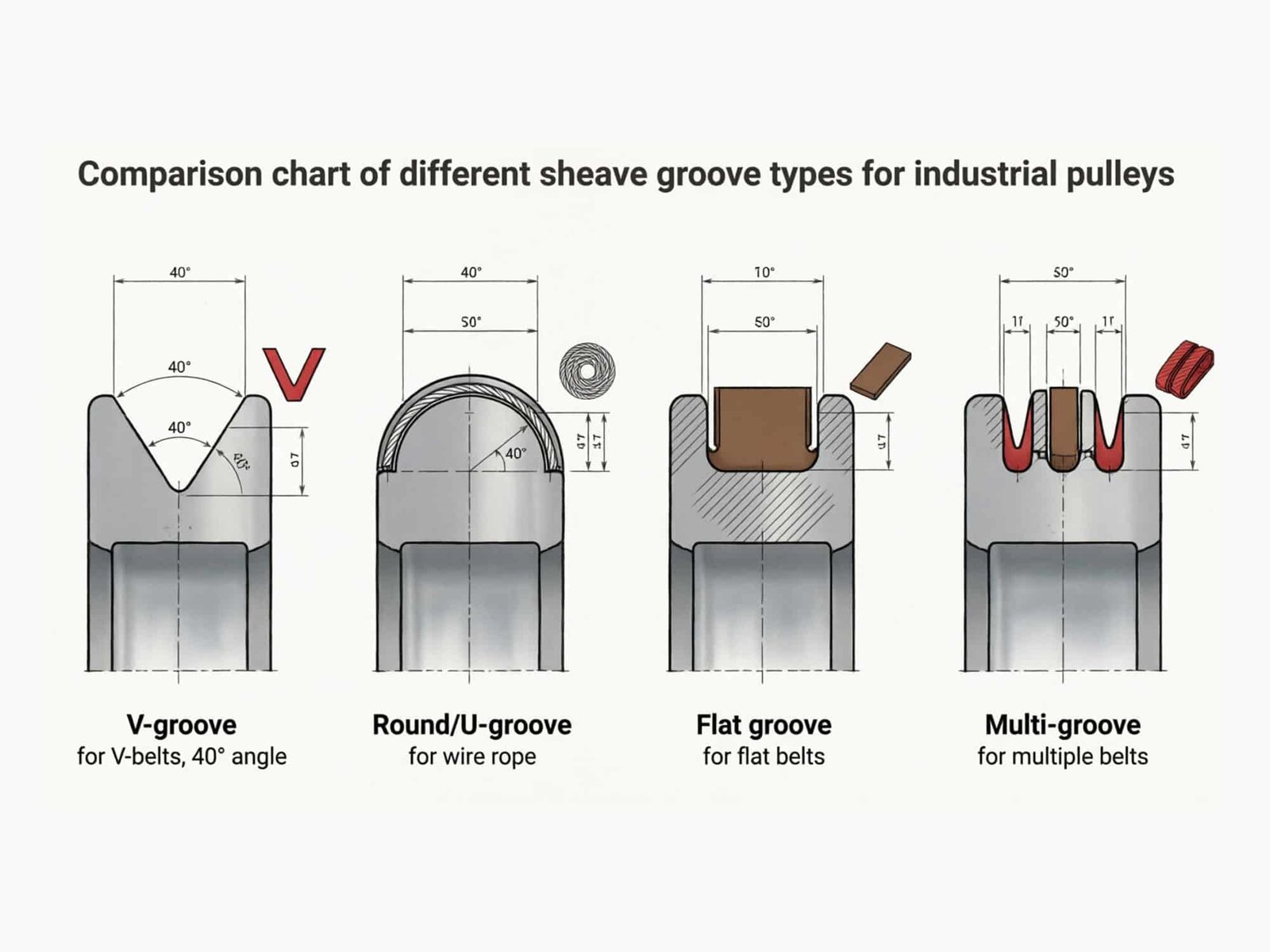
A sheave is a grooved wheel, typically made of metal or durable plastic, that forms a critical component of a pulley system. A sheave specifically denotes the wheel that holds and guides a rope, cable, or belt. Sheaves are designed to guide the rope or belt’s smooth movement along its groove, minimizing friction and wear. They are often replaceable components within a pulley, particularly in high-wear applications.
How Do Pulleys and Sheaves Work Together?
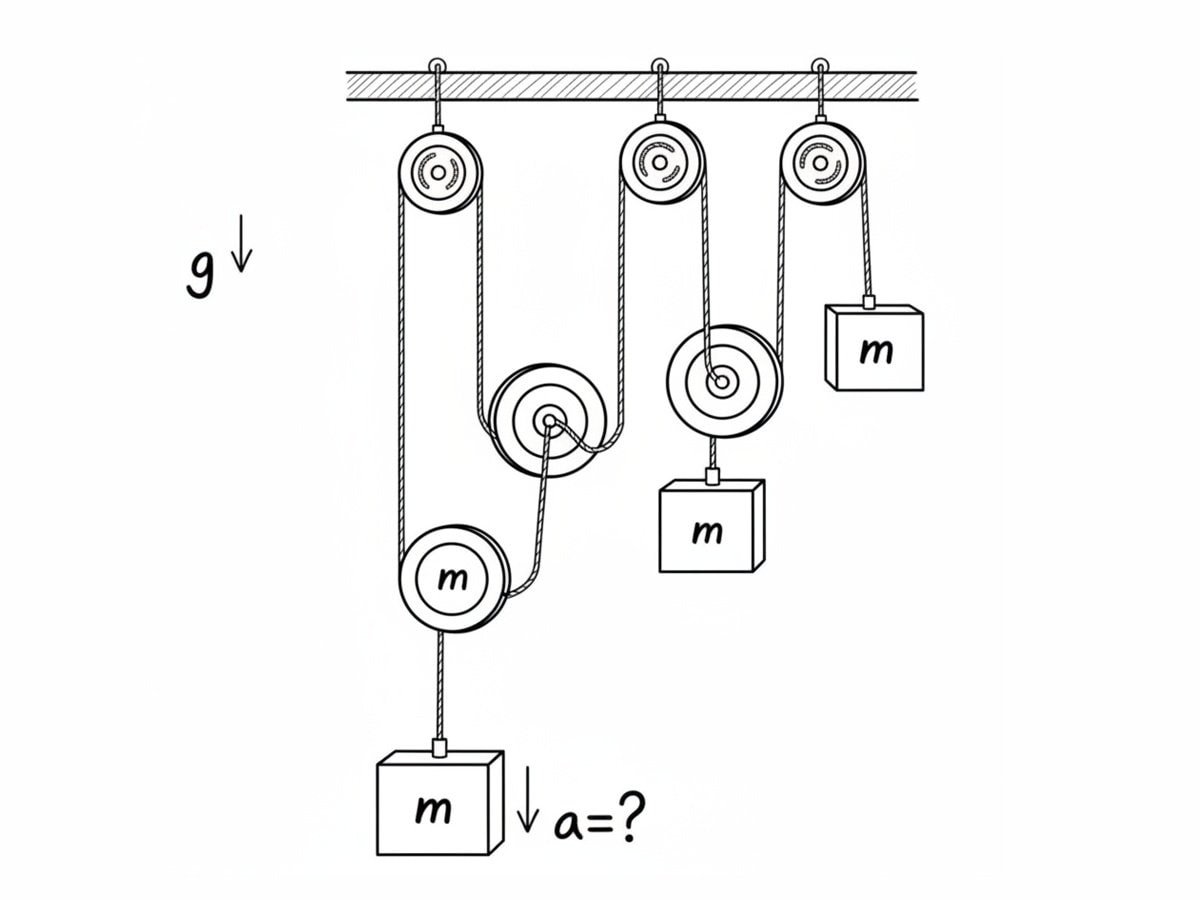
The sheave, as the grooved wheel, rotates within the pulley’s frame or housing, guiding the rope or belt along its path. The pulley’s axle and frame provide structural support, ensuring the sheave remains stable under load. This interaction is critical in applications like cranes, where the sheave’s smooth rotation reduces friction, while the pulley system distributes the weight of the load.
Sheaves and Pulleys: What’s the Difference?
To clarify the distinction between these commonly confused terms, the following table appropriately introduces the terms pulley vs sheave and highlights their fundamental differences.
Why Does the Distinction Matter If They Always Work Together?
In practice, sheaves and pulleys are almost never found apart — a sheave without a frame is just a loose wheel, and a pulley without a sheave has nothing to guide the belt or rope. So why does the distinction matter?
The Answer is Simple: knowing which term refers to which part helps you communicate clearly when something goes wrong or when you need to order a replacement.
Consider these three everyday situations:
When Ordering Replacement Parts
If your conveyor system breaks down and you tell your supplier “I need a new pulley,” they may send you the entire assembly — frame, axle, bearings, and wheel — when all you actually needed was the grooved wheel itself. Asking for a replacement sheave gets you exactly the worn component, nothing more.
When Reading a Technical Drawing
Equipment manuals and engineering drawings label components precisely. A drawing that calls out “sheave diameter: 6 inches” is telling you the size of the grooved wheel specifically, not the overall pulley assembly. Misreading this leads to ordering the wrong size.
When Describing a Problem to a Technician
“The pulley is making noise” tells a technician the system has a problem. “The sheave groove is worn” tells them exactly where to look and what to replace. The more precise your language, the faster the problem gets solved.
So while a sheave and pulley work as one unit in operation, treating them as interchangeable words in conversation costs time and money.
Choosing the Right Components
Selecting the appropriate pulley or sheave depends on the application’s requirements. Factors like load capacity, rope or belt type, and environmental conditions (e.g., exposure to moisture or extreme temperatures) influence material and design choices.
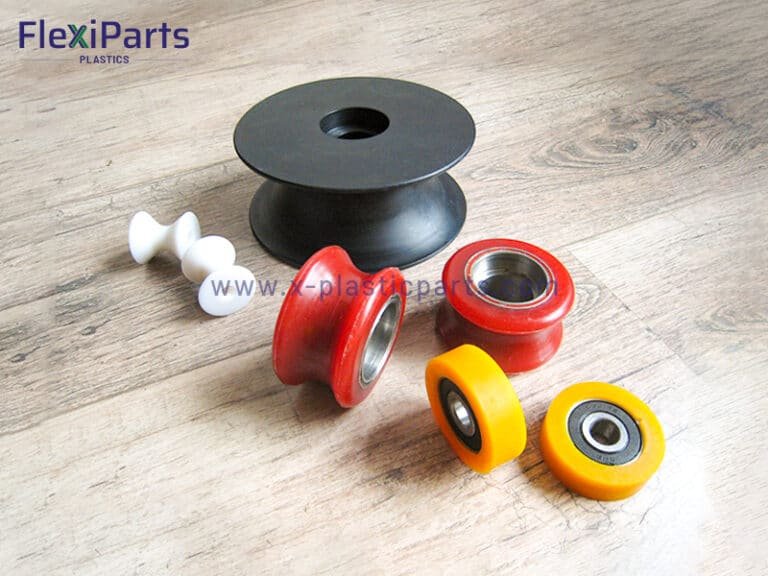
Flexiparts offers custom plastic pulleys and sheaves tailored to your specifications. Our injection-molded pulleys provide lightweight, corrosion-resistant, and low-friction solutions suitable for both industrial and consumer applications, with customizable sizes, shapes, bearing types, and wear resistance.
Conclusion
A pulley is the complete mechanism that redirects force or transmits power, while a sheave is the grooved wheel that guides the rope or belt within the pulley. Flexiparts custom injection-molded lightweight and durable pulleys. Contact Flexiparts and get a tailored pulley injection molding solution.
Contact Flexiparts today to discuss your custom pulley or sheave requirements. Send us your 3D drawings or specifications, and we’ll provide a tailored, lightweight, and durable solution with fast turnaround.