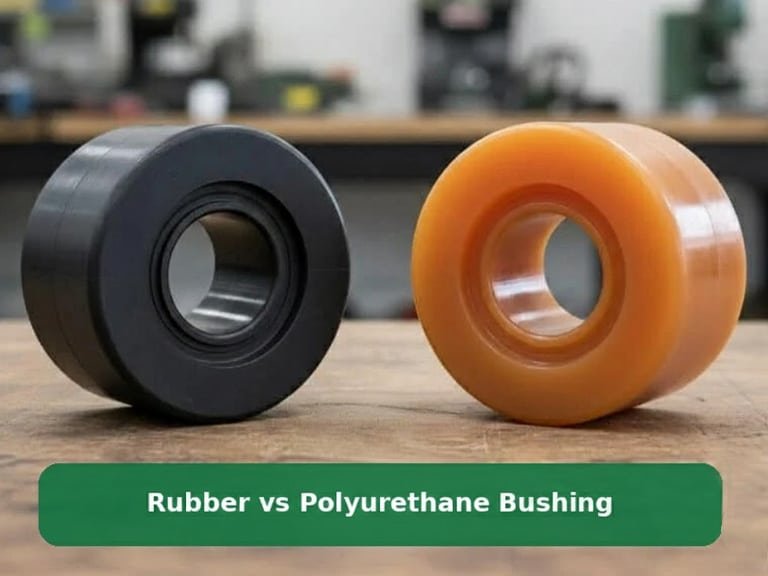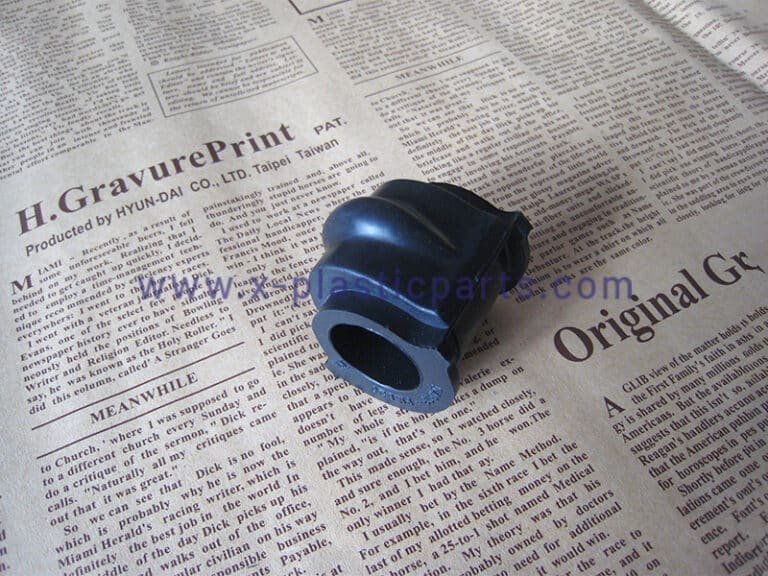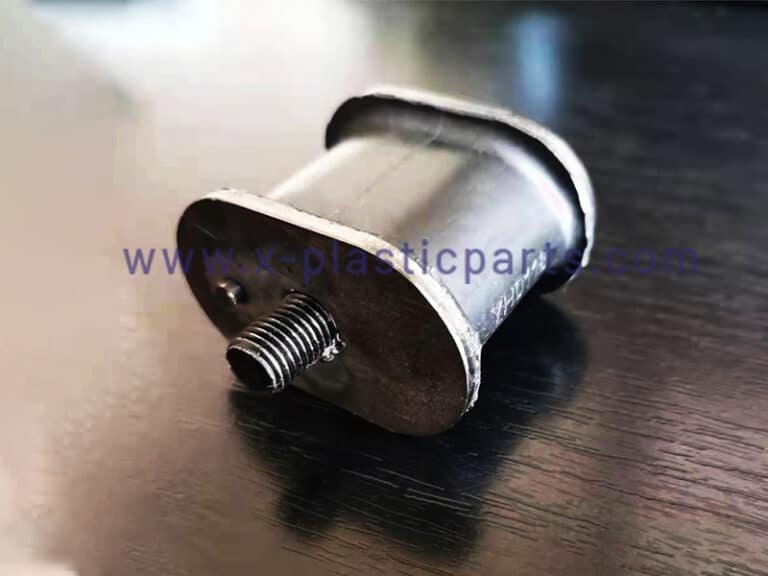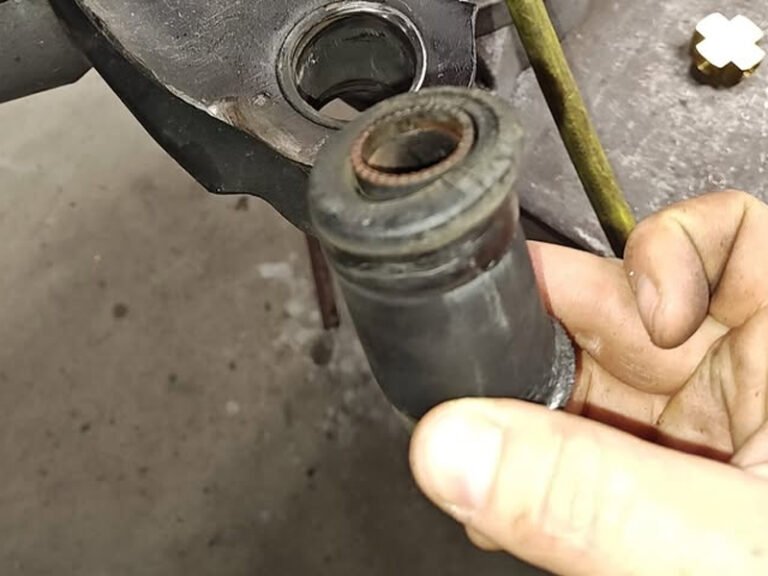
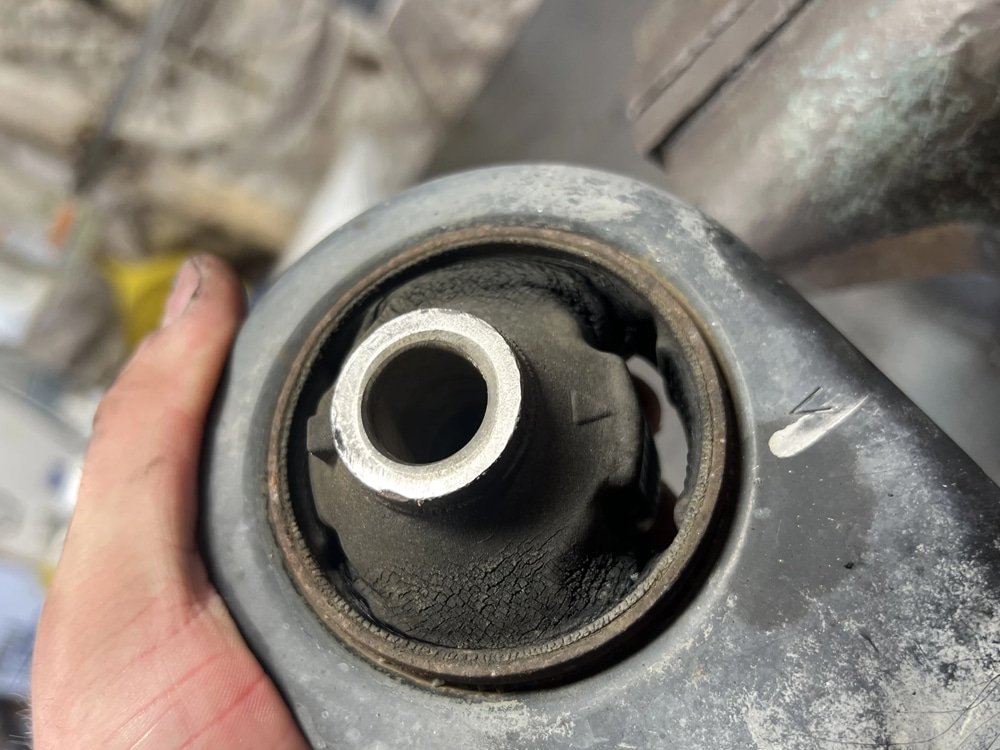
Rubber and polyurethane bushings reduce vibration, maintain alignment, and support moving parts under load in vehicles and industrial equipment. When a bushing fail occurs, it can lead to increased noise, uneven wear, and higher maintenance costs. Bushing failure often results from decisions made during material selection, design, or installation rather than from defects in the parts themselves. At Flexiparts, we manufacture these components and observe the patterns that contribute to bushing failure in real applications.
1. Bushing Material Selection Errors
One of the most common causes of bushing failure is incorrect material selection. Bushings are produced from a wide range of elastomers and polymers, including NR, NBR, EPDM, CR, and polyurethane. Each material has specific resistance characteristics, and mismatches with application conditions often lead to premature failure. For example, Using NR (natural rubber) in oil or fuel environments results in swelling and structural degradation. Selecting EPDM for hydrocarbon exposure leads to rapid material breakdown. Applying general-purpose rubber in high-abrasion systems where polyurethane is required.
Material Mismatch Affects:
- Elastic recovery under load.
- Resistance to swelling and chemical attack.
- Long-term fatigue performance.
One of our clients came to us after an off-road suspension bushing failed within six months of installation. The original NR compound was exposed to a minor engine bay oil leak, causing the rubber to swell and lose pre-load — resulting in noticeable steering play. Switching to an oil-resistant EPDM/PU combination eliminated the failure across the following production batch.
In many bushing failure cases, the part itself is not defective—the material simply does not match the operating environment. Flexiparts addresses this issue by evaluating application parameters before material selection. Temperature range, media exposure, and dynamic load frequency are analyzed together to define a suitable elastomer system. This reduces the risk of premature degradation caused by incorrect material pairing.
Learn more about bushing types and materials, help you choose right bushing for your requirement.
2. Improper Bushing Hardness Selection
Hardness, typically measured in Shore A for rubber materials and Shore D for harder polymers, plays a critical role in bushing performance.
- When the durometer rating is too high, the bushing transmits excessive vibration and provides limited damping. This condition can lead to fatigue in surrounding components over time.
- On the other hand, a durometer that is too low allows excessive movement under load, which causes deformation and eventual loss of alignment. In suspension systems, for instance, incorrect hardness contributes to steering play and uneven tire wear, both indicators of bushing failure.
A commercial vehicle client originally specified an 85 Shore A stabilizer bar bushing, assuming higher hardness meant longer service life. In practice, the bushing provided almost no damping, transmitting vibration directly into the frame mounts and causing fatigue cracking in connected components within 30,000 km. Reducing hardness to 70 Shore A and introducing a multi-layer hardness configuration brought vibration transfer down and restored normal component life.
Hardness must be matched not only to load magnitude but also to motion frequency and mounting geometry. A mismatch often leads to uneven stress distribution, which accelerates bushing failure over time. Flexiparts evaluates hardness selection together with load modeling and structural design. In high-demand applications, multi-layer or optimized hardness configurations are used to balance damping performance and mechanical stability.
3. Rubber-to-Metal Bond Failure in Bonded Bushing Structures
Bonding failure between rubber or polyurethane and the metal sleeve represents another significant source of bushing failure. Common reasons include inadequate surface preparation of the metal before molding, use of incompatible adhesive systems, and exposure to thermal cycling that weakens the interface. Moisture or contaminants during manufacturing can also reduce bond strength. Once the bond separates, the bushing experiences increased play, which leads to noise and accelerated wear on connected parts.
On one metal-sleeve bushing program, a client reported noise within two weeks of assembly. Teardown showed the metal surface preparation hadn’t met the required blast profile before molding, allowing the bond interface to separate under thermal cycling. After standardizing the pre-bond surface treatment (grit blasting plus chemical priming) and adding shear-fatigue validation, the issue didn’t recur in later batches.
Once debonding begins, it typically accelerates under cyclic load, leading to progressive bushing failure behavior such as loosening, noise, and increased vibration. Flexiparts applies controlled surface treatment processes such as grit blasting and chemical priming to ensure adhesion reliability. Each bonding system is validated through mechanical testing to confirm resistance to shear and fatigue loads under realistic operating conditions.
4. Overload Conditions and Installation Misalignment
Overload conditions and installation errors contribute directly to bushing failure. Excessive axial forces beyond the design limits cause permanent deformation. Misalignment during press-fit creates an uneven pressure distribution that leads to localized wear. Insufficient interference fit allows movement that generates heat and accelerates deterioration. These issues appear frequently in field service reports where installation procedures were not followed precisely.
A client’s assembly line was running with an uncalibrated press-fit tool, resulting in insufficient interference fit. Bushings developed slight play after installation, and friction-generated heat accelerated material aging, leading to early failure within a few hundred hours of operation. Defining a clear press-fit tolerance range and providing tooling calibration guidelines resolved the issue.
Flexiparts designs bushings with installation tolerances explicitly defined. For critical applications, installation guidelines and tooling recommendations are provided to ensure proper alignment and consistent press-fit conditions across production environments.
5. Chemical Exposure and Environmental Degradation
Exposure to chemical agents and environmental factors leads to material degradation in many bushing failure cases. Ozone and ultraviolet light cause cracking in certain rubber compounds. Regular contact with oils, greases, or cleaning solvents can soften or swell unprotected materials. Outdoor applications face additional challenges from temperature swings and moisture that speed up these processes. Components in engine bays or undercarriage positions encounter these conditions regularly. Without suitable resistance properties, the material loses elasticity and structural integrity, resulting in bushing failure.
Bushings installed in an exposed chassis position on one client’s platform developed surface cracking within 6-8 months due to continuous exposure to road de-icing chemicals. Switching to an enhanced ozone- and chemical-resistant EPDM formulation extended service life to meet the original design target under the same operating conditions.
Flexiparts selects materials based on environmental resistance requirements. For outdoor applications, EPDM-based formulations with enhanced ozone resistance are commonly used. For industrial chemical environments, polyurethane or specialized elastomer blends are selected to improve long-term stability.
Material Selection Reference Overview
The table below matches common operating conditions with recommended materials:
Custom Bushing Solution
If you need a custom Bushes solution for your project, contact Flexiparts for professional manufacturing support.