O-ring failure is rarely caused by a single issue. Leakage, pressure loss, and unexpected equipment downtime usually result from a combination of material selection, groove design, operating conditions, and installation factors. Many of these failure risks can be identified before production through proper engineering review.
At Flexiparts, material selection and groove design are reviewed during the quoting and DFM stage to help prevent common O-ring failure modes before they occur in the field.
Common Types of O-Ring Failure
- Compression set
- Abrasion and wear
- Extrusion and nibbling
- Chemical attack
- Installation damage
- Thermal degradation
- Spiral failure
- Dynamic fatigue
- Rapid gas decompression
1. Compression Set
A compression set occurs when an O-ring loses its ability to return to its original shape after being compressed in a groove, resulting in inadequate sealing and leakage. Excessive or prolonged compression, elevated temperatures, or an unsuitable elastomer can cause permanent deformation, and poor groove design adds further stress on the ring.
We check compression set risk during quoting by confirming groove depth and fill ratio against the specified material’s compression set rating, and for demanding applications we run compression set testing on T1 samples before approving them for production.
2. Abrasion and Wear
Abrasion is the wear or erosion of the O-ring surface from mechanical friction, producing grooves, scratches, or thinning that reduce sealing effectiveness. Relative motion against mating surfaces, contaminated fluids, or high-speed dynamic applications accelerate this wear.
For dynamic applications, we default to wear-resistant compounds and flag lubrication requirements to the customer at the design stage rather than leaving it to be discovered after installation.
3. Extrusion and Nibbling
Extrusion happens when high pressure forces part of the O-ring into the clearance gap; nibbling is when small pieces tear away during that process, leading to leakage. High pressure, excessive groove clearance, and missing backup rings are the usual causes, and soft or low-durometer materials are more vulnerable.
If you’re seeing torn or nibbled edges on a returned part, it’s usually a sign the groove clearance wasn’t matched to the actual pressure the part sees in service — not a material defect. We flag this during design review rather than after a failure report. For pressure-rated selection guidance, see our O-Ring Pressure Rating Guide.
4. Chemical Attack
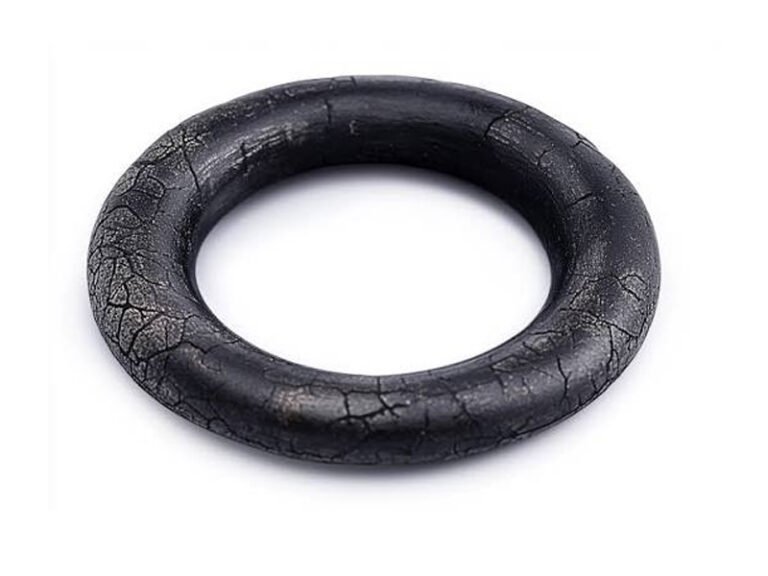
Chemical attack is degradation from exposure to incompatible fluids or chemicals, showing up as swelling, softening, or cracking. It usually comes down to a mismatch between the O-ring material and the media it contacts, especially under high concentrations of acids, bases, or solvents.
We run material compatibility checks against the customer’s stated operating fluid before quoting, since this is one of the most common causes of failures we see reported after a part has already been specified with the wrong compound.
5. Installation Damage
O-rings can be cut, nicked, or deformed during installation from improper handling, sharp tools, twisting, or insufficient lubrication.
Where installation damage has been a recurring issue for a customer, we can adjust the O-ring’s cross-section tolerance or recommend a compatible lubricant as part of the part specification, rather than treating it purely as a handling problem on the customer’s end.
6. Thermal Degradation
Exposure to temperatures beyond the material’s rated range causes hardening, cracking, or embrittlement, whether from continuous high heat, thermal cycling, or a localized heat source.
We select materials against the full expected temperature range up front — including short-term spikes, not just steady-state operating temperature — since this is the detail most often missed in initial specs.
7. Spiral Failure
Spiral failure shows up as a twisted O-ring with diagonal cuts along its length, most common in long-stroke hydraulic cylinders. Misalignment during installation, poor lubrication, non-circular bores, or side loads are the typical causes.
For long-stroke or side-load-prone designs, we can recommend square or X-profile rings in place of standard round cross-sections to reduce this risk.
8. Dynamic Fatigue
Repeated movement — in reciprocating pistons or rotary shafts — leads to cracking, wear, or extrusion over time, driven by high-frequency motion, inadequate lubrication, or a material not suited to dynamic service.
We specify dynamic-rated elastomers by default for any application flagged as reciprocating or rotary, rather than using a static-service compound and discovering the mismatch later.
9. Rapid Gas Decompression
This occurs when high-pressure gas that has dissolved into the material is released too quickly, creating internal bubbles, blisters, or ruptures. Standard compounds generally lack the resistance needed for this condition.
For gas service applications, we specify RGD-resistant compounds and higher-hardness formulations rather than a general-purpose material, since standard O-rings are a common point of failure in these systems.
Custom O-ring Solution
How to Prevent O-Ring Failure?
Most O-ring failures can be prevented during the design and manufacturing stage through proper material selection, groove design, and application review. At Flexiparts, potential sealing risks are evaluated during the quoting and DFM process to ensure the O-ring design matches the actual operating conditions.
Material and Design Review
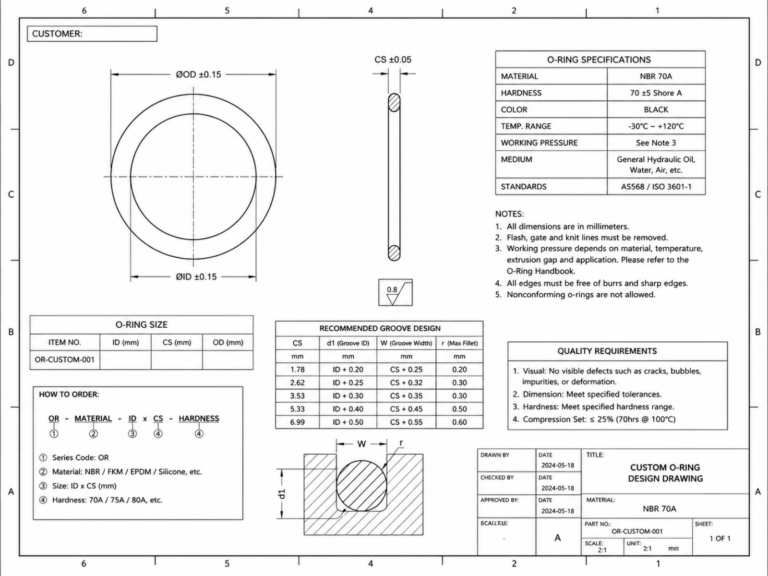
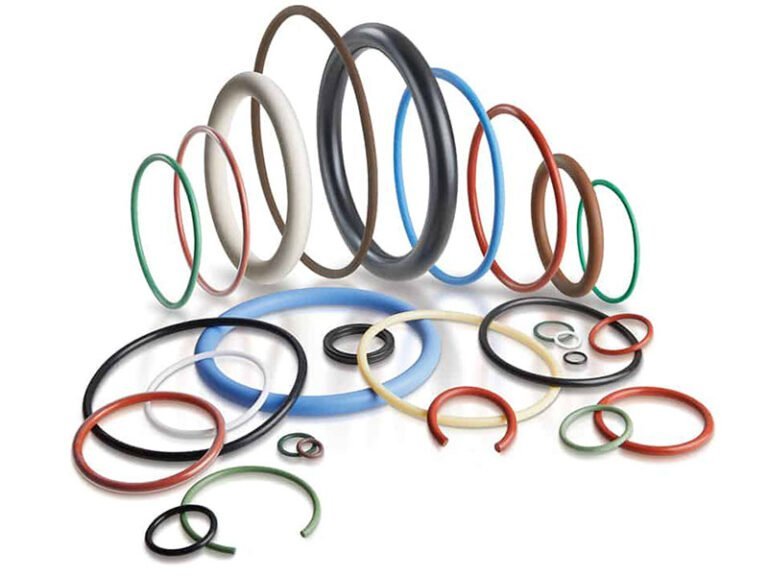
The correct O-ring material must be selected based on fluid compatibility, temperature range, pressure conditions, and sealing requirements. Groove dimensions, compression ratio, and clearance are also reviewed to reduce risks such as chemical attack, compression set, extrusion, and leakage.
Manufacturing and Testing Control
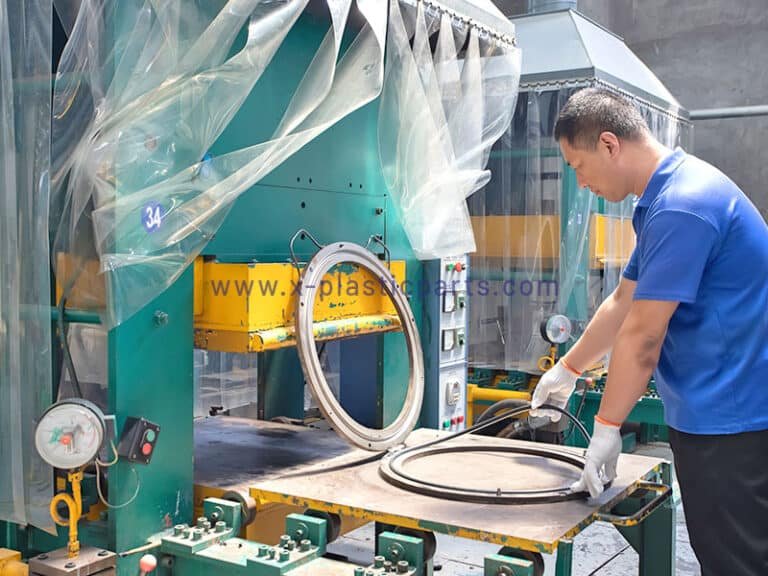
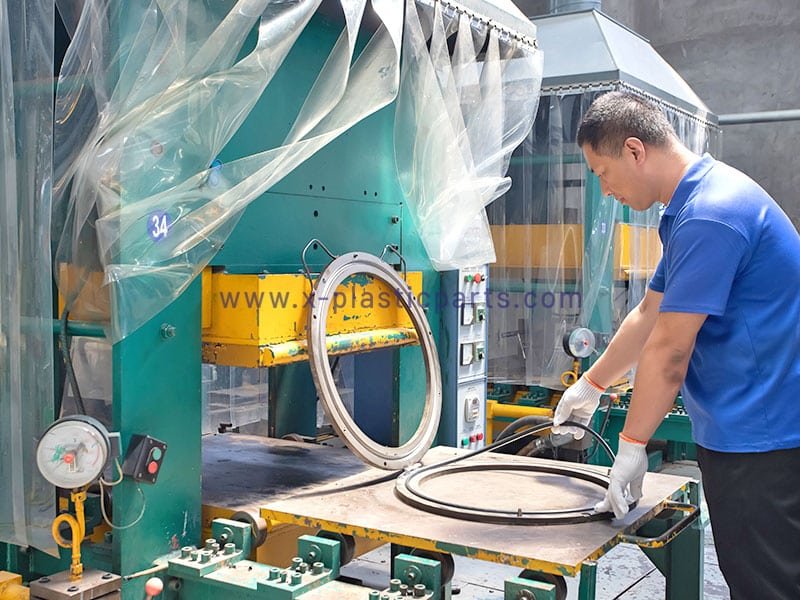
Consistent dimensions and surface quality are essential for reliable sealing performance. Mold design, process control, and inspection help prevent defects that may affect sealing reliability.
For demanding applications, first article inspection and performance testing, such as compression set testing, can be performed before production approval.
Application Review
Installation conditions, lubrication, and operating environment also affect O-ring service life. Reviewing these factors early helps prevent installation damage, premature wear, and unexpected sealing failures.
Conclusion
O-ring failures usually result from identifiable issues such as improper material selection, incorrect groove design, installation damage, or unsuitable operating conditions. By addressing these risks during the design and manufacturing stage, sealing reliability can be significantly improved.
Regular inspection, proper O-ring lubrication, and correct material selection help maintain long-term sealing performance. Send us your application details or a sample, and we can help evaluate the right material and groove design before production.