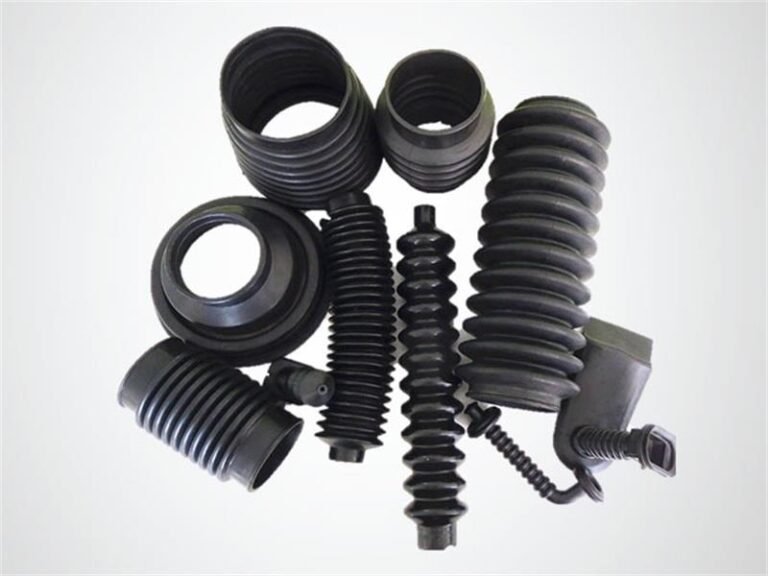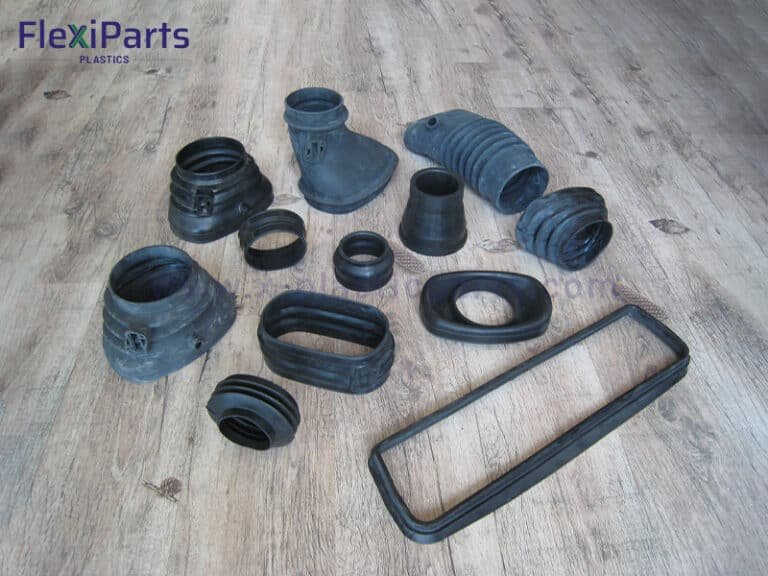
Rubber bellows are used in automotive systems, industrial machinery, robotics, and medical devices to protect moving parts, reduce contamination, and provide flexibility in motion. The performance of a rubber bellow depends heavily on material selection. EPDM, NBR, Silicone, FKM, PU, Neoprene, HNBR, and Natural Rubber all behave differently under heat, oil, UV exposure, abrasion, and chemical contact.
If you are still comparing basic structures and use cases, start with our overview of rubber bellows types, advantages, and key applications, then use this material guide to narrow down the compound for your operating environment.
EPDM Rubber Bellows for Outdoor and High-Temperature Exposure
EPDM is one of the most common materials for outdoor rubber bellows. It offers strong resistance to ozone, UV light, weathering, and heat. They maintain flexibility across a temperature range typically suitable for exterior sealing, HVAC systems, and brake-system protection.
Actual Cases
In automotive brake systems, EPDM dust boots protect components during long-term exposure to heat and outdoor air without developing cracks or significant ageing.
In HVAC equipment, outdoor pipe connections use EPDM rubber bellows. The material handles UV exposure and ozone effectively over years of service.
Selection Logic
- The application of EPDM bellows involves frequent contact with sunlight, rain, or moderate heat.
- Long service intervals with limited maintenance are required.
Important Considerations
Avoid direct and prolonged contact with mineral oils or fuels. Such exposure can cause swelling or cracking in EPDM rubber bellows.
NBR Rubber Bellows for Oil and Fuel Environments
NBR (nitrile butadiene rubber) offers good resistance to petroleum-based oils, fuels, and hydraulic fluids. Its typical temperature range runs from -40°C to +100°C, with solid abrasion resistance. It is commonly used where a bellow needs to seal or protect moving components around oil.
Actual Cases
Automotive drive shaft boots or hydraulic cylinder protectors made from NBR maintain sealing in environments with regular oil contact. In industrial machine tools and pump systems, NBR rubber bellows protect rods and shafts from oil mist, cutting fluids, and light mechanical wear.
Selection Logic
- The environment includes frequent exposure to petroleum oils, fuels, or hydraulic fluids.
- Moderate temperatures and good wear performance are needed.
- Cost control matters while oil barrier properties remain important.
Important Considerations
NBR performs poorly under long-term sunlight, ozone, or strong acids and alkalis. It is not suitable for high-temperature steam or extended outdoor use.
For applications that need oil-resistant molded protection, Flexiparts can manufacture NBR rubber bellows with customized dimensions, wall thickness, and end connections.
Silicone Rubber Bellows for Extreme Temperatures and Sensitive Applications
Silicone (VMQ) rubber bellows handle wide temperature swings from -60°C to +200°C or higher. They offer low compression set and good electrical insulation. Silicone rubber bellows are commonly used in medical devices, food-processing equipment, electronics, and high-temperature zones.
Actual Cases
Medical devices and food processing lines use silicone rubber bellows for flexible connections. These maintain elasticity during high-temperature sterilization or low-temperature storage.
In automotive engine areas or industrial ovens, silicone bellows resist heat aging effectively.
Selection Logic
- The application requires performance across wide temperature extremes.
- Low odor, low volatility, or compliance with FDA standards is necessary.
- Ozone resistance and electrical properties matter.
Important Considerations
Silicone shows limited resistance to oils and fuels. Its mechanical strength is lower than that of other materials, so it is not ideal for high-abrasion or heavy-load conditions.
When high-temperature flexibility is the priority, custom silicone bellows are a practical choice for sensitive and heat-exposed assemblies.
FKM Rubber Bellows for Chemical and Heat Resistance
FKM (fluoroelastomer, often called Viton) delivers excellent resistance to aggressive chemicals, fuels, acids, and high temperatures up to +200°C or more. It also shows low compression set.
Actual Cases
Chemical processing equipment and aircraft fuel systems use FKM rubber bellows for stable performance in solvents and hot oils.
In premium automotive engines and industrial valves, these bellows handle high-temperature and high-pressure conditions.
Selection Logic
- Exposure to strong chemicals, fuels, acids, or hot oils is present.
- Extended service life with minimal deformation is required.
- The application justifies higher material costs due to demanding conditions.
Important Considerations
FKM costs more than many alternatives. Performance at very low temperatures (below -20°C) can decline, with reduced flexibility.
For chemical, fuel, and high-heat environments, Flexiparts offers FKM rubber bellows for demanding sealing and protection requirements.
PU Rubber Bellows for Abrasion and Mechanical Strength
Polyurethane (PU) rubber bellows combine high abrasion resistance, good tensile strength, and elasticity. Typical temperature limits reach up to +120°C.
Actual Cases
Robotic joints and automation axes use PU rubber bellows to handle repeated motion and impacts.
In heavy machinery such as forklifts, PU cylinder protectors resist tearing in high-wear settings.
Selection Logic
- High wear, impact, or dynamic loading occurs.
- Good rebound and moderate oil resistance are needed.
- Mechanical durability is a priority.
Important Considerations
PU has average heat resistance and can be sensitive to certain solvents or strong acids. It is not the best choice for long-term strong UV exposure.
Neoprene Rubber Bellows for Balance of Multiple Conditions
Neoprene (CR) provides moderate oil resistance together with good weather and ozone tolerance. Its temperature range is generally -30°C to +120°C.
Actual Cases
Automotive air conditioning systems and pipe connections use Neoprene rubber bellows for compatibility with refrigerants and light oils.
Marine equipment and HVAC vibration dampers perform well in humid or mildly oily outdoor settings.
Selection Logic
- A mix of moderate oil, chemical, and weather resistance is required.
- Flame retardancy or balanced ozone and sunlight performance matters.
- A cost-effective general-purpose option fits the application.
Important Considerations
Oil resistance is lower than that of NBR. Avoid strong solvents or concentrated acids and alkalis for best long-term results.
For applications requiring balanced oil, weather, and ozone resistance, neoprene rubber bellows can provide a stable all-around option.
HNBR Rubber Bellows for Oil Systems
Hydrogenated nitrile rubber (HNBR) improves on standard NBR with better heat and oxidation resistance. It operates effectively up to +150°C.
Actual Cases
Automotive engine oil circuits and transmissions use HNBR rubber bellows for reliable protection in hot oil.
Industrial hydraulic systems under elevated temperatures benefit from its enhanced aging performance.
Selection Logic
- Standard NBR conditions exist but higher temperatures or oxidation resistance is needed.
- Longer service life in hot oil or additive-rich environments is important.
- High-reliability applications in automotive or precision machinery justify the upgrade.
Important Considerations
HNBR costs more than NBR. It is less suitable for very low temperatures or strong polar solvents.
Natural Rubber Bellows High Dynamic Fatigue
Natural rubber (NR) delivers excellent elasticity, tear strength, and fatigue resistance under dynamic loads. Its temperature range is typically -40°C to +70°C.
Actual Cases
Vibrating screens and heavy equipment use natural rubber bellows for high-frequency motion protection.
Some low-cost automotive suspension parts in clean, indoor-like conditions rely on its flexibility.
Selection Logic
- High dynamic fatigue life and strong rebound are primary needs.
- The environment stays clean with minimal oil or outdoor exposure.
- Softness and tear resistance are valued within tight budgets.
Important Considerations
Natural rubber has poor weather and ozone resistance. It degrades quickly with UV, oils, or fuels.
Conclusion
Rubber bellows material selection depends on the specific operating environment. Review temperature limits, chemical exposure, movement frequency, and cost before deciding. If the bellow must also meet a special shape or movement requirement, our guide to different types of rubber bellows can help connect material choice with structure.
Flexiparts manufactures custom rubber bellows in multiple compounds for automotive, industrial, medical, and equipment protection applications. Share your drawings, working temperature, medium exposure, and movement requirements so our team can recommend a suitable rubber material and molding solution.