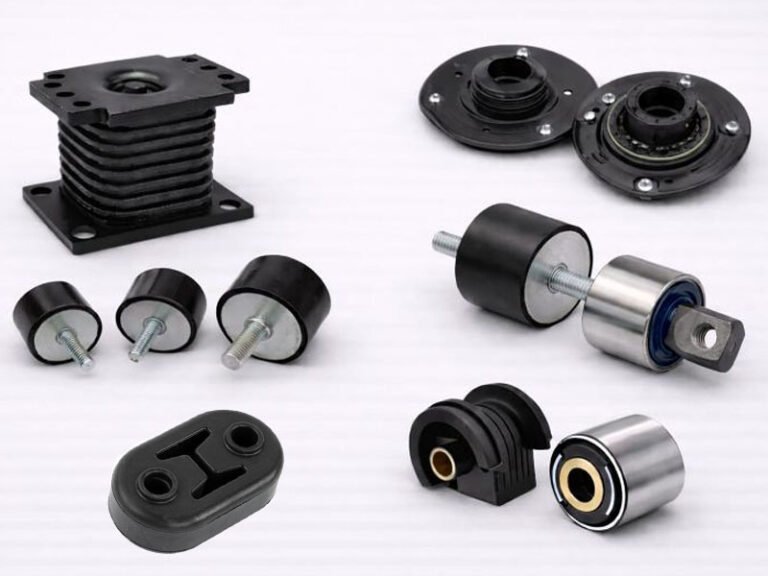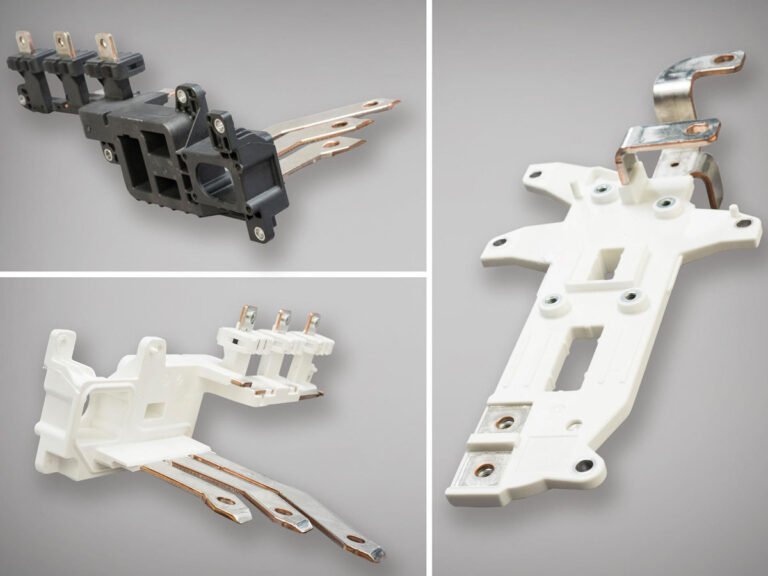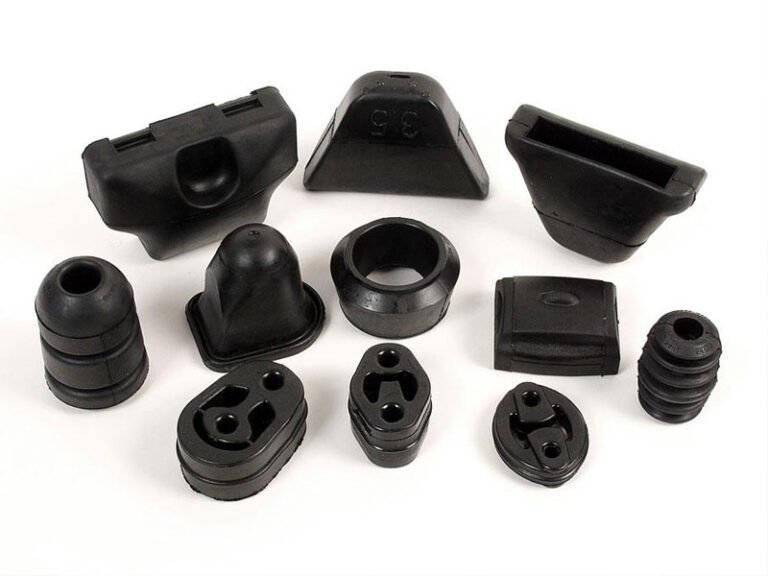
Automotive rubber bumpers are used in different vehicle systems to absorb impact, limit movement, reduce noise, and protect connected components. They can be found in suspension systems, vehicle doors, hoods, trunks, and chassis structures. Although these components may have simple shapes, their performance depends on material properties, geometry, compression behavior, and operating conditions. Selecting the right Automotive Rubber Bumper requires understanding its application and the loads it needs to withstand.
What Is an Automotive Rubber Bumper?
An automotive rubber bumper, also called a rubber buffer, bump stop, or rubber stopper, is an elastic component designed to cushion impact and control movement between vehicle parts. When a door, hood, trunk lid, suspension component, or chassis assembly reaches the end of its travel, the rubber bumper compresses and absorbs part of the impact energy.
Its main functions include:
- Limiting the movement of suspension, doors, hoods, trunk lids and other movable components.
- Preventing metal-to-metal contact that can cause noise, wear or structural damage.
- Reducing impact noise, vibration and harshness during vehicle operation.
- Protecting painted surfaces, plastic parts, wiring, brackets and surrounding assemblies.
- Providing a controlled final stop in suspension systems and other high-load applications.
Rubber bumpers are commonly molded into cylindrical, dome-shaped, tapered, rectangular, or custom geometries. The shape, hardness, and material formulation determine how the part compresses under load and how it recovers after repeated impacts.
Common Types and Applications of Automotive Rubber Bumpers
Automotive rubber bumpers have different structures depending on their installation location and function.
Suspension Bump Stops
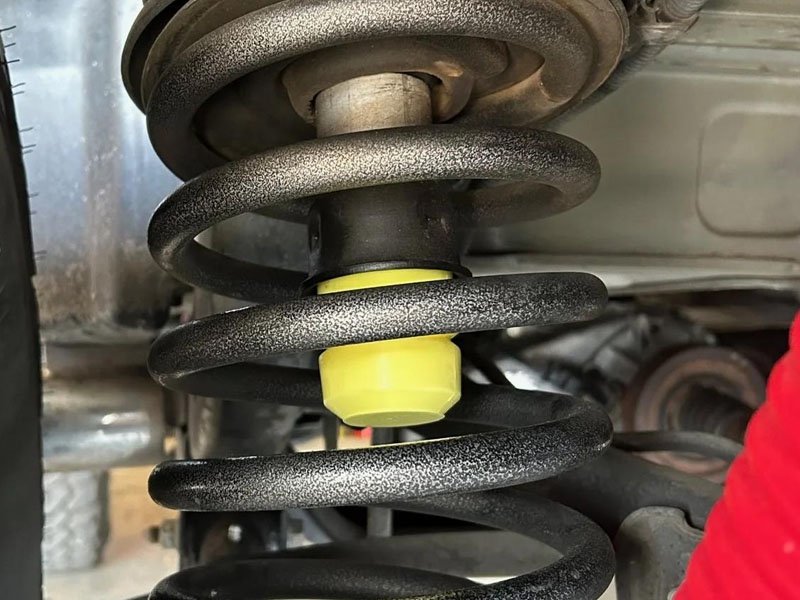
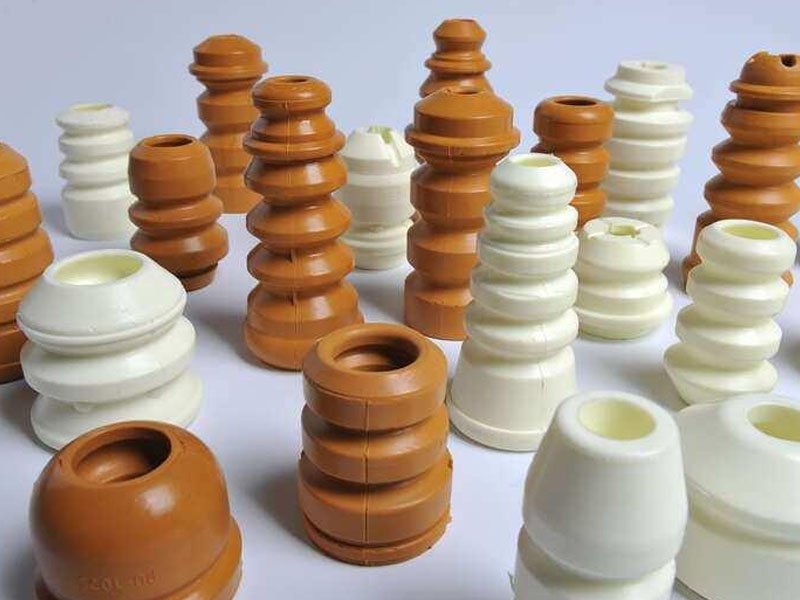
Suspension bump stops are installed in suspension systems, commonly around shock absorbers or struts. They absorb impact energy and limit excessive suspension compression when wheels encounter potholes, road obstacles, or heavy loads. Common designs include solid, hollow, cylindrical, conical, and convoluted structures. Their load capacity, compression behavior, and fatigue resistance must match the suspension requirements.
Door, Hood, and Trunk Bumpers
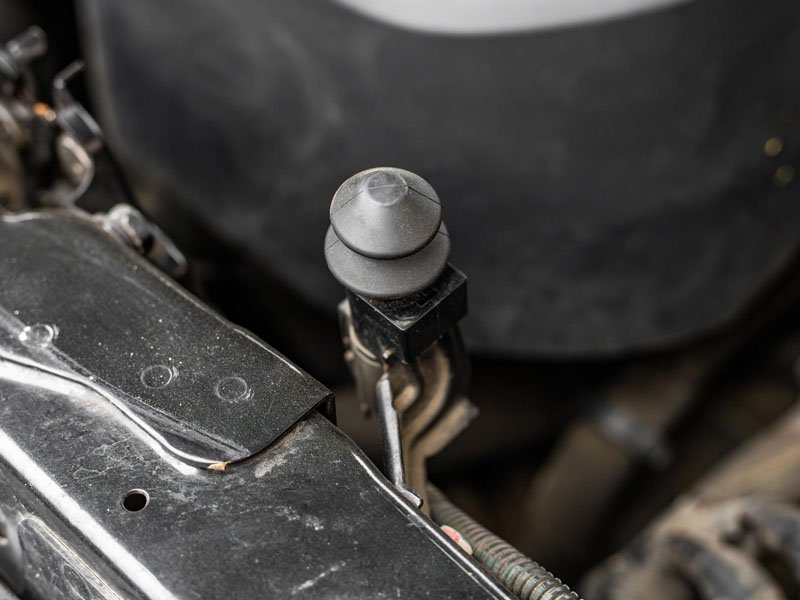
These small rubber components are installed at vehicle door, hood, and trunk contact points. They are installed as catch bumpers, stem bumpers, or surface-mounted pads to cushion closing impact, reduce rattling noise, and help maintain panel position and clearance. They are commonly designed as rubber stops, pads, or adjustable bumpers.
Chassis and Body Buffers
Chassis and body buffers are installed between frames, body panels, and supporting structures. They reduce vibration and impact transmission while preventing direct contact between metal components. They may use solid rubber blocks, rubber pads, or rubber-metal bonded structures.
Truck and Heavy-Duty Buffers
Trucks, trailers, and commercial vehicles use larger rubber buffers in suspension systems, chassis structures, and contact points between moving components. These parts must withstand higher loads and repeated impacts. Load capacity, wear resistance, fatigue performance, and dimensional stability are important selection factors.
Common Materials for Automotive Rubber Bumpers
Material selection affects the compression behavior, durability, and environmental resistance of automotive rubber bumpers. Common materials include the following.
Natural Rubber (NR)
Natural rubber offers good elasticity, tensile strength, and tear resistance. It is suitable for suspension bump stops and other buffers that experience repeated compression and dynamic impact. However, its resistance to oils, ozone, and high temperatures needs to be considered.
EPDM
EPDM provides good resistance to ozone, weathering, water, and heat. It is commonly used for door, hood, trunk, and body bumpers exposed to outdoor conditions. However, it has limited resistance to mineral oils and petroleum-based fluids, so it should not be selected for parts that will remain in direct contact with lubricants or fuel.
Chloroprene Rubber (CR)
Chloroprene rubber offers balanced mechanical strength, weather resistance, and moderate resistance to oils and heat. It can be used for automotive buffers that require a combination of mechanical performance and environmental resistance.
Nitrile Rubber (NBR)
NBR provides good resistance to oils and certain petroleum-based fluids. It is suitable for selected automotive buffers installed near lubricants or other oil-containing components. Its heat resistance and low-temperature flexibility depend on the compound formulation.
Polyurethane (PU)
Polyurethane offers good wear resistance, load-bearing capacity, and abrasion resistance. Microcellular polyurethane is widely used in suspension bump stops because its cellular structure allows substantial compression and can provide progressive stiffness. The exact formulation must be matched to the required temperature range, dynamic load, and long-term compression performance.
Manufacturing Processes for Automotive Rubber Bumpers
The main manufacturing processes for molded rubber bumpers include compression molding, transfer molding, and rubber injection molding. The selected process depends on part geometry, material, production volume, tolerance requirements, and whether metal inserts are needed.
Compression Molding
A prepared rubber blank is placed into a mold cavity. Heat and pressure allow the compound to fill the cavity and vulcanize into the required shape. Compression molding is suitable for many rubber bumpers, especially parts with relatively simple geometry or medium production volumes.
Transfer Molding
In transfer molding, the rubber compound is placed in a separate chamber and forced into the mold cavity through runners. The material is then vulcanized. Transfer molding is useful for parts with metal inserts, more complex geometry, or tighter requirements for dimensional consistency. It is often applied to rubber components that combine elastomer with a metal support or mounting feature.
Rubber Injection Molding
Rubber injection molding feeds uncured rubber compound into a closed, heated mold, where it fills the cavity and undergoes vulcanization. It is appropriate for high-volume production and parts requiring consistent, repeatable quality. It can improve production efficiency for suitable rubber compounds and part designs.
How to Select and Design Automotive Rubber Bumpers?
Selecting an Automotive Rubber Bumper requires evaluating its operating conditions and installation requirements.
Load Capacity and Compression Stroke
Identify the static load, impact load, maximum expected force, and required compression stroke. The bumper must provide sufficient support without excessive deformation or an overly stiff response. A load-displacement curve helps evaluate its compression behavior.
Operating Environment
Consider temperature changes and exposure to oil, fuel, water, ozone, salt, and UV radiation. The material should match the actual installation environment.
Mounting Method and Geometry
Confirm the installation space, mounting dimensions, and fastening method. Common designs include push-in, threaded, bonded, and mechanically fastened structures. Wall thickness, internal cavities, and contact surfaces also affect compression performance.
Durability Testing
Depending on the application, testing may include compression set, load-deflection, repeated compression, fatigue, heat aging, and environmental resistance tests. These evaluations help verify whether the bumper can maintain its required performance during service.
Benefits of Custom Automotive Rubber Bumpers
Custom manufacturing allows rubber bumpers to match specific vehicle structures and operating requirements.
- Custom Dimensions and Geometry: Adjust height, diameter, wall thickness, profile, and mounting features to fit the available space.
- Material and Hardness Selection: Choose suitable compounds according to load, compression, temperature, and environmental conditions.
- Performance Adjustment: Optimize material and geometry together to achieve the required compression response and durability.
- Flexible Mounting Structures: Incorporate holes, grooves, metal inserts, and bonding surfaces where needed.
- Prototype to Mass Production: Support sample development, design modification, tooling, and repeatable production.
Conclusion
Automotive rubber bumpers can absorb impact, limit movement, reduce noise, and protect vehicle components. For custom applications, Flexiparts provides rubber part manufacturing services, including material selection, DFM evaluation, mold design, and compression, transfer, and injection molding. We support made-to-drawing rubber components with customized dimensions, hardness, and mounting structures. Contact us with your drawings or samples to discuss your requirements and request a quotation.