Durometer Selection and Its Impact on Stiffness and Damping
Durometer, measured on the Shore A scale, indicates material hardness and strongly influences bushing behavior.
- Lower durometer values, such as 50-60A in rubber, allow greater deflection and better vibration damping.
- Higher values, common in polyurethane at 80-95A, increase stiffness and support higher loads with less movement.
In dynamic systems, stiffness is non-linear and shifts with load direction, temperature, and deformation rate. Selecting the right durometer requires balancing these factors against the application’s load cycles and frequency targets.
Chemical, Oil, and Temperature Resistance Trade-offs
Operating environment determines material suitability more than initial cost in many cases.
- Natural rubber offers good elasticity and cost efficiency but swells when exposed to oils and certain chemicals.
- Polyurethane generally resists oil and fuel better and maintains properties across a wider temperature range, though it can become brittle in very low temperatures below -20°C.
Thermal cycles must be carefully evaluated. Elevated temperatures accelerate rubber hardening or cause permanent set. Field data shows rubber performs reliably up to 80-90°C continuous duty, while specialized polyurethane grades safely reach 110°C.
Cost and Mold Compatibility Comparison
- Rubber bushings typically carry lower material and tooling costs, making standard sizes highly economical.
- Polyurethane requires tighter process control to avoid bubbles or incomplete fills, which increases per-part pricing but delivers superior abrasion resistance.
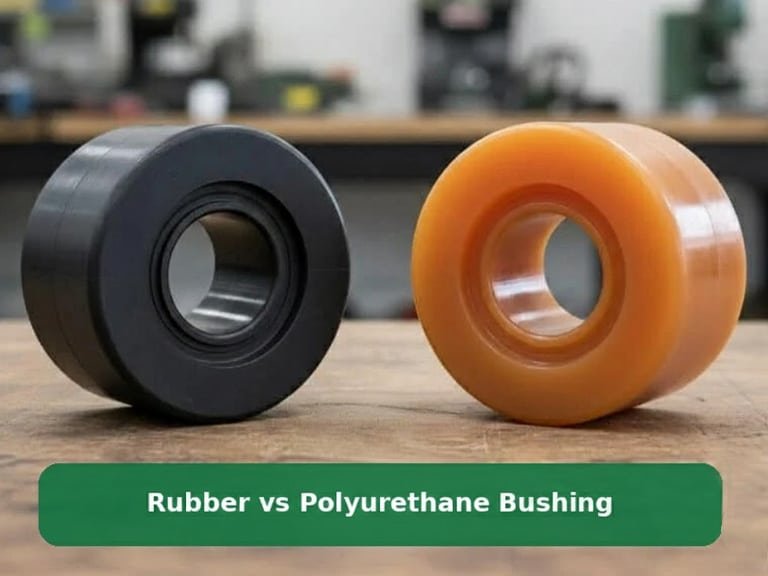
For small production runs, standard rubber components minimize investment. However, for high-volume or demanding specifications, polyurethane becomes highly viable by reducing warranty claims. Total cost of ownership—including maintenance and downtime—frequently favors the material that directly mitigates the system’s dominant failure mode, rather than the lowest initial price.
Geometric Structure and Cavity Design
Once material is selected, geometry determines how the bushing responds to forces in different directions. Wall thickness, diameters, and internal features allow engineers to tune performance without major material changes.
Cavity Design for Radial Versus Axial Stiffness Adjustment
Cavities molded into the rubber or polyurethane element provide one of the most effective ways to adjust directional stiffness. Placing voids in specific zones reduces stiffness in the radial direction while preserving axial and torsional properties. Complex cavity patterns, such as multiple offset holes or shaped channels, achieve finer control than simple cylindrical voids.
Wall Thickness and Inner-to-Outer Diameter Ratio Effects on Load Capacity
Wall thickness and the ratio between inner and outer diameters control load distribution and fatigue life. Thicker rubber walls increase deflection capacity and reduce peak stresses under rotation. A larger outer diameter typically increases load capacity, but may also increase stiffness beyond acceptable NVH (noise, vibration, harshness) limits. Conversely, a smaller ratio improves compliance but reduces structural support under high load.
Testing experience indicates that ratios between 1.8:1 and 2.5:1 work well for most automotive applications. Beyond this range, gains in one area create problems in another. Thin walls under high loads develop cracks earlier, while very thick sections raise material costs and can make the bushing too stiff in torsion.
Tolerance and Fit Considerations
Manufacturing tolerances influence both performance and assembly success in bushing design. Interference fits remain common because they provide retention without additional fasteners in many cases.
Interference Fit Tolerance Control
Outer tube interference into the housing and inner tube fit onto bolts or shafts require careful specification. Typical interference values range from 0.1 to 0.3 mm depending on diameter and material. Too little interference allows slippage under load. Excessive interference risks damage during press-in, especially with rubber that can tear at the edges.
Temperature during assembly matters. Cold pressing or using lubricants formulated for the application reduces insertion force. Post-assembly testing under vibration helps confirm that the fit remains stable throughout the expected duty cycle.
Custom Mold Tolerance Capability Versus Standard Parts
Standard bushings offer good consistency within published tolerances, often ±0.15 mm on critical diameters. Custom tooling opens possibilities for tighter control and non-standard geometries. When performance margins are narrow, the added precision of custom molds reduces variation in spring rates and improves fatigue consistency.
Standard parts work adequately for many non-critical applications. Situations involving tight packaging, unusual load angles, or stringent NVH targets often benefit from custom dimensions.
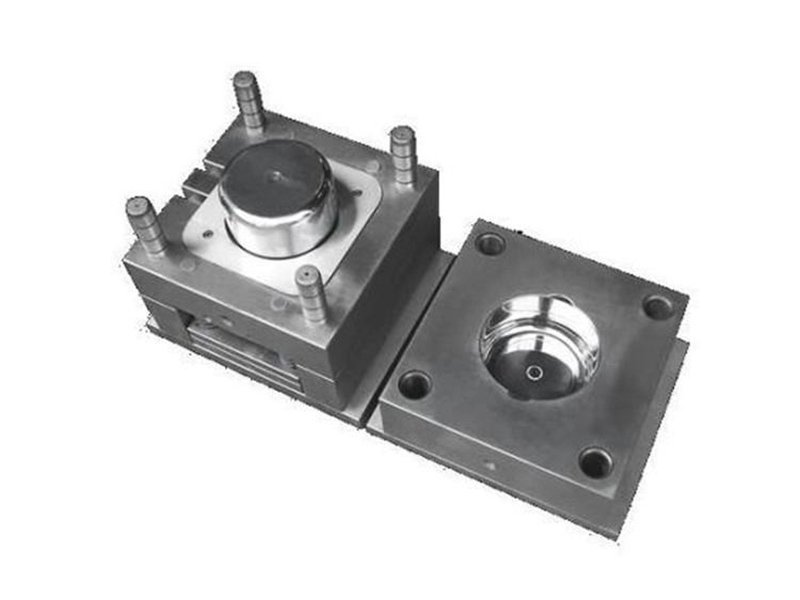
Standard vs Custom: When to Choose Custom Tooling
Deciding between standard and custom bushings requires balancing cost, performance, and timeline.
Limitations of Standard Bushings
Catalog bushings cover a wide range of common sizes and configurations. Their primary limitation appears when system requirements fall outside typical automotive or industrial ranges. Compromises in stiffness, deflection, or durability become necessary. In some cases, engineers must add secondary components to compensate, which increases assembly complexity and potential failure points.
Scenarios Where Custom Tooling Makes Sense
Custom tooling becomes worthwhile under several conditions. Production volumes above several thousand units per year spread tooling amortization effectively. Applications with extreme loads, unusual motion paths, or strict weight targets also justify investment. Unique geometry needs, such as integrated mounting features or optimized cavity layouts for specific directions of compliance, further support custom development.
Conclusion
Effective bushing design requires attention to material properties, geometry, tolerances, and manufacturing approach from the earliest stages. Considering these factors early prevents many common failures such as premature cracking, slippage, or excessive noise and vibration. A balanced design process that includes prototyping and validation testing leads to components that perform reliably throughout their intended service life. By addressing these aspects systematically, engineers can achieve the necessary compromises that deliver both function and durability in real-world conditions.
Whether you need a rubber component or a custom-engineered polyurethane bushing with optimized cavity design, our engineering team is here to help. Welcome to contact us for your project.