Injection moulding large parts service is a sophisticated process that plays a crucial role in the production of large, high-precision plastic components. As industries demand more complex, durable, and cost-efficient solutions, the capabilities of large part injection molding have expanded significantly. This article delves into the intricacies of injection moulding for large parts, exploring the techniques, materials, advantages, and key factors like injection pressure and clamping tonnage. Whether for automotive, industrial, or consumer products, understanding these elements can significantly impact the success of your large part manufacturing projects.
What is Injection Moulding Large Parts?
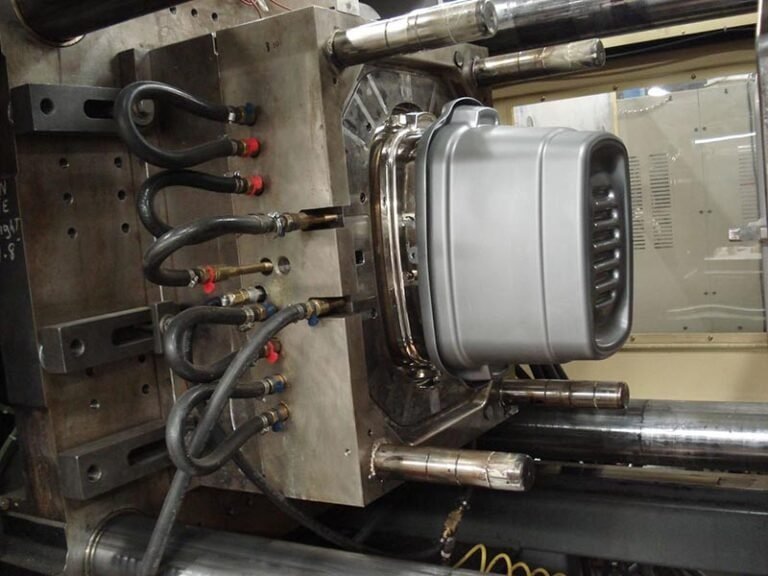
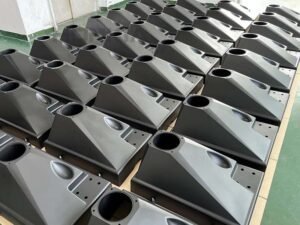
Injection moulding large parts refers to the process of producing substantial plastic components by injecting molten plastic into a mold under high pressure. This technique is commonly used in manufacturing large-scale, high-performance large molded plastic parts that require precision and durability. From automotive bumpers to industrial machinery components, the use of injection moulding for large parts is prevalent in a variety of industries.
Unlike traditional moulding methods, this approach is specifically designed to accommodate larger geometries while maintaining the quality and consistency of smaller parts. It offers significant advantages when it comes to high-volume production, complex designs, and achieving a high degree of dimensional accuracy.
The process requires careful consideration of factors such as injection pressure, clamping tonnage, material selection, and mold design to ensure the successful production of these larger components without defects. With the right techniques and equipment, large part injection molding offers a highly efficient and scalable solution for manufacturing high-quality large plastic parts components for large molds.
Critical Factors: Injection Pressure and Clamping Tonnage
The relationship between injection pressure and clamping tonnage is paramount for successful large part injection moulding.
- Injection Pressure: This refers to the force with which the molten material is injected into the mold cavity. For injection moulding large parts, the pressure must be high enough to ensure the molten plastic fully fills the mold cavity, especially with intricate designs. This ensures the large part will have a consistent structure, free of air pockets or voids.
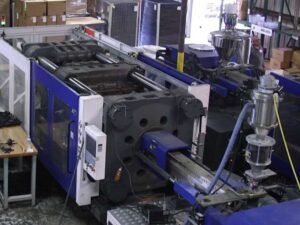
- Clamping Tonnage: This is the force applied by the machine’s clamping unit to keep the mold halves securely closed. Without sufficient injection moulding tonnage, the mold could open under the immense pressure, causing defects like flash or incomplete filling. As injection pressure increases, the required clamping tonnage also rises significantly to prevent the mold from opening.
Choosing the right equipment for large part injection molding is essential. Machines typically have a clamping force ranging from 1,000 tons to over 10,000 tons, a critical factor for successful production.
Common Materials for Injection Moulding Large Parts
When selecting materials for injection moulding large parts, it is essential to choose substances that offer the necessary balance of strength, flexibility, and durability. Common materials include thermoplastics, such as ABS, polycarbonate (PC), polypropylene (PP), and high-density polyethylene (HDPE), as well as reinforced plastics like glass-filled nylon and carbon-fibre composites.
These materials are selected based on their suitability for the intended application, taking into consideration factors such as temperature resistance, impact strength, chemical resistance, and ease of processing. For parts that require added strength and rigidity, materials like polyphenylene sulfide (PPS) or acrylonitrile butadiene styrene (ABS) are often preferred.
The Advantages of Injection Moulding Large Parts
The Advantages of Injection Moulding Large Parts lie in the unique capabilities of the process when applied to larger, more complex components.
Manufacture Large One-Piece Components
Large part injection molding enables the production of oversized components in a single piece instead of assembling multiple smaller parts. This reduces assembly time, improves dimensional accuracy, and increases overall product strength.
Improved Structural Strength
Eliminating joints and fasteners creates stronger, more durable components. One-piece molded parts also reduce potential failure points during long-term use.
Consistent Quality in High-Volume Production
Once the mold is optimized, large injection molding provides repeatable dimensions and consistent quality across every production run, making it suitable for OEM manufacturing.
Lower Total Manufacturing Cost
Although tooling investment is higher, producing large plastic parts in volume significantly lowers the cost per part by reducing labor, assembly, and secondary processing.
Wide Material and Design Flexibility
A variety of engineering plastics can be used to achieve different mechanical, thermal, and chemical performance requirements. Features such as ribs, bosses, inserts, and mounting structures can also be molded directly into the part.
The Applications of Injection Moulding Large Parts
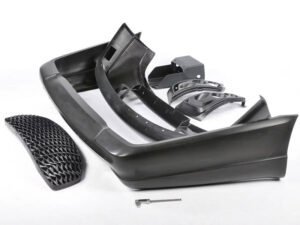
Injection moulding large parts is widely used across various industries due to its versatility and ability to produce high-quality, durable components. In the automotive sector, large parts like bumpers, dashboards, and exterior panels are commonly made using this technique.
The examples of injeciton molding large parts as bellow:
- Body panels (e.g., bumpers, door interior panels)
- Dashboard panels
- Door panels
- Wheel covers and trim pieces
- Machine housings (e.g., enclosures for motors, pumps, compressors)
- TV and monitor casings
- Refrigerator and washing machine panels
- Air conditioner housings and components
- Plastic chairs and tables
- Cabinets and plastic storage units
- Plastic sheds (outdoor storage units)
Conclusion
Choosing the right manufacturing partner is just as important as selecting the right material or machine capacity. Large part injection molding requires expertise in mold design, process optimization, cooling control, and quality inspection to ensure dimensional stability and long-term performance.
Whether you need large industrial housings, automotive components, or custom structural plastic parts, our engineering team can provide DFM analysis, material recommendations, and full-scale production support from prototype to mass production.