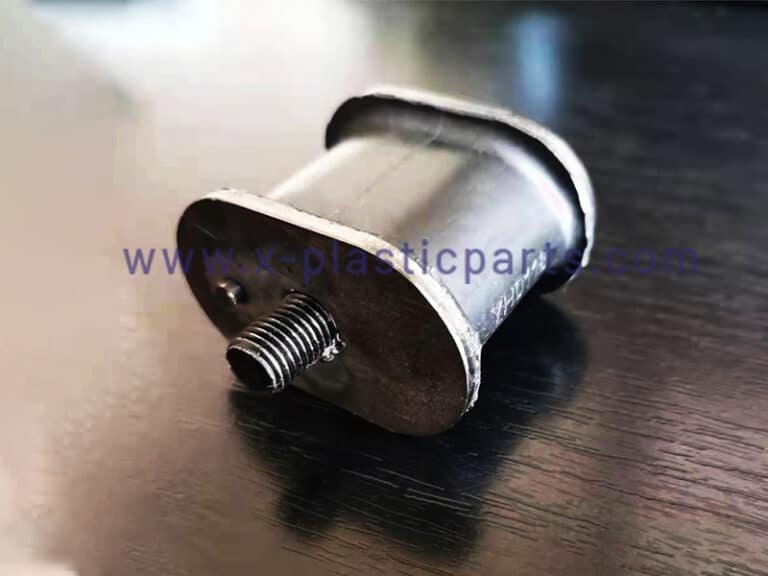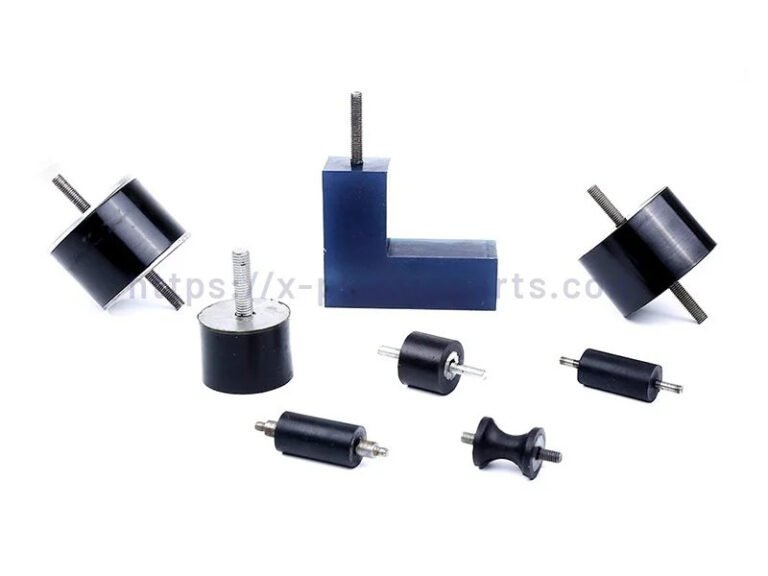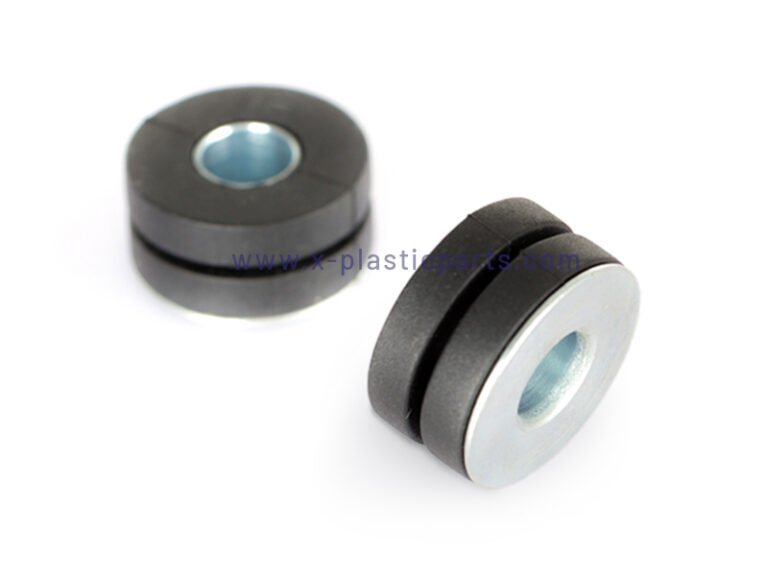
Vibration damping materials helping reduce mechanical vibration, noise, and wear across a wide range of applications. In this article, we explore the fundamentals of vibration damping, the critical properties vibration damping materials must possess, and the best rubber options available for effective vibration control.
What is Vibration Damping?
Vibration damping refers to the process of reducing or absorbing unwanted vibrations that occur during the operation of machinery, vehicles, or other mechanical systems. Vibrations can cause various issues such as increased noise, wear and tear on components, and overall reduced efficiency. The fundamental principle behind vibration damping involves energy dissipation, where materials or devices absorb the vibrational energy produced by oscillations and convert it into other less harmful forms, preventing the vibration amplitude from growing. Effective damping also helps avoid resonance.
Properties of Vibration Damping Materials
When selecting vibration damping materials, several key properties must be considered to ensure optimal performance. Damping Capacity The ability of a material to absorb and dissipate vibration energy. This is the most critical property of vibration damping materials. Materials must be soft enough to absorb vibrations but firm enough to maintain mechanical support.
Elasticity
The material’s ability to return to its original shape after deformation. High elasticity ensures that the material can withstand repeated vibrations without permanent damage.
Environmental Stability
Vibration damping materials must be able to withstand environmental factors such as temperature fluctuations, moisture, and exposure to chemicals.
Fatigue Resistance
Damping materials frequently undergo cyclic loading. Thus, high fatigue resistance ensures longevity and consistency of damping performance.
Thermal Stability
Materials should be able to perform well across a wide range of temperatures.
Viscoelasticity
The combination of viscosity and elasticity in a material that allows it to absorb and dissipate energy.
Common Types of Vibration Damping Materials
A variety of materials are used for vibration damping, each with unique characteristics tailored to different applications:
1. Rubber Vibration Damping Materials
Rubber is one of the most popular materials used for vibration damping. It has excellent damping properties due to its high elasticity and viscoelastic nature, making it capable of absorbing and dissipating vibration energy effectively.
- Natural Rubber: Known for its high elasticity. It is particularly useful in applications with moderate temperature and chemical exposure.
- Synthetic Rubber: Materials like neoprene, nitrile, and EPDM rubber offer enhanced durability and resistance to weathering, making them often used in heavy machinery and automotive applications.
- Neoprene Rubber: Offering excellent chemical, oil, and weather resistance. Although its elasticity is slightly lower than natural rubber, its durability under these conditions often makes up for it.
- EPDM Rubber: Renowned for heat and weather resistance, EPDM is useful for outdoor and automotive damping components. It has medium damping capacity but excellent longevity.
- Nitrile Rubber: While less effective in damping, nitrile rubber’s strength in resisting oils and fuels allows it to be used in seals and gaskets where vibration isolation is secondary to chemical resistance.
2. Polyurethane
Polyurethane Known for wear resistance and flexibility, polyurethane combines strength with reasonable damping capacity. Polyurethane materials can be molded into various shapes and sizes, making them suitable for custom damping solutions in automotive and industrial settings.
3. PVC and Other Polymers
Polyvinyl chloride (PVC) is often used in damping sheets and barriers to reduce noise and vibrations in enclosures and machinery casings.
4. Foam Materials
Foam materials, such as closed-cell foam or viscoelastic foam, are used for vibration damping in applications where lightweight and flexible solutions are required. Foam can be used in combination with rubber to create hybrid damping systems for enhanced performance in specific environments.
The Most Common Damping Mechanisms
Vibration damping materials rely on different mechanisms to reduce vibration energy. There are two most common mechanisms.
Viscoelastic Damping
The most common damping mechanism is viscoelastic damping, which combines the elastic properties of solids with the viscous properties of liquids. In this mechanism, the material both temporarily stores vibration energy (like an elastic solid) and dissipates some of it as heat (like a viscous fluid), effectively reducing vibration amplitude and preventing transmission of excessive oscillations. Viscoelastic damping is widely used in rubber and polymer vibration damping materials because it provides a balance between energy absorption and mechanical support.
Sorbothane Damping
Another notable damping mechanism is the Sorbothane damping mechanism, which is a specialized type of viscoelastic damping. Sorbothane is a proprietary polyether-based polyurethane material exhibiting enhanced viscoelastic properties. It offers superior vibration isolation and shock absorption due to its high energy absorption capacity and memory effect, allowing it to recover its shape while dissipating large amounts of vibrational energy as heat. This mechanism is often used in high-performance applications requiring precise vibration control near resonant frequencies.
Conclusion
Understanding the principles of vibration damping, properties and types of vibration damping materials, can help to make informed decisions about the right material for specific needs. Flexiparts is a professional on-demand manufacturer. We supply customized vibration damping parts production. Welcome to contact Flexiparts for custom vibration damping solutions.