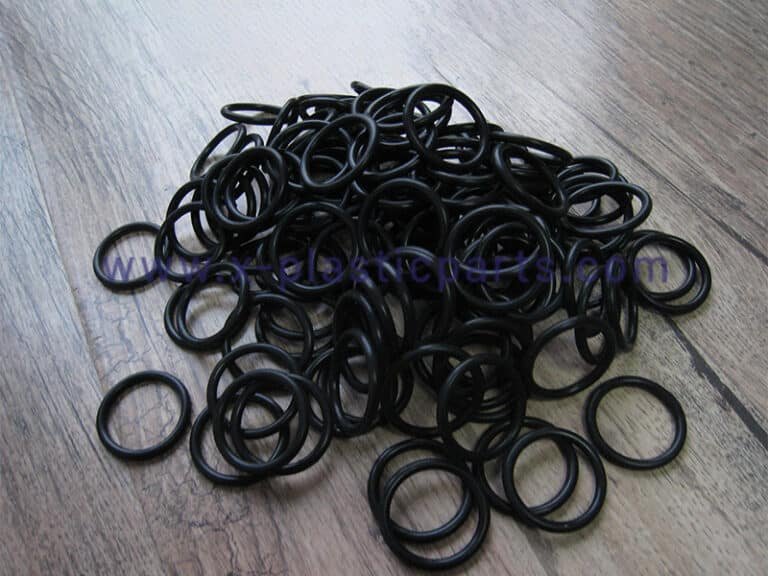
O-ring material types play a central role in determining the performance and reliability of seals across industrial applications. Selecting the right o-ring material is essential because factors such as temperature exposure, chemical contact, pressure, and mechanical stress vary widely between uses. Different types of O-ring material offer distinct properties that match specific operating conditions. In the following sections, we will explore the different o-ring materials in detail.
NBR (Nitrile)
NBR, or Nitrile Butadiene Rubber, is one of the most widely used O-ring material types. Key characteristics include strong resistance to mineral oils, fuels, greases, and hydraulic fluids, along with good tensile strength and abrasion resistance. The compression set remains low under normal conditions. The typical temperature range for NBR is approximately -40°C to 120°C, with some formulations extending to -55°C to +135°C.
NBR O-ring typical applications cover automotive fuel systems, hydraulic equipment, general machinery seals, and petroleum-related low-demand settings.
FKM (Viton)
FKM, commonly known as Viton, is a high-performance fluorocarbon elastomer. It resists petroleum-based oils, fuels, acids, many chemical solvents, and halogenated hydrocarbons effectively. Permeation rates stay low, and compression set performs well over time, and suitability for both dynamic and static seals. The operational range for FKM is approximately -20°C to 200°C, with specialized grades reaching -40°C to +230°C.
FKM O-ring typical applications include chemical processing equipment, aerospace components, automotive engine fuel systems, and oil and gas operations, particularly where rapid gas decompression resistance is required.
EPDM
EPDM stands out for outdoor and water-based uses in o-ring material selection. The temperature range is from -50°C to +150°C, with short-term steam exposure up to +180°C. It offers strong resistance to ozone, UV radiation, weathering, hot water, steam, dilute acids and alkalis, ketones, and alcohols. EPDM o ring is moderate cost, extended service life, and availability in FDA, NSF, and WRAS-certified versions for food and potable water contact.
EPDM O-ring typical applications involve water treatment systems, automotive cooling circuits, pharmaceutical and food processing equipment, and general outdoor sealing.
Silicone (VMQ)
Silicone provides one of the broadest temperature capabilities among O-ring rubber types. The temperature range is from -60°C to +230°C, with some grades extending to -100°C to +260°C.
It demonstrates excellent resistance to high and low temperatures, ozone, and UV light, plus strong electrical insulation and non-toxic properties. Silicone o-ring is low compression set, good elasticity retention, and compliance with USP Class VI, ISO 10993, and FDA standards for medical and food use.
Silicone O-ring typical applications cover medical devices, food processing machinery, semiconductor equipment, and seals in ovens or refrigerators. It lacks strength for high-wear or oil-exposed environments.
FFKM (Perfluoroelastomer)
FFKM delivers excellent chemical compatibility as a premium option in different types of O-ring material. The temperature range: -40°C to +260°C, with certain compounds up to +327°C. It withstands nearly all chemicals, features very low permeation, and maintains excellent compression set resistance. FFKM o-rings are durable in corrosive, high-purity, or high-temperature settings.
FFKM O-ring typical applications include semiconductor fabrication, advanced pharmaceutical processes, deep oil and gas wells, and chemical handling with strong acids or bases.
PTFE
PTFE, often used in encapsulated or pure forms, provides exceptional chemical inertness, though it lacks inherent elasticity. The temperature range: -200°C to +260°C. PTFE orings resist almost all substances except molten alkali metals and select fluorides, with a very low friction coefficient.
PTFE O-ring typical applications involve chemical processing, food and pharmaceutical systems, electrical environments, and high-purity setups. It usually combines with an elastic core for better sealing in dynamic or high-wear situations.
HNBR
Hydrogenated Nitrile Butadiene Rubber (HNBR) is a modified form of NBR with improved heat and ozone resistance. HNBR O-rings maintain mechanical strength under high temperatures and in aggressive environments. Its operational temperature range is approximately -40°C to 150°C, with some grades to +165°. HNBR o-ring features lower compression set, and strong resistance to rapid gas decompression.
HNBR O-ring typical applications include automotive air conditioning, oilfield equipment, transmission systems, and high-temperature oil seals.
Neoprene (CR)
Neoprene offers balanced properties for moderate conditions. The temperature range is from -40°C to +120°C. Neoprene o-ring provides good resistance to weathering, ozone, oils, chemicals, and flame, plus compatibility with refrigerants and ammonia.
CR O-ring typical applications cover refrigeration and air conditioning systems, outdoor machinery, and chemical contact areas.
Conclusion
The performance of an O-ring depends largely on the material selected. Understanding the different types of O-ring material and their characteristics is crucial for ensuring durability, reliability, and proper function in specific operating environments. Careful O-ring material selection involves evaluating temperature ranges, chemical exposure, and mechanical requirements. Flexiparts assist in choosing the appropriate material and offer customization for O-ring rubber types, helping customers achieve optimal sealing performance for their applications. Welcome to contact us and get a custom solution for your o-ring project.