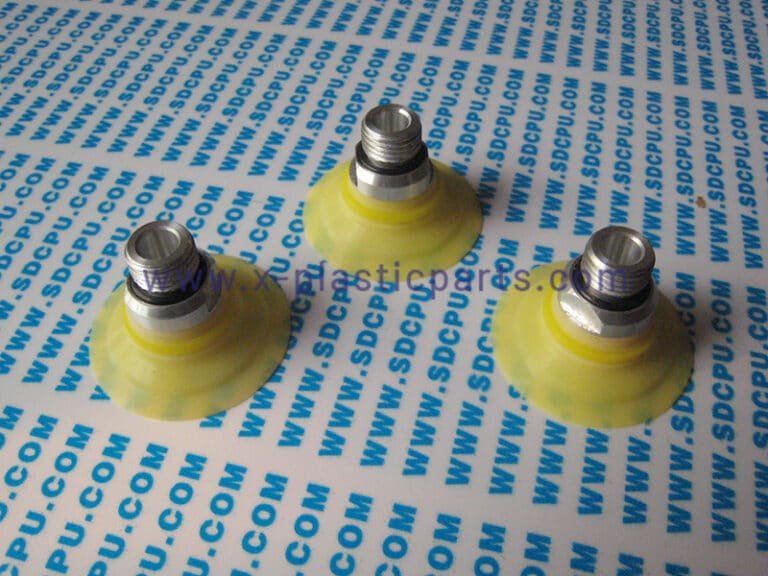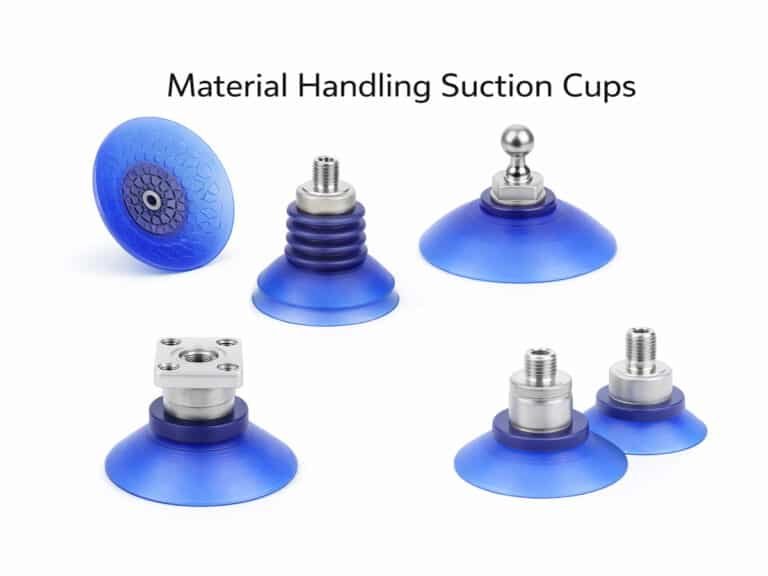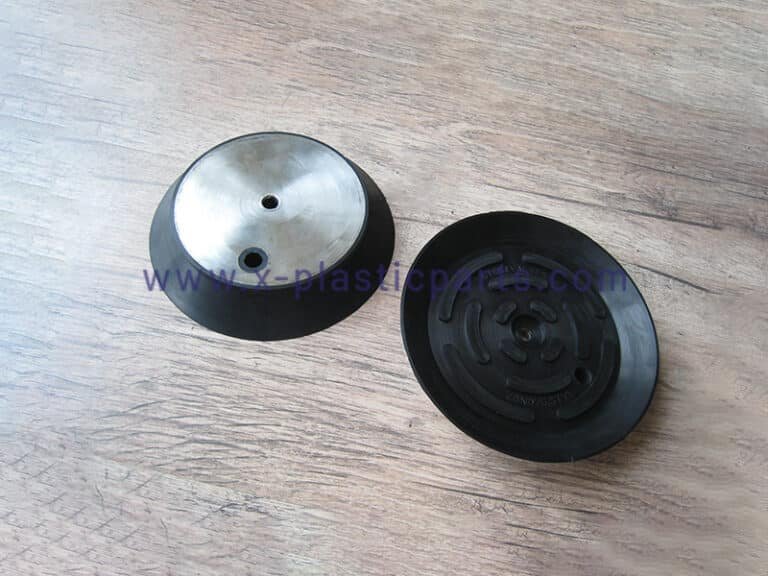
Vacuum cups are components used in industrial applications for handling materials. They provide a method for lifting and moving objects without direct mechanical contact.
What is a Vacuum Cup?
A vacuum cup, often referred to as a vacuum suction cup, is a device used in various industrial applications for holding and moving objects without the need for mechanical fasteners or manual labor. These cups use the principle of vacuum suction to create a stable grip on an object, enabling it to be lifted, transported, or positioned with precision. The versatility and simplicity of vacuum cups have made them indispensable in many sectors, particularly in automation and material handling.
Vacuum Cup Work Principle
A vacuum cup works by generating a vacuum, or negative pressure, between the cup and the surface of an object. When the vacuum is created, atmospheric pressure pushes the cup against the object, creating an effective seal. The force holding the object is calculated using the formula F = P × A, where F is the holding force, P is the pressure difference, and A is the effective area of the cup. This force holds the object securely in place, allowing it to be moved without direct contact or the use of additional fixtures.
The primary function of a vacuum cup is to lift and move objects without the need for direct physical contact, which can be especially useful for delicate or irregularly shaped items that may be damaged by traditional handling methods. The suction created by the vacuum cup provides a reliable means of lifting, even for heavy or complex-shaped objects, as long as there is a good seal.
Components of a Vacuum Cup
The construction of a vacuum cup is fairly straightforward. The main components include the cup itself, a sealing element, and a connection to a vacuum source.
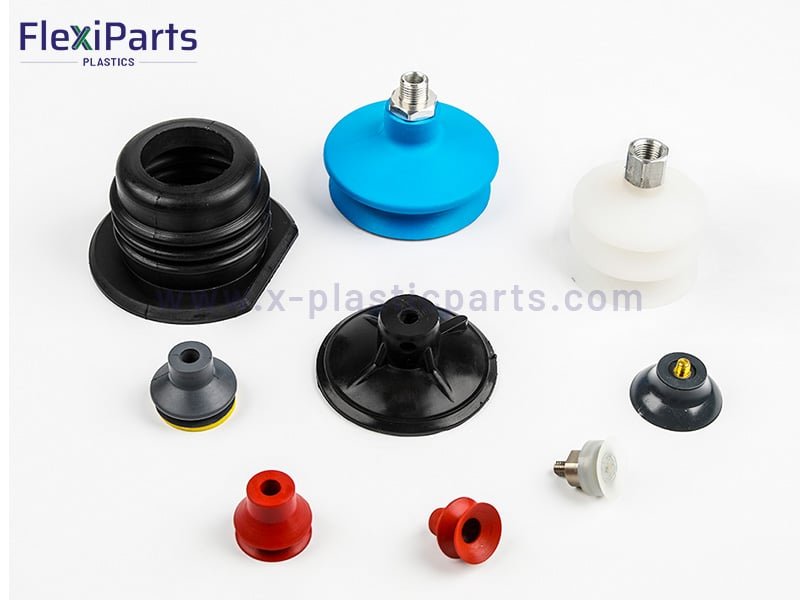
Vacuum Cup Body: Typically made from materials like rubber, silicone, or plastic, the cup body is designed to create the surface contact that forms the vacuum. It is usually flexible, allowing it to conform to the shape of the object being lifted.
Sealing Element: The sealing element, often a rubber or soft material, is crucial for ensuring that no air can escape when the vacuum is applied. The seal prevents leakage, which could otherwise reduce the lifting capacity of the vacuum cup.
Vacuum Connection: The vacuum cup is connected to a vacuum system, usually through a hose or tube. This system creates the necessary suction by removing air from within the cup. The vacuum pressure is maintained while the object is being held, enabling secure transportation.
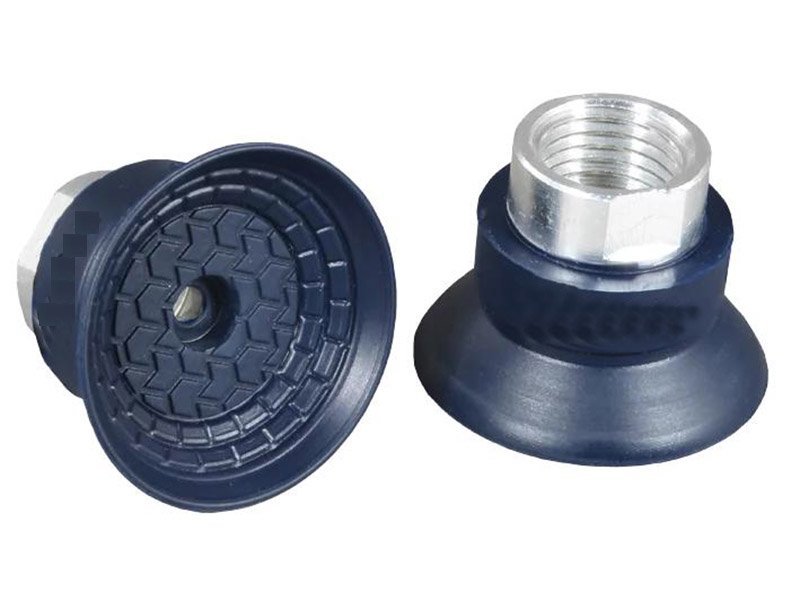
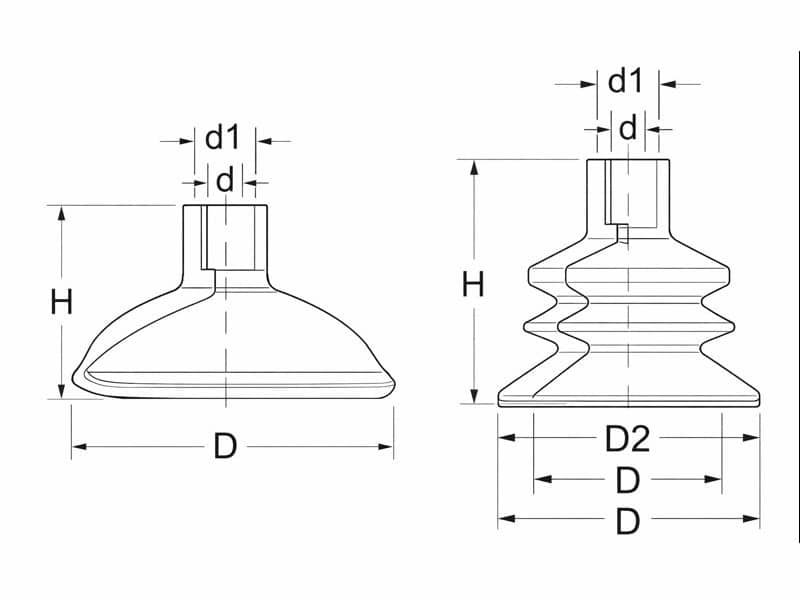
Vacuum Cup Key Parameters & Design Considerations
Diameter
- Parameter: Ranges from 4 mm to 900 mm. Larger diameters increase contact area and suction force.
- Design Tip: Use larger cups for heavy or bulky objects; smaller cups for delicate components to prevent surface damage.
Hardness
- Parameter: Typically 40–70 Shore A. Hardness affects flexibility and durability.
- Design Tip: Softer cups seal better on uneven surfaces, while harder cups resist wear and suit rough materials.
Volume / Internal Capacity
- Parameter: Smaller volume cups evacuate air faster, improving cycle efficiency.
- Design Tip: For high-frequency handling or automated lines, choose cups with smaller internal volume.
Operating Temperature & Chemical Resistance
- Parameter: Depends on material, affecting heat tolerance and chemical compatibility.
- Design Tip: For high-temperature or chemically harsh environments, select heat- and chemical-resistant materials like VMQ (Silicone) or FKM (Fluorocarbon).
Vacuum Cup Material Selection
- Nitrile Rubber (NBR): Oil-resistant and durable, operating from -10°C to +80°C. Ideal for metal handling.
- Silicone (VMQ): Wide temperature range (-40°C to +200°C), food-grade. Suitable for high-heat or sanitary applications.
- Polyurethane (PU): Highly wear-resistant, -20°C to +80°C. Best for rough surfaces like wood or recycled materials.
- Fluorocarbon (FKM): Chemical- and heat-resistant, up to +200°C. Used in harsh industrial environments.
Main Applications of Vacuum Cups
Vacuum cups are used in a wide range of industries, particularly those that rely on automation and precise material handling.
Industrial Automation: Vacuum cups are commonly used in robotic arms and automated production lines for handling parts and products.
Packaging and Assembly: In the packaging and assembly industries, vacuum cups are used for picking and placing items such as bottles, boxes, and components.
Glass and Electronics Manufacturing: Vacuum cups are often used in the handling of delicate items such as glass panels and electronic components.
Material Handling: In warehouses and logistics centers, vacuum cups are used to move heavy or awkwardly shaped items, such as metal sheets or machinery parts.
Metalworking: Vacuum cups handle sheets in stamping or laser cutting processes. They manage oily or textured surfaces effectively with appropriate lip designs.
Conclusion
Vacuum cups serve as essential tools in industrial handling. They operate on pressure differences to provide secure attachment. Proper selection ensures operational efficiency and safety. Advances in materials and designs continue to expand their use in automation.