Table of Contents

Understanding PTFE O-Rings: How They Work, Pros, and Cons

PTFE O-Rings

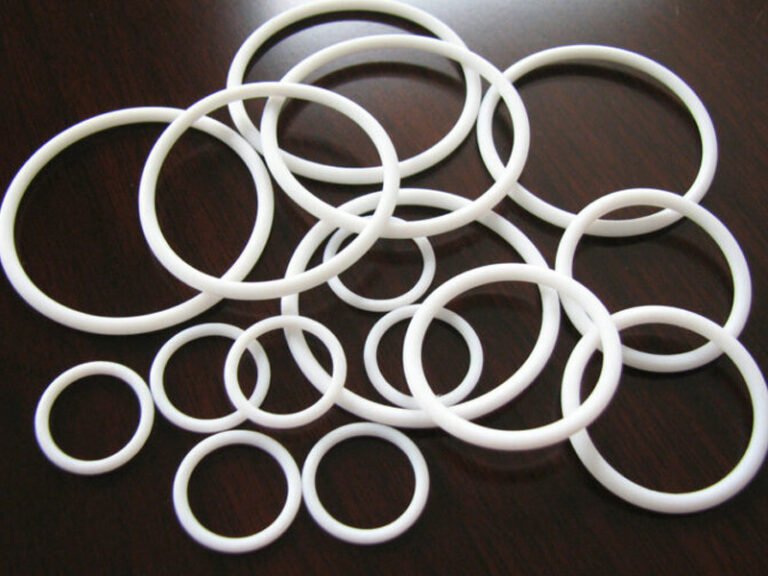
A PTFE O-ring is a circular sealing component manufactured from polytetrafluoroethylene, a fluoropolymer known for its chemical resistance and thermal stability. Unlike rubber-based O-rings, a PTFE O-ring relies more on material stability and precise mechanical design than on elastic recovery to achieve effective sealing.

Basic Working Principle of PTFE O-Rings

PTFE O-rings function through mechanical compression and pressure activation. When installed in a groove, the ring is compressed between two mating surfaces, creating an initial seal. As system pressure increases, it pushes the PTFE O-ring against the groove walls and sealing surfaces, enhancing the seal.

In static applications, PTFE O-rings provide reliable sealing because the material resists deformation over time under constant load. For dynamic uses, the low friction of PTFE reduces wear, but the lack of elasticity can lead to challenges in maintaining a consistent seal during movement. The sealing effectiveness of a PTFE O-ring depends on proper groove design, including dimensions and surface finish, to ensure even compression.

Installation involves placing the PTFE O-ring into the groove without twisting, followed by assembly of the components. Once in place, the ring deforms slightly to fill gaps, but it does not return to its original shape like rubber seals. This one-time deformation characteristic makes PTFE O-rings suitable for applications where disassembly is infrequent.

Why Can PTFE be used for O-rings?

The use of PTFE in O-ring manufacturing is driven by a distinct set of material characteristics that differ fundamentally from traditional rubber compounds.

Chemical Inertness

PTFE is a fluoropolymer with a structure of carbon atoms bonded to fluorine atoms, resulting in strong chemical bonds. This composition makes PTFE resistant to a wide range of aggressive chemicals, including acids, solvents, fuels, and strong oxidizing agents. This makes a PTFE O-ring suitable for environments where elastomer degradation, swelling, or chemical attack would otherwise compromise seal integrity.

Thermal Stability

Thermal stability is another defining feature. PTFE maintains stable mechanical properties across a wide operating temperature range from -200°C to +260°C. At low temperatures, PTFE remains flexible without becoming brittle, and at high temperatures, it does not soften or degrade significantly.

Low Coefficient of Friction

PTFE also has a very low coefficient of friction, typically between 0.05 and 0.10. This property reduces wear in dynamic sealing applications and minimizes stick-slip behavior. However, low friction alone does not guarantee effective sealing, and it must be balanced with appropriate surface contact pressure.

Low Water Absorption

PTFE exhibits zero water absorption, preventing swelling or dimensional changes in humid conditions. It also has high dielectric strength, making it suitable for electrical insulation in sealing roles.

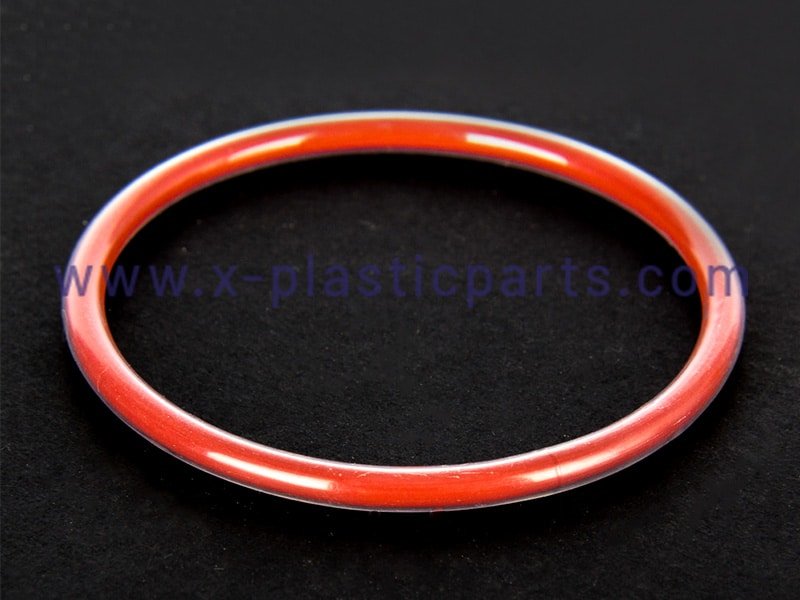
Encapsulated O Ring

Disadvantages of PTFE O-Rings

Despite their strengths, PTFE O-rings are not universally suitable, and understanding their limitations is essential for proper application.

Lack of Elastic Recovery

The lack of elastic recovery is one of the most significant constraints. Once compressed, a PTFE O-ring does not rebound effectively if sealing surfaces relax or move. As a result, PTFE O-rings are less tolerant of vibration, misalignment, or fluctuating loads.

Prone to Creep

At the same time, PTFE is prone to creep, also known as cold flow. Under sustained load, the material can gradually deform, potentially reducing contact pressure over time, compromising the seal in high-pressure systems.

Installation Sensitivity

Installation sensitivity is another consideration. PTFE O-rings require accurate groove dimensions and smooth surface finishes. Sharp edges or improper compression can lead to damage during assembly or premature seal failure.

Cost

Cost is another factor; PTFE O-rings are more expensive due to material and manufacturing expenses. They also have higher initial leak rates in low-pressure or gaseous media because of reduced conformability.

Typical Application Scenarios for PTFE O-Rings

PTFE O-rings are most commonly used in applications where environmental or operating conditions exceed the capabilities of elastomeric seals.

  • Chemical: Seal for pumps, valves, and flanges.
  • Pharmaceutical: Mixers, reactors, and piping in sterile environments.
  • High-temperature systems: Heat exchangers and industrial reactors.
  • Food processing equipment: Fillers and conveyors.
  • Aerospace applications: Fuel systems, hydraulic lines, and cryogenic storage tanks.
  • Semiconductor manufacturing: Seal vacuum chambers and gas delivery systems.
How to Select the Appropriate PTFE O-Ring?

Selecting a PTFE O-ring starts with assessing the operating conditions: temperature, pressure, media type, and whether the application is static or dynamic. For temperatures below -40°C or above 200°C, PTFE is often necessary.

Evaluate chemical compatibility using charts that list PTFE’s resistance to specific substances. Virgin PTFE suits most needs, but for improved strength against creep, consider filled variants like glass or carbon-reinforced types.

Determine the groove dimensions based on standard sizes, such as AS568, to ensure proper fit. Calculate the compression percentage, typically 10-40% for PTFE O-rings, to achieve sealing without excessive deformation.

For dynamic uses, opt for spring-energized PTFE seals to compensate for the lack of elasticity. Test the assembly under simulated conditions to verify leak rates and durability.

Consider cost versus performance; while initial expense is higher, longer life in harsh environments can reduce downtime. Consult manufacturers for custom solutions if standard options do not fit. Proper selection ensures reliable operation of PTFE O-rings, also known as Teflon O-rings, in the intended application.

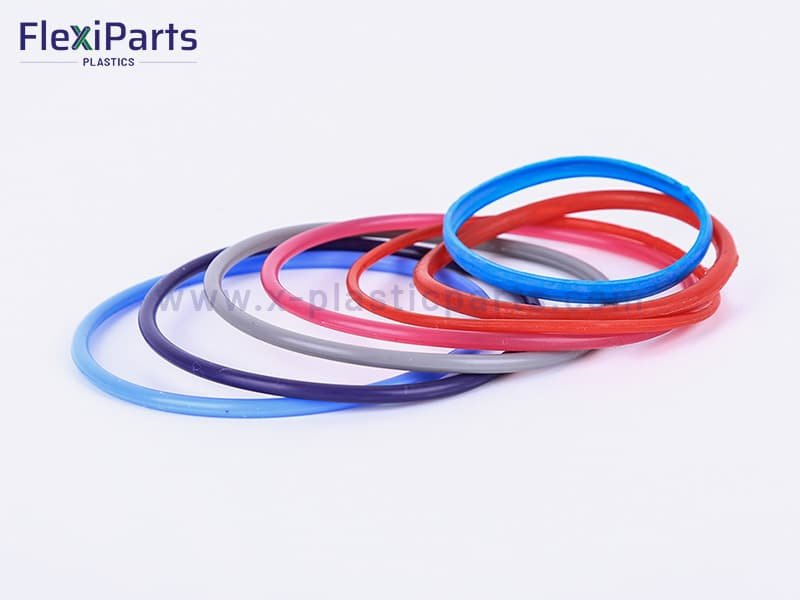
Rubber Custom O Rings

How to Select the Appropriate PTFE O-Ring

Assessing the Operating Conditions

Selecting a PTFE O-ring starts with assessing the operating conditions: temperature, pressure, media type, and whether the application is static or dynamic. For temperatures below -40°C or above 200°C, PTFE is often necessary.

Evaluate Chemical Compatibility

Evaluate chemical compatibility using charts that list PTFE’s resistance to specific substances. Virgin PTFE suits most needs, but for improved strength against creep, consider filled variants like glass or carbon-reinforced types.

Proper Groove Design

A PTFE O-ring must be supported adequately to prevent extrusion and excessive deformation. In some cases, alternative sealing designs or energized PTFE seals may offer better long-term performance than a standard solid PTFE O-ring.

Conclusion

A PTFE O-ring is a specialized sealing solution designed for applications where chemical resistance, thermal stability, and material inertness are critical. While it does not provide the elastic behavior of traditional rubber seals, careful design and correct application allow a PTFE or Teflon O-ring to deliver reliable performance in demanding environments. Flexiparts supplies custom O-ring manufacturing. Welcome to contact us and get a custom solution for high-performance PTFE O-rings.