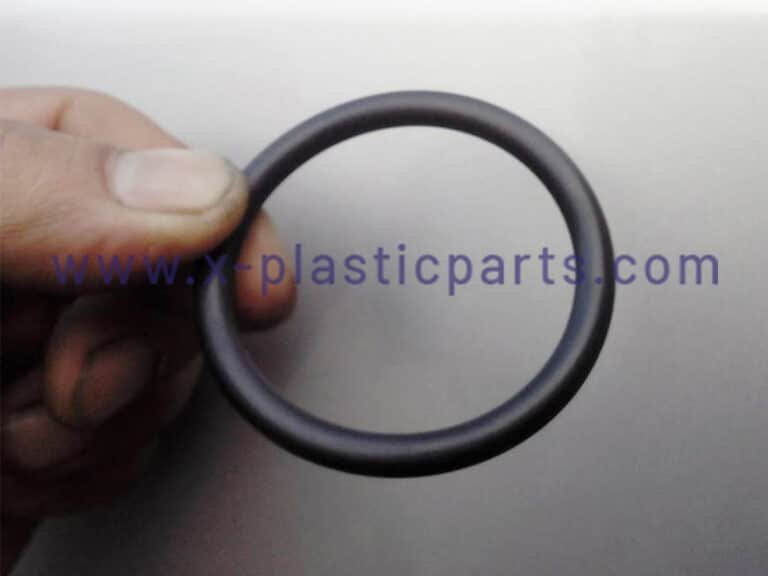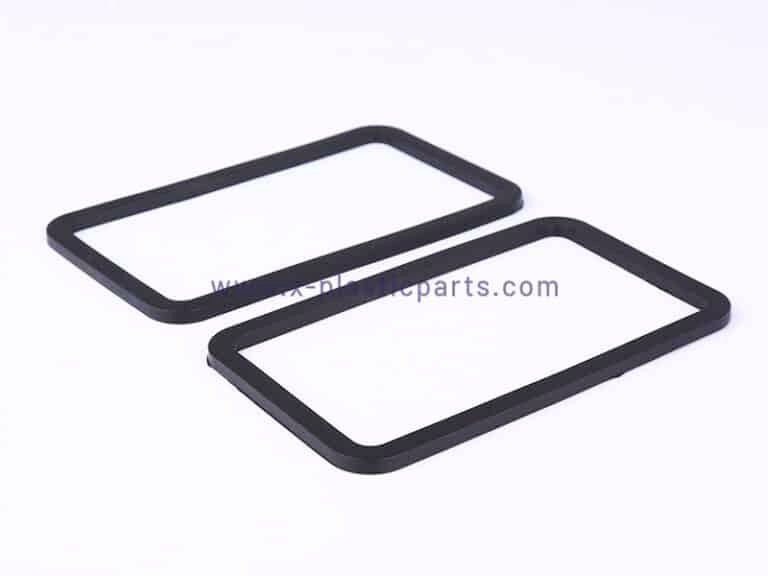
Square O rings, also known as O ring square profile or square cut O rings, represent a specialized type of sealing component used in various industrial applications. These seals, often referred to as rubber square rings or square section seals, differ from traditional O-rings in their cross-sectional geometry. They provide specific performance characteristics that make them suitable for certain environments.
What is a Square O Ring?
A square O ring is a sealing device with a square or rectangular cross-section, unlike the circular profile of standard O-rings. It is typically made from elastomeric materials and functions to prevent fluid or gas leakage in mechanical assemblies. These seals are designed to fit into grooves where they compress to form a barrier. The square shape allows for a different interaction with the groove walls compared to round profiles.
Comparison with Standard O-Rings
To understand the distinctions, consider the following table comparing square O rings with standard O-rings:
| Aspect | Square O Rings | Standard O-Rings |
|---|---|---|
| Cross-Section Shape | Square or rectangular | Circular |
| Stability in Groove | Higher resistance to twisting or rolling | Prone to rolling under pressure |
| Compression Range | Typically 15-30% | Usually 10-25% |
| Installation | Requires precise groove design | More forgiving in standard grooves |
| Cost | Often higher due to material and manufacturing | Generally lower for mass production |
| Common Applications | Static seals in high-pressure systems | Dynamic seals in general use |
Why Use Square O-Rings?
Square O-Rings offer several advantages compared to traditional O-Rings.
Improved Stability Within the Groove: The flat sides of the square cut O rings or rubber square ring prevent rotation or displacement, which can occur with round O-rings under lateral forces. This feature reduces the risk of seal failure in environments with vibration or pressure fluctuations.
Achieve higher compression rates: Square O rings can compress more uniformly across their surface, leading to better contact with mating parts. This results in effective sealing at higher pressures without excessive material deformation.
Exhibit good resistance to extrusion in high-pressure conditions: The geometry distributes stress more evenly, extending the service life of the seal. They also require less groove depth in some designs, allowing for compact assemblies.
More compatibility: Square cut O-rings can be used in existing grooves designed for round O-rings with minimal modifications, provided the dimensions align. This adaptability reduces redesign costs.
Materials Used for Square O-Rings
The material of Square O-Rings plays a significant role in determining their performance in different applications. Several materials are commonly used for square-section seals, each offering distinct properties suited for various environments.
Nitrile (Buna-N)
One of the most widely used materials for Square O-Rings, nitrile rubber offers excellent resistance to oils, fuels, and grease. It operates effectively in temperatures from -40°C to 120°C and is suitable for hydraulic and pneumatic systems. It is often used in automotive and industrial applications where sealing against oils and fuels is required.
EPDM (Ethylene Propylene Diene Monomer)
EPDM is known for its superior resistance to heat, ozone, and weathering. It handles temperatures from -50°C to 150°C and resists ozone and UV light. It is commonly used in outdoor applications, as well as in HVAC systems, where it is exposed to fluctuating temperatures and weather conditions.
FKM /Viton (Fluorocarbon Rubber)
Viton is a high-performance material that offers exceptional resistance to high temperatures, chemicals, and fuels. It can withstand temperatures up to 250°C. It is typically used in aerospace and automotive industries where components need to withstand extreme conditions.
Silicone Rubber
Silicone rubber provides flexibility and resistance to extreme temperatures, ranging from -60°C to 230°C. It is biocompatible, making rubber square rings from silicone appropriate for medical or food-grade equipment.
PU (Polyurethane )
PU is chosen for its high tear strength and abrasion resistance. Square O rings in PU perform well in dynamic applications with temperatures up to 100°C, such as in heavy machinery.
When to Use Square O Rings?
Square O-rings are appropriate in situations where standard O-rings fall short.
They are particularly useful in high-pressure static sealing applications, such as flanges or valve bodies, where the square cut O rings prevent extrusion and maintain seal integrity. In systems with significant vibration, the stability of rubber square rings reduces the likelihood of misalignment.
These seals are also selected for retrofitting older equipment. If a groove is shallow or irregular, the O-ring square profile can provide better compression without redesigning the housing.
In automotive engines or hydraulic pumps operating under pressure variations, square O-rings ensure consistent performance. They are less ideal for high-speed dynamic applications, where round O-rings might be better due to lower friction.
Flexiparts Customization for Square O Rings
Square O rings offer practical solutions in sealing technology. Flexiparts offers customization services for O rings Manufacturing, tailoring them to specific needs. This includes adjusting dimensions like inner diameter, outer diameter, and cross-section thickness to fit unique grooves. Materials such as NBR, FKM, or silicone can be selected based on the application. Welcome to contact us and get a custom solution for your project.