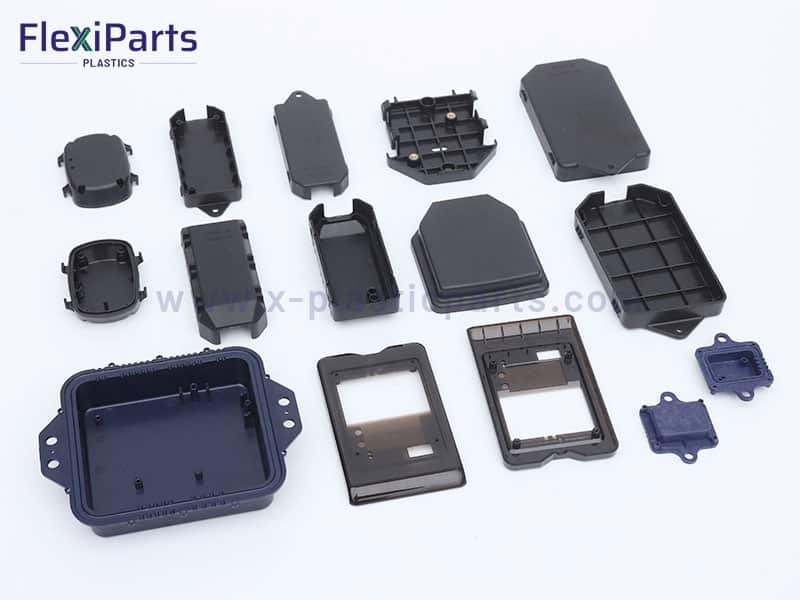
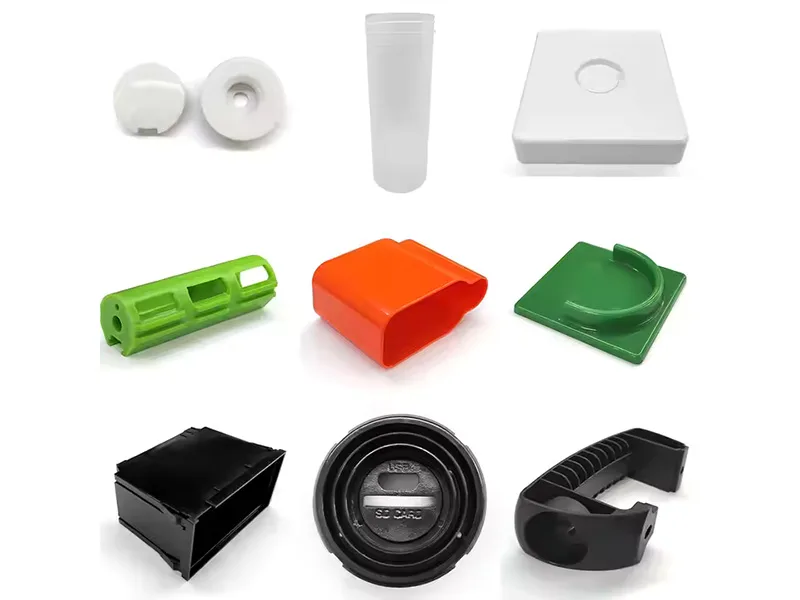
Advantages of Plastic Electronic Enclosures
Custom plastic electronic enclosures bring several practical benefits that support product development and long-term use.
- First, they reduce overall device weight. Lighter enclosures make products easier to handle, ship, and mount in the field.
- Second, plastics provide natural electrical insulation. This feature improves product safety and often simplifies internal design by removing the need for extra insulating layers.
- Third, electronic plastic enclosures resist corrosion and rust. This leads to lower maintenance needs and longer service life in many conditions.
- Fourth, production costs usually stay lower with plastics, particularly at medium to high volumes. Injection molding allows efficient manufacturing of detailed shapes, cutouts, and integrated features without extensive secondary operations.
- Fifth, plastics support greater design freedom. Plastic enclosures support custom wall thicknesses, snap-fit features, and ergonomic shapes more easily than with sheet metal. Color can be added directly to the material.
- Finally, many plastic grades meet industry standards for flame resistance and environmental protection. This helps projects achieve required certifications faster.
Types of Plastic Electronic Enclosures
Understanding the type of enclosure required for your electronics is critical for proper protection and compliance. The National Electrical Manufacturers Association (NEMA) identifies several enclosure categories, each designed to meet specific environmental and operational conditions.
NEMA Type 1 enclosures are designed for indoor use only. They provide basic protection against light dust, dirt, and accidental contact. These enclosures are suitable for variable-frequency drives, office equipment, and other indoor control systems where exposure to harsh conditions is minimal.
NEMA Type 3 enclosures work primarily outdoors, though some can also be used indoors. They offer solid protection against falling dirt, snow, rain, and external ice formation. Outdoor junction boxes and basic weather-exposed equipment often use this rating.
NEMA Type 4 enclosures deliver stronger weather protection than Type 3. They are watertight and handle more demanding weather conditions. This makes them appropriate for industrial applications such as outdoor wiring, mounted telecom equipment, and machinery controls exposed to heavy rain or splashing water.
NEMA Type 4X enclosures build on Type 4 performance by adding higher corrosion resistance. They perform well in outdoor settings with extreme moisture or corrosive chemicals, for example, electrical boxes installed near coastlines or in chemical processing areas.
NEMA Type 6 and 6P enclosures are also intended for outdoor use and can withstand temporary or prolonged submersion in water.
Type 7 enclosures address hazardous locations, such as areas with flammable gases or vapors.
Type 12 enclosures provide enhanced indoor protection compared with Type 1, offering better resistance to dust, dirt, and dripping liquids. Common in manufacturing floors and industrial automation settings.
Custom Enclosures
While standard NEMA types cover many scenarios, some projects require bespoke solutions. Flexiparts specializes in custom plastic enclosures, such as tailoring enclosure dimensions, mounting options, and access points, integrating features such as ventilation, cable entries, or snap-fit assembly, select materials optimized for your environment and regulatory requirements. Our team ensures that your custom enclosure meets NEMA standards while precisely fitting your application, delivering both protection and manufacturability.
Key Design Considerations for Plastic Enclosures
Proper design ensures that plastic enclosures are functional, manufacturable, and durable.
- Mechanical Design: Wall thickness, ribs, bosses, and snap-fit features ensure structural integrity.
- Environmental Protection: Decide early on the required IP or NEMA rating to determine sealing methods and material choice.
- Thermal Management: Plastics transfer heat less efficiently than metals. Ventilation openings, internal heat sinks, or component placement need to be considered.
- Sealing: Choose compression gaskets or ultrasonic welding when dust and moisture resistance are critical.
- Assembly and Maintenance: Consider ease of assembly, modularity, and access for maintenance or repair.
Flexiparts provides Design for Manufacturing (DFM) services, optimizing designs to reduce production costs, improve assembly efficiency, and enhance overall performance.
Manufacturing Methods for Plastic Enclosures
Choosing the right manufacturing method depends on production volume, complexity, and material requirements:
Injection Molding
Injection molding serves as the primary method for producing plastic electronic enclosures at scale. It delivers consistent quality, tight tolerances, and the ability to include complex features in a single step. This process suits medium to high volumes where tooling investment can be justified.
CNC Machining
For prototypes and low-volume runs, plastic CNC machining from plastic sheets or blocks offers fast turnaround and design flexibility. Changes can be made quickly without new molds.
3D Printing
3D printing allows rapid iteration of complex geometries that would be difficult or expensive with traditional methods. Flexiparts combine these approaches — using 3D printing for early validation and injection molding for final production.
Thermoforming / Vacuum Forming
Thermoforming is particularly suited for larger enclosures or when shallower depths and simpler geometries are needed. It offers lower tooling costs and faster setup times, making it suitable for medium volumes or when budget constraints are important.
Flexiparts offers end-to-end manufacturing services, from prototyping to full-scale production. We can recommend the most efficient route for each project stage.
Conclusion
Plastic electronic enclosures provide lightweight, durable, and cost-effective solutions for a wide range of electronic devices. Their design flexibility, electrical insulation, and manufacturability make them ideal for consumer, industrial, and specialized applications. Flexiparts delivers professional custom enclosure services, guiding clients from material selection and design to prototype and mass production. Contact Flexiparts today to discuss your next enclosure project and find the right solution for your electronics.